The forex world is full of people promising easy riches — and almost all of them are either selling you something or stealing from you. Where there is money and beginners eager to make it, scams flourish, and the forex industry attracts more than its share. Knowing the common scams, recognising their red flags, and understanding how to protect yourself is one of the most valuable and protective lessons a beginner can learn — potentially saving you from losses far larger than any trading mistake. This guide covers the most common forex scams, the warning signs they share, and the simple principles that keep you safe. Consider it essential self-defence before you part with any money.
It complements the guidance on choosing a regulated broker in how to choose a forex broker, and the realistic expectations set throughout the beginner guides.
Key takeaways
Q: What are the most common forex scams?
A: Common forex scams include signal sellers with fake track records, fake gurus selling get-rich-quick courses, schemes promising guaranteed or unrealistic returns, managed-account and Ponzi fraud, automated 'robot' systems that don't work as advertised, and unregulated brokers that may refuse withdrawals or manipulate prices.
Q: What are the red flags of a forex scam?
A: Major red flags include promises of guaranteed or unrealistically high returns, get-rich-quick lifestyle marketing, pressure to act quickly, unregulated brokers, requests to send money to individuals, upfront fees for 'secret' systems, and any claim that contradicts the basic reality that trading carries risk.
Q: How can you protect yourself from forex scams?
A: Verify that any broker is regulated by a reputable authority, be deeply sceptical of guarantees and unrealistic returns, never send money to individuals claiming to trade for you, do your own learning rather than buying 'secret' systems, and remember that if something sounds too good to be true, it is.
Signal sellers and fake gurus
Among the most common forex scams are signal sellers — individuals or services selling "winning" trade signals or subscriptions, often backed by impressive-looking track records. The problem is that these track records are frequently fabricated or cherry-picked, showing only the wins, and the signals themselves rarely deliver the promised results. The seller profits from the subscription fees regardless of whether the signals make you money — a business model that rewards marketing, not trading skill. A genuinely profitable signal provider would have little reason to sell signals cheaply to the masses rather than simply trading them.
Closely related are the fake gurus — the social-media "traders" flaunting rented sports cars, private jets and lavish lifestyles, selling expensive courses, mentorships or "academies" that promise to reveal the secrets of easy trading wealth. The lifestyle imagery is the marketing, and it is often funded by course sales, not trading. While legitimate trading education exists, the get-rich-quick guru selling a dream of effortless riches is a classic scam archetype. The tell is the promise itself: real trading is difficult, risky and uncertain, as this entire site emphasises, so anyone selling it as an easy path to wealth is selling a fantasy. The flashier the lifestyle marketing and the bolder the promises, the more sceptical you should be.
Guaranteed returns and managed-account fraud
Perhaps the most dangerous scams involve guaranteed or unrealistic returns. Any scheme promising guaranteed profits, "risk-free" trading, or consistently high returns (say, doubling your money quickly or fixed large monthly percentages) is a scam, full stop. This follows from the most basic reality of trading: it carries risk, and no one can guarantee profits. Returns and risk are inseparable, so a promise of high returns with no risk is a logical impossibility and a certain sign of fraud. The guarantee itself is the red flag, regardless of how professional the operation looks.
These promises often appear in managed-account or investment fraud, where you are invited to hand over your money for someone else to "trade" on your behalf for spectacular returns. In reality, the money is frequently stolen outright, or the scheme is a Ponzi — paying early "investors" with later investors' money to maintain the illusion of returns until it collapses and everyone loses. The structure exploits trust and the appeal of passive riches. The protective principle is absolute: be extremely wary of handing your money to anyone promising to trade it for you, especially with guaranteed or impressive returns, and never send money to an individual or unregulated entity on such a promise. Legitimate investment management is regulated, transparent, and never promises guaranteed high returns; the forex version promising easy fortunes is overwhelmingly fraudulent.
Robots and unregulated brokers
Trading robots or "expert advisors" (EAs) are automated systems sold with promises of hands-off, automatic profits — "set it and forget it" wealth. While automated trading is a legitimate field, the robots marketed to beginners with promises of effortless, guaranteed returns are overwhelmingly scams or worthless: if a simple purchasable robot genuinely printed money, its creator would use it privately rather than sell it. The promise of automatic profits with no skill or effort required is, again, the fantasy that signals a scam.
Most insidious are unregulated brokers — trading platforms not regulated by any reputable authority. An unregulated broker may refuse to process withdrawals (taking your deposits and never letting you take money out), manipulate prices against you, or simply vanish with client funds. Because the broker holds your money, dealing with an unregulated one risks losing everything regardless of how you trade. This is why verifying regulation, as the broker guide stresses, is non-negotiable: a broker regulated by a respected authority (such as the FCA in the UK, ASIC in Australia, or other major regulators) is subject to oversight, capital requirements and client-fund protections that an unregulated one is not. There is also a particularly cruel follow-on scam: recovery scams, where, after you have been defrauded, fresh fraudsters contact you promising to recover your lost funds for an upfront fee — stealing from victims a second time. Once burned, be doubly wary of anyone promising to recover your money.
Every forex scam rests on the same false promise: easy, guaranteed, low-risk profit. That promise contradicts the fundamental reality that trading is risky and hard — so the promise itself is the red flag. And the logic that exposes them all: if someone truly had a money-printing system, they would use it, not sell it to you.
The red flags
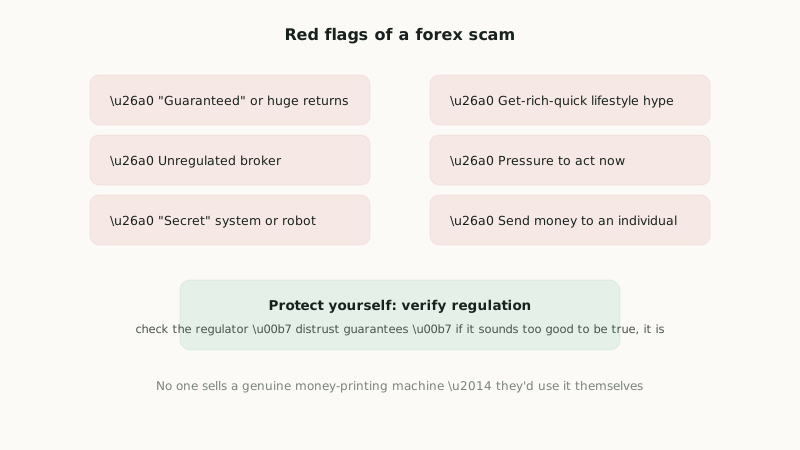
The scams above share a recognisable set of red flags, and learning to spot them protects you against scams you have never seen before. Be alarmed by: guarantees of profit or unrealistically high returns (the biggest red flag, contradicting trading's basic risk); get-rich-quick messaging and lavish-lifestyle marketing; pressure to act quickly (urgency is a manipulation tactic to prevent careful thought); unregulated brokers or entities; requests to send money to an individual or to pay upfront fees for "secret" systems; excessive secrecy about how returns are generated; and anything that simply sounds too good to be true.
The common thread is the promise of easy, reliable, low-risk profit — which, as this site emphasises throughout, contradicts the fundamental nature of trading. Real trading is difficult, risky and uncertain; success comes slowly through skill, discipline and risk management, not from secret systems, guaranteed signals or other people's effortless generosity. Any pitch that contradicts this reality — that offers a shortcut around the difficulty and risk — should trigger immediate suspicion. The scammer's entire business is convincing you that the hard, risky reality of trading can be bypassed for a fee; recognising that it cannot is your fundamental protection.
How to protect yourself
Protecting yourself comes down to a few firm principles. Verify broker regulation: only trade with brokers regulated by a reputable authority, and check the regulator's register directly rather than trusting the broker's own claims. Distrust all guarantees: treat any promise of guaranteed or unrealistic returns as proof of a scam. Never send money to individuals claiming to trade for you, and be wary of all managed-account schemes promising high returns. Do your own learning rather than buying "secret" systems — genuine trading knowledge is widely available (much of it free, like this site), and there are no secrets worth paying a fortune for. And apply the timeless test: if it sounds too good to be true, it is.
Underlying all of this is the logical principle that exposes nearly every forex scam: anyone with a genuine money-making system would use it themselves, not sell it to you. A person who could reliably guarantee profits would quietly compound their own fortune, not hawk signals, courses or robots to strangers. The very act of selling easy riches is evidence that the riches are not real — the seller is monetising your hope, not a working system. Holding this principle firmly, combined with healthy scepticism, verification of regulation, and the understanding (from the rest of this site) that real trading is a difficult skill rather than a shortcut to wealth, protects you against the scams that prey on beginners. The forex market offers genuine opportunity for those who learn it properly and manage risk; the scammers offer only the illusion of an easier path. Recognising the difference is one of the most valuable things a new trader can learn.
If you have been scammed
If you suspect you have fallen victim to a forex scam, a few steps matter. Stop sending money immediately — do not pay further "fees," "taxes" or "deposits" that a scammer claims are needed to release your funds, as these are simply additional theft. Document everything: keep records of communications, transactions, the entity's details and any promises made, as these will help any report. Report it to the relevant financial regulator and to the appropriate authorities or fraud-reporting bodies in your country; while recovery is often difficult, reporting helps authorities act against the scammers and may warn others.
Be especially alert to the recovery scam that frequently follows: having been identified as a victim, you may be contacted by fraudsters posing as recovery agents, lawyers or even authorities, promising to retrieve your lost money for an upfront fee. This is a second scam targeting the same victims, exploiting their desperation to recover losses — and paying it simply compounds the loss. Legitimate authorities and regulators do not charge upfront fees to recover scammed funds. Treat any unsolicited offer to recover your money as almost certainly fraudulent.
Finally, while a scam loss is painful, try to extract the lesson rather than chase the loss. The same scepticism, verification of regulation, and refusal to believe in easy guaranteed riches that would have prevented the scam are what will protect you going forward. The forex market offers genuine opportunity through patient, disciplined, properly-managed trading — the path the rest of this site describes — and recognising that this legitimate path looks nothing like the scammer's promise of effortless wealth is the enduring protection. Channel the experience into learning to trade properly and safely, with regulated brokers and realistic expectations, rather than into a hunt for someone who will magically restore the loss.
Common forex scams: signal sellers with fake records, get-rich-quick gurus, guaranteed-return and managed-account/Ponzi fraud, "robots" promising automatic profits, and unregulated brokers that steal deposits or block withdrawals — plus recovery scams that target victims again. Shared red flags: guaranteed or unrealistic returns, lifestyle hype, pressure to act now, unregulated entities, and requests to send money to individuals. Protect yourself: verify regulation, distrust all guarantees, never hand money to individuals, learn rather than buy "secrets." If scammed, stop paying, document, report — and beware recovery scams. Anyone with a real money-making system would use it, not sell it.