Trading guarantees losses, drawdowns and mistakes — they are not possibilities but certainties, built into the probabilistic nature of the activity. So the question is never whether setbacks will come, but whether you can recover from them and keep going. Emotional resilience is exactly that capacity: the ability to absorb the inevitable blows of trading — losing trades, drawdowns, errors, stress — and bounce back, sustaining yourself over the long haul without being broken by the emotional toll. It is what separates traders who endure the marathon from those who burn out, tilt, or give up. This guide explains why resilience matters, its core pillars, how to build it, and — importantly — when to step back for the sake of your wellbeing.
It is what allows the calm handling of losses and avoidance of tilt, supported by the discipline and perspective of the trader's mindset.
Key takeaways
Q: What is emotional resilience in trading?
A: Emotional resilience is the capacity to recover from the inevitable setbacks of trading — losses, drawdowns and mistakes — and to sustain trading over the long haul without being broken by the emotional toll. It means bouncing back from setbacks rather than spiralling into tilt, revenge or giving up.
Q: How do you build emotional resilience for trading?
A: Through realistic expectations (expecting losses and drawdowns), sound risk management (so setbacks are survivable and less emotionally devastating), keeping perspective (one trade or drawdown isn't the end), routine and process focus, taking breaks, self-care, and treating trading as a marathon rather than a sprint.
Q: When should you step back from trading?
A: Step back when trading is causing significant stress that affects your wellbeing, when you're trading emotionally (on tilt, chasing losses), or when it stops being healthy. Taking breaks is a normal, valid part of sustainable trading — and if trading is harming your mental health, seek support from people you trust or a professional.
Why resilience matters
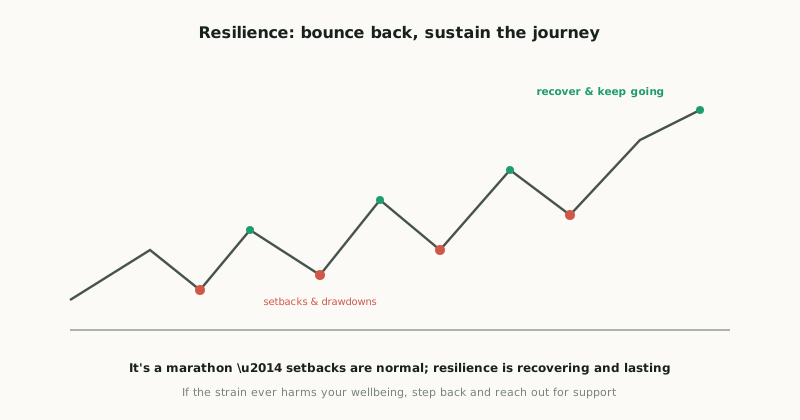
Resilience matters because trading is, unavoidably, a series of setbacks interspersed with progress, sustained over a long period. The setbacks are guaranteed: every trader, however skilled, endures losing trades (frequently), drawdowns (periods of declining equity), and mistakes — these are not signs of failure but inherent features of a probabilistic activity, as the expectancy, drawdown and uncertainty guides establish. What is not guaranteed is how the trader responds. A setback can be absorbed and recovered from — or it can spiral into something far worse: a loss that triggers tilt (emotional, reckless trading), a drawdown that prompts revenge trading or abandonment of a sound strategy, a string of difficulties that leads to burnout or giving up entirely. Resilience is what determines which path the trader takes.
This is why resilience is so important: the difference between a trader who lasts and one who doesn't is often not their strategy or even their discipline on any single day, but their capacity to keep going through the hard periods without being broken. Trading is a marathon, not a sprint — success comes from sustaining sound trading over a long time, allowing the edge to play out across many trades and through inevitable rough patches — and longevity requires the resilience to endure the emotional toll of the journey. A trader with a genuine edge but no resilience may be destroyed by a normal drawdown (tilting, revenge-trading, or quitting at the worst moment), never giving the edge time to work. A trader with resilience rides out the same drawdown, recovers composure, maintains discipline, and continues — letting the edge eventually reassert itself. Resilience, in this sense, is what protects the edge and the trader through the unavoidable hard times, making it as essential to long-term success as the strategy or the risk management. The setbacks will come; resilience is what lets you survive them and keep playing the long game.
The pillars of resilience
Emotional resilience rests on several mutually-reinforcing pillars, summarised below.
Pillars of resilience
Acceptance is foundational: expecting and accepting losses and drawdowns as normal, inevitable parts of trading (not catastrophes or personal failures) drains them of much of their emotional power — a loss you expected and accept as routine is far less destabilising than one you took as a shock or an affront. Perspective follows: keeping the long-term view that any single trade, day, or even drawdown is just one part of a long journey and not the end of the world — zooming out from the painful moment to the bigger picture prevents a setback from feeling catastrophic and curbs the overreactions (tilt, revenge, quitting) that catastrophising causes. Risk control is the practical pillar that underpins the emotional ones: when risk is properly managed (small per-trade risk, sound position sizing, the drawdown kept survivable), setbacks are inherently less devastating — a loss or drawdown within prudent risk limits is bearable, whereas one from reckless over-risking can be financially and emotionally shattering. Good risk management is thus a cornerstone of resilience, because it keeps the blows small enough to absorb. Recovery is the active skill of regaining composure after a setback — stepping away to reset rather than trading on emotionally, returning to the process once calm. And sustainability is the long-game pillar: pacing yourself, taking breaks, avoiding the burnout that comes from relentless pressure, and maintaining a life and identity beyond trading so that trading's ups and downs don't consume your whole wellbeing. Together these pillars — acceptance, perspective, risk control, recovery and sustainability — form the structure of resilience, each supporting the trader's capacity to absorb setbacks and keep going.
Building resilience, and knowing when to step back
Resilience is built deliberately, through practices that the psychology and risk sections reinforce. Set realistic expectations from the outset — understand and internalise that losses and drawdowns are normal and inevitable, so they don't come as destabilising shocks (unrealistic expectations of easy, steady profits set traders up for the emotional devastation that breaks resilience). Maintain sound risk management — the single most practical resilience-builder, since keeping setbacks survivable keeps them emotionally bearable. Keep perspective actively — remind yourself, in the painful moment, that this trade/day/drawdown is one small part of a long journey. Lean on process and routine — focusing on executing your process well (rather than fixating on results) provides stability through rough patches, and a steady routine anchors you. Take breaks and step away — stepping back after a setback to regain composure, and taking regular breaks to avoid burnout, are signs of strength and professionalism, not weakness; a trader who can walk away from the screen when needed lasts far longer than one who can't. And cultivate perspective and support beyond trading — maintaining relationships, interests and an identity outside trading so that its swings don't define your entire sense of wellbeing.
Finally, and importantly, resilience includes knowing when to step back — for your wellbeing. Resilience is not about grinding on through anything regardless of cost; sometimes the resilient, healthy choice is to stop. If trading is causing significant stress that is affecting your wellbeing, if you find yourself trading emotionally (on tilt, chasing losses, unable to follow your plan), or if it has simply stopped being healthy, the right response is to step back — reduce your size, take a break, or pause entirely until you are in a better state. Taking breaks is a normal, valid and healthy part of sustainable trading, not a failure. And a genuine note on wellbeing, in keeping with the care this site tries to bring to these topics: if trading is harming your mental health — causing persistent anxiety, distress, or a compulsive inability to stop — please treat that as more important than any trade or account, step away, and reach out for support from people you trust or a professional. Your wellbeing matters far more than trading, money should never be pursued at the cost of your mental health, and there is no shame in stepping back or stopping; it is the wisest and strongest thing to do. Trading is meant to be a pursuit you undertake from a position of stability, not one that erodes your wellbeing — and protecting that wellbeing is the deepest form of resilience there is. The honest, caring takeaway: emotional resilience — recovering from inevitable setbacks and sustaining yourself over the long marathon — is essential to lasting in trading, built through acceptance, perspective, sound risk management, recovery, sustainability and realistic expectations; and crucially, it includes the wisdom to step back when trading threatens your wellbeing, because nothing in trading is worth more than your health and peace of mind.
Common setbacks and bouncing back
Resilience becomes concrete in how you recover from the specific setbacks trading throws at you. A losing streak — several losses in a row — is statistically normal even for a sound, positive-expectancy approach (the expectancy and drawdown guides show losing runs are inevitable), yet it tests resilience hard, tempting the trader to abandon their strategy or trade emotionally to "fix" it. The bounce-back: recognise the streak as a normal, expected part of the distribution (not evidence the strategy is broken), keep risk small so the streak stays survivable, and either continue executing the sound process or, if shaken, step back briefly to reset — but resist the urge to overhaul everything or revenge-trade. A single large loss — especially a painful one or a mistake — can sting more than a streak; the bounce-back is to take the loss, accept it as the cost of doing business in an uncertain activity, learn any genuine lesson (was it a process error or just bad luck?), and deliberately avoid the revenge-trading the wounded ego craves.
A drawdown — an extended decline in equity — is the slow, grinding setback that wears on morale over weeks; resilience here is about perspective (a drawdown is a normal phase, not a verdict), maintaining discipline through the discomfort, perhaps reducing size to ease the pressure, and trusting that a genuine edge reasserts itself over time. And a mistake — a lapse in discipline, a fat-finger error, a deviation from the plan — calls for honest acknowledgement without spiralling into harsh self-criticism: note it, understand what caused it, put a guard in place to prevent its repeat, and move on. A vital thread runs through all of these: be kind to yourself in the recovery. Setbacks are not character flaws or proof you're not cut out for trading; they are the normal texture of a difficult, probabilistic endeavour that every trader faces. Harsh self-judgement and negative self-talk after a setback don't aid recovery — they corrode it, feeding the emotional spiral that breaks resilience. Treat yourself as you would a respected colleague going through a rough patch: with honesty about any genuine errors, but also with patience, perspective and encouragement. Bouncing back well — from streaks, big losses, drawdowns and mistakes alike — means absorbing the blow, extracting any real lesson, protecting your composure and your wellbeing, and returning to sound process, rather than letting the setback compound into something worse.
Trading guarantees setbacks — losses, drawdowns, mistakes — so success depends on emotional resilience: recovering from them and sustaining yourself over the long marathon without being broken (spiralling into tilt, revenge or burnout). Its pillars: accepting losses/drawdowns as normal, keeping perspective (one trade isn't the end), sound risk management (so setbacks stay survivable and bearable), recovery (regain composure, step away to reset), and sustainability (pace yourself, avoid burnout, keep a life beyond trading). Build it through realistic expectations, risk control, process focus, breaks, and support. Crucially, resilience includes knowing when to step back: if trading harms your wellbeing or you're trading emotionally, pause — that's strength, not failure. Your mental health matters more than any trade; if trading is harming it, step away and seek support.