The forex market is open 24 hours a day, but that does not mean every hour is worth trading. Liquidity and volatility cluster at particular times — there are hours when the market is alive with movement and tight spreads, and hours when it drifts thin and choppy. Knowing when to trade, and just as importantly when not to, is a genuine and underrated edge: it means trading in conditions that suit your strategy rather than fighting poor liquidity. This guide explains the best times to trade, the times to approach with caution, and how to match your timing to the pairs you trade.
This puts the session structure from the forex trading sessions to practical use — turning when the market is active into when you should trade.
Key takeaways
Q: When is the best time to trade forex?
A: The best conditions generally come during the London session and especially the London-New York overlap, when liquidity and volatility peak, spreads are tightest, and meaningful moves occur. The exact best time also depends on which pairs you trade and your strategy.
Q: What times should you avoid trading forex?
A: Be cautious during low-liquidity periods such as the quiet hours between major sessions, the daily rollover time, late on Fridays when the market thins, and around the Sunday open when gaps can occur. Thin conditions mean wider spreads and choppier, less reliable moves.
Q: Does the best time to trade depend on the pair?
A: Yes. European and dollar pairs like EUR/USD are most active during the London and New York sessions, while yen and Asia-Pacific pairs are more active during the Asian session. Trading a pair during its active session gives better liquidity and movement.
The best conditions
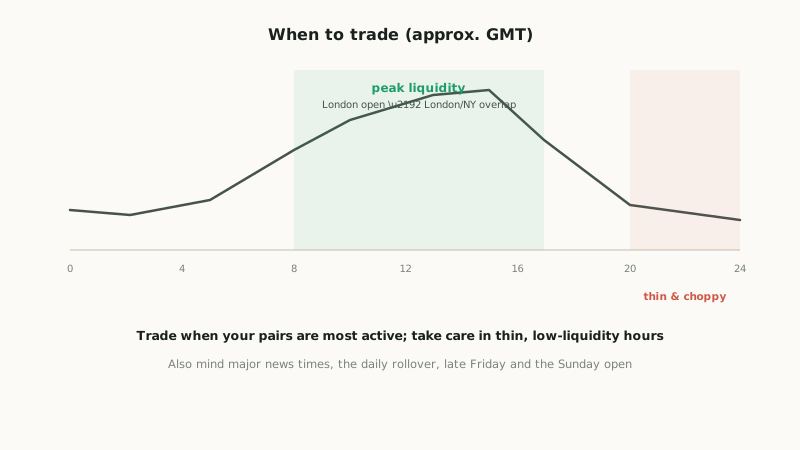
For most traders and most pairs, the best trading conditions come during the London session and the London/New York overlap. This is when liquidity is deepest and volatility is highest, which translates into the practical advantages that matter: the tightest spreads (lowest trading costs), the most meaningful price movement (real moves to trade rather than aimless drift), and the most reliable execution. The London open often brings a surge of activity and direction, and the overlap with New York — when the two largest financial centres trade simultaneously — is the single most active window of the day.
Why do these conditions suit trading? Because most strategies need movement to profit and liquidity to enter and exit cleanly at low cost. A pair that barely moves offers no opportunity; a thinly-traded pair with wide spreads bleeds money on every trade. The high-liquidity, high-volatility window of the London and New York hours provides both the movement and the tight costs that trading rewards. This is why so many traders concentrate their activity in these hours — not arbitrarily, but because the conditions are objectively more favourable. The market is, in effect, telling you when it is most worth trading.
News and data times
A second category of high-activity periods is around major news and economic data releases. As covered in the fundamental analysis section, scheduled releases — inflation data, employment reports, central bank decisions — inject sharp volatility into the market at known times. Much US data, for instance, is released in the New York morning, often during the London/NY overlap, compounding the activity of that window. These release times bring movement and opportunity, but also heightened risk: the moves are fast and can be erratic, spreads can widen momentarily, and being caught on the wrong side of a spike is costly.
The relationship between news times and good trading times is therefore double-edged. The volatility around releases creates opportunity for those prepared for it, but the chaos in the immediate aftermath is hazardous, especially for beginners. Many traders treat the seconds and minutes right after a major release with great caution — or stay out entirely — and then trade the clearer move that emerges once the dust settles. Whether you seek to trade the volatility or prefer to avoid it, you should always know when major releases are due (via an economic calendar), because they reshape conditions dramatically and being blindsided by one is an avoidable mistake.
Times to approach with caution
Just as important as the good times are the periods to approach with caution — typically the low-liquidity hours when the market thins out. The clearest is the quiet stretch between major sessions, particularly the lull after New York closes and before the Asian session gathers pace, when liquidity drains away. In thin conditions, spreads widen (raising your costs), price action becomes choppy and erratic, and moves are less reliable — false breakouts and meaningless wiggles are more common when few participants are trading. Strategies that work in liquid hours often perform poorly in these dead zones.
Several other periods warrant care. The daily rollover time (when swap is applied and one trading "day" ticks over) can see a brief patch of very thin liquidity and odd pricing. Late Friday tends to thin out as traders close positions ahead of the weekend, and can bring erratic, low-conviction moves. The Sunday open (the start of the new trading week) can produce gaps — jumps from Friday's close — if significant news broke over the weekend, a risk for positions held across it. And liquidity drops around major public holidays, especially when key financial centres are closed. None of these periods is forbidden, but each carries worse conditions and added risk, and recognising them helps you avoid trading when the odds of a clean, reliable trade are lower.
The market tells you when it's worth trading. Deep liquidity and real movement — the London hours and the London/NY overlap — are when most strategies work best. Thin, choppy hours — the between-session lulls, late Friday, the Sunday open — are when trades misfire on wide spreads and meaningless noise. Trading the right hours is an edge in itself.
Matching timing to your pairs and life
The "best" time also depends on which pairs you trade. The major European and dollar pairs (EUR/USD, GBP/USD) are most active during the London and New York hours — their prime time. Yen pairs and the Asia-Pacific commodity currencies (AUD, NZD) see their best activity during the Asian session, when their home markets and news are live. Trading a pair during its active session means better liquidity and more meaningful movement; trading EUR/USD in the dead of the Asian session, by contrast, often means sitting through aimless drift. So match the pairs you trade to the hours you can trade, or vice versa.
This last point matters practically: your own schedule and time zone determine which sessions you can realistically trade, and you should choose pairs and strategies that fit. A trader who can only trade in their evening should favour the pairs and sessions active then, rather than forcing trades in unsuitable hours. There is no single "best time" for everyone — there is the best time for your pairs, your strategy and your availability. The universal principles hold (favour liquid hours, respect the thin ones, know when news is due), but applying them means aligning the market's rhythms with your own. Done well, this turns timing from an afterthought into a genuine, cost-free edge.
Matching the time to your strategy
The best time to trade depends not only on your pairs but on your strategy and style, because different approaches need different conditions. Short-term traders — scalpers and day traders who aim to capture small moves quickly and hold positions briefly — are highly dependent on liquidity and movement, so they are most reliant on the prime hours: the London session and the London/New York overlap, where tight spreads and active price action make rapid trading viable. For these traders, trading the quiet hours is often pointless or costly, as thin liquidity and wide spreads erode the small edges they pursue.
Longer-term traders — swing traders who hold positions for days, or position traders who hold for weeks — are far less sensitive to the exact hour of entry. When you intend to hold a trade for several days, whether you enter during the London session or a quieter hour matters little to the eventual outcome; the larger move you are targeting dwarfs the small difference in entry conditions. Swing traders can therefore trade around their own schedules with less concern for session timing, though they still benefit from entering during reasonable liquidity to get a fair price and a clean fill.
Strategy interacts with session character in other ways too. The quieter Asian session, with its often tighter ranges, can suit range-trading strategies that profit from price oscillating between levels, while the more directional London open can suit breakout and trend strategies that profit from decisive moves. News traders, naturally, organise their trading around scheduled releases. The principle is to match the conditions you trade in to what your strategy needs: fast, liquid hours for short-term and breakout trading; less time-sensitivity for swing trading; quieter ranging periods for range strategies. Knowing both the rhythms of the market and the needs of your own approach lets you choose times that work with your strategy rather than against it — the essence of using timing as an edge.
The best forex conditions — deepest liquidity, tightest spreads, real movement — come during the London session and the London/New York overlap, plus around major news (with caution for the volatility). Approach the thin hours warily: the between-session lulls, the daily rollover, late Friday and the gap-prone Sunday open. The best time depends on your pairs, your schedule, and your strategy — scalpers and breakout traders need the liquid hours, swing traders are far less time-sensitive, and ranging strategies can suit the quieter sessions. Trading the right hours is a real edge.