
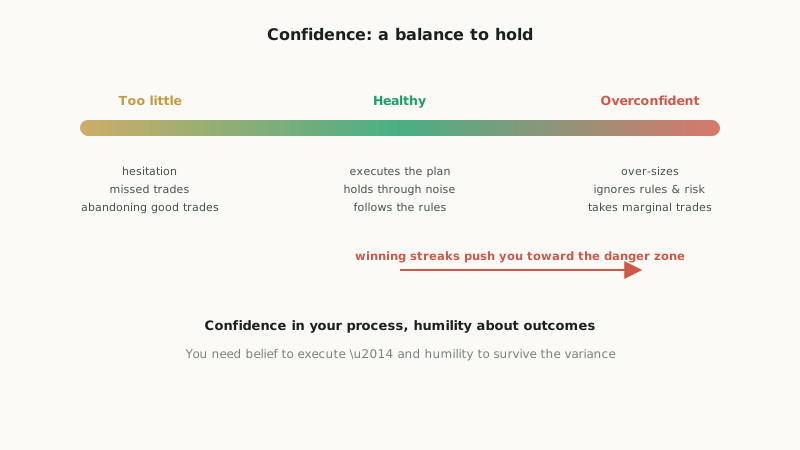
Trading demands a delicate psychological balance: you need enough confidence to pull the trigger on valid trades and follow your plan under pressure — but too much confidence tips into overconfidence, which leads to over-risking, broken rules and, often, blow-ups. The two sit on a spectrum, and the trader's task is to hold the healthy middle: confident enough to execute, humble enough to survive. Counterintuitively, the most dangerous moment for many traders is not after a painful loss but after a run of wins, when overconfidence swells just as the risk of complacency peaks. This guide explores why confidence is necessary, why overconfidence is dangerous, how winning streaks breed it, and how to stay calibrated.
Overconfidence is one of the cognitive biases covered elsewhere, and managing the confidence balance is central to trading discipline.
Key takeaways
Q: Why do traders need confidence?
A: Confidence is needed to execute a strategy — to take valid trades without hesitation, hold through normal fluctuations, and follow rules under pressure. Without confidence in their plan, traders hesitate, miss trades, second-guess and abandon good positions, undermining the consistency that success requires.
Q: Why is overconfidence dangerous in trading?
A: Overconfidence leads traders to over-risk, ignore their rules, take marginal trades and abandon risk management, often attributing success to skill while ignoring luck and variance. It frequently follows winning streaks and precedes large losses or blow-ups, making it one of the most dangerous trading mindsets.
Q: Why are winning streaks dangerous?
A: Winning streaks breed overconfidence — traders begin to feel invincible, attribute the wins entirely to their skill, and start over-sizing, taking marginal trades and ignoring risk rules. This is why the period after a run of wins is often the most dangerous, frequently preceding significant losses.
Why confidence is necessary
Confidence often gets a bad name in discussions of trading psychology, with all the focus on the dangers of overconfidence — but a baseline of genuine confidence is necessary to trade well. Trading requires you to act under uncertainty: to take a valid trade without hesitation, to hold a position through the normal fluctuations that test your conviction, and to follow your rules even when emotion or doubt pushes against them. All of this requires belief in your plan and your process — without it, you cannot execute.
The trader who lacks confidence suffers real, opposite-side problems: hesitation that causes them to miss valid setups; second-guessing that leads them to override their own analysis; premature exits driven by doubt, bailing out of good trades at the first wobble; and a general inability to follow their plan decisively. These failures of execution can be just as damaging as overconfidence's excesses, just less dramatic. A strategy with a genuine edge produces nothing if the trader lacks the confidence to execute it consistently. So confidence is not the enemy — it is a requirement. The goal is not to eliminate confidence but to calibrate it: to have enough belief to act decisively on your edge, without the excess that breeds recklessness. Recognising that confidence is necessary, and that its absence is also a problem, gives a fuller and more accurate picture than the common one-sided warning against overconfidence.
Why overconfidence is dangerous
At the other end of the spectrum, overconfidence is one of the most dangerous mindsets in trading, precisely because it feels so good and so justified. The overconfident trader, believing strongly in their own skill and judgement, begins to over-risk — increasing position sizes beyond their rules; to ignore their rules — skipping stop-losses or risk limits they deem unnecessary given their "edge"; to take marginal trades — trusting their judgement on setups they would normally skip; and to abandon risk management — the disciplines that overconfidence makes feel overly cautious. Each of these directly undermines the survival-first principles that the risk-management section establishes as essential.
Underlying overconfidence is usually a misattribution: the trader credits their results entirely to their own skill, ignoring the large role of luck and variance. As the expectancy and risk-of-ruin guides emphasise, outcomes — especially over short runs — contain substantial randomness, so a string of wins may owe as much to favourable variance as to skill. The overconfident trader fails to see this, attributing good fortune to genius, and so takes on risks that the underlying randomness will eventually punish. This is the deep danger: overconfidence leads traders to abandon the very disciplines (small position sizing, stops, selectivity) that protect them from variance, just as their inflated sense of skill makes those protections feel unnecessary. The result is a trader exposed and over-leveraged precisely when they feel most invincible — a setup for serious losses or a blow-up.
The danger of winning streaks
The most important practical insight about overconfidence is when it strikes: winning streaks breed overconfidence, making the period after a run of wins often the most dangerous in trading. This is deeply counterintuitive — we naturally fear losses and feel safe after wins — but it is precisely backwards from a risk perspective. After several wins, the trader feels validated, skilled, even invincible; their confidence swells past the healthy middle into overconfidence, and they begin over-sizing, taking marginal trades, and relaxing their risk discipline, feeling that their hot streak justifies it.
This is why experienced traders treat winning streaks with caution rather than abandon. A run of wins is partly skill and partly favourable variance, and the variance will turn — but the overconfident trader, having ramped up their risk during the streak, is now exposed to a larger loss when it does. Many serious blow-ups occur not during losing periods but after winning ones, when overconfidence led the trader to over-leverage just before the inevitable losing trades arrived. The psychological pattern — wins breeding confidence breeding excess risk breeding a large loss — is one of the most reliable in trading. Recognising it allows the crucial defence: staying disciplined precisely when you feel most confident, resisting the urge to increase size or relax rules after wins, and remembering that the hot streak is partly luck that will turn. The dangerous moment is the moment you feel invincible.
The most dangerous time to trade is often right after a winning streak, not after losses. Wins breed overconfidence, which whispers that you can size up, skip the stop, take the marginal trade — just as variance is about to turn. Many blow-ups follow winning runs. Stay most disciplined exactly when you feel most invincible.
Staying calibrated
The healthy state is calibrated confidence — believing in your edge and process enough to execute decisively, while staying humble about uncertainty, variance and the limits of your control. The guiding formula is confidence in your process, humility about outcomes: trust your plan and your ability to follow it (process), while accepting that any individual outcome is uncertain and partly random (humility). This combination lets you act decisively without tipping into the recklessness that comes from believing you can control or predict outcomes you cannot.
Several practices support calibration. Humility about luck — consciously acknowledging the role of variance in your results, crediting neither all your wins to skill nor all your losses to misfortune — keeps overconfidence in check. Consistent position sizing regardless of recent results — not increasing size after wins — directly prevents the most dangerous expression of overconfidence; the disciplined trader risks the same small percentage whether on a winning or losing streak. Following the plan and rules at all times, especially when confidence is high and they feel unnecessary, preserves the discipline that overconfidence erodes. And the trading journal helps by grounding your self-assessment in actual data and the process-over-outcome distinction, rather than in the emotional swings of recent results. The aim throughout is to hold the healthy middle of the confidence spectrum: confident enough to execute your edge without hesitation, humble enough to respect variance and keep your defences up — the balance that lets you both act on your edge and survive the randomness that surrounds it.
Building genuine confidence
If healthy confidence is necessary but overconfidence is dangerous, where should genuine confidence come from? The answer is that real, well-founded confidence is earned, built on solid foundations rather than on bravado, hope or a recent hot streak. Understanding the difference between earned confidence and false confidence is key to cultivating the right kind.
Genuine confidence rests on several pillars. Preparation is the first: a clear, well-thought-out trading plan that you understand and believe in gives you something solid to be confident in — you can execute decisively because you know exactly what you are doing and why. Testing is the second: a strategy you have backtested and forward-tested, and seen perform, earns your confidence through evidence rather than hope, so your belief is grounded in demonstrated edge rather than wishful thinking. Experience is the third: having traded your approach through various conditions, including losses and drawdowns, and seen that you can follow it and that it works over time, builds a confidence that has been tested by reality. And the trading journal and track record provide the fourth: an objective record of your process and results that lets you base your confidence on actual data — you know your real expectancy and that you can follow your plan — rather than on the emotional swings of recent outcomes.
This earned confidence is fundamentally different from the false confidence that breeds overconfidence: where false confidence comes from a winning streak, ego, or attributing luck to skill, earned confidence comes from preparation, evidence and experience. Crucially, earned confidence is naturally accompanied by appropriate humility — because it is grounded in real understanding of your edge, it also understands that edge's limits, the role of variance, and the uncertainty of any outcome. This is why building genuine confidence and avoiding overconfidence are not in tension: the same foundations (a tested plan, real experience, an honest track record) that justify confidence in your process also instil humility about outcomes. The trader who builds confidence properly — on preparation and evidence rather than on a hot streak — tends to land naturally in the healthy middle of the spectrum, confident enough to execute and humble enough to survive.
Confidence is necessary — you need belief in your plan to execute without hesitation; too little causes missed trades and second-guessing. But overconfidence drives over-risking, ignored rules and marginal trades, usually by crediting results to skill while ignoring luck. Winning streaks breed it, making the period after wins often the most dangerous. Build genuine confidence from preparation, testing, experience and an honest track record — which naturally comes with humility — not from hot streaks or ego. Stay calibrated: confidence in your process, humility about outcomes; keep position sizing consistent regardless of recent results.