Day trading is defined by a single rule: every position is opened and closed within the same trading day, so the trader ends each session flat, holding nothing overnight. This intraday discipline lets day traders profit from the price moves that unfold during the trading day while deliberately sidestepping the risks of holding positions while markets are closed. It is faster and more active than swing or position trading, but slower and less frantic than scalping — a middle-fast style that demands active hours and genuine focus, but not the split-second, dozens-of-trades intensity of the scalper. This guide explains what day trading is, the logic of closing out daily, its demands, and how it compares to the neighbouring styles.
It sits between scalping and swing trading on the spectrum from trading styles by timeframe.
Key takeaways
Q: What is day trading?
A: Day trading is a style in which all positions are opened and closed within the same trading day, so no position is held overnight. Day traders aim to profit from intraday price moves, typically taking a handful of trades per day and holding them for minutes to hours.
Q: Why do day traders avoid holding overnight?
A: Closing all positions by day's end avoids overnight risk — the danger of adverse moves and gaps while markets are closed or thin, and the cost of overnight swap charges. It means the trader is never exposed to surprises that occur while they are away from the market and unable to react.
Q: Is day trading easier than scalping?
A: Day trading is generally less frantic than scalping — fewer trades, slightly longer holds, and less extreme cost sensitivity — but it is still demanding, requiring active hours, focus and discipline. It is not a beginner-friendly style; slower approaches like swing trading suit newcomers better.
Day trading at a glance
What day trading is
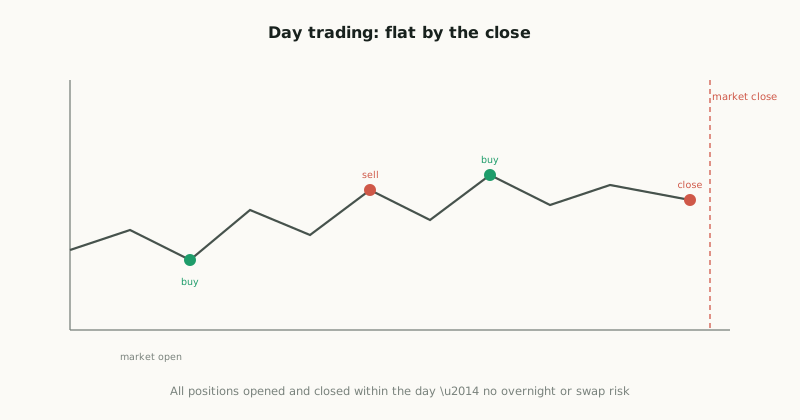
Day trading is an intraday style in which positions are held for minutes to hours and always closed before the trading day ends — the trader never carries a position overnight. A day trader typically takes a handful of trades during their active session, aiming to capture the meaningful price moves that occur within the day, using intraday charts (commonly one-minute to one-hour timeframes) to time entries and exits. The day's trading is self-contained: it begins flat, takes its trades, and ends flat, with the slate wiped clean each evening.
This places day trading in the active-but-not-frantic middle of the speed spectrum. It is faster than swing trading (which holds for days to weeks) — the day trader is engaged with the market throughout their session and takes several trades a day rather than a few a week. But it is slower than scalping — day traders take fewer trades, hold them somewhat longer (minutes to hours rather than seconds to minutes), and aim for larger moves than the scalper's few pips, so they are not subject to scalping's extreme cost sensitivity or its split-second relentlessness. Day trading thus offers an active engagement with the markets and the potential for frequent opportunities, without the brutal pace of scalping — a distinct middle ground that appeals to traders who want to be actively involved during defined hours.
The logic of closing out daily
The defining discipline of day trading — closing all positions by day's end — exists to avoid overnight risk, and understanding this rationale clarifies the style's appeal. Holding a position overnight carries real dangers: markets can move sharply while you are away and unable to react; prices can gap (jump) when markets reopen or during thin overnight hours, potentially blowing through stops; and unexpected news can break outside your active hours, moving the market before you can respond. By closing out daily, the day trader is never exposed to these overnight surprises — they sleep with no open positions, immune to whatever happens while markets are closed or thin.
There is also a cost dimension: holding positions overnight incurs swap/rollover charges (the interest adjustment for holding a leveraged position overnight), which the day trader avoids entirely by closing out each day. And there is a psychological benefit: ending each day flat means a clean mental slate, no anxiety about open positions overnight, and a clear separation between trading days. This overnight-risk avoidance is the core rationale for day trading's intraday discipline, and it is a genuine advantage over the longer-term styles, which must accept overnight (and weekend) exposure as the price of holding for the larger moves. The day trader trades that larger opportunity away in exchange for never being caught out by what happens while the market is closed — a deliberate trade-off that defines the style. The flip side, of course, is that day traders cannot capture the multi-day moves that swing and position traders pursue, since they exit every day regardless.
Day trading's whole identity is the daily flat: by closing out every session, you trade away the multi-day moves swing traders chase in exchange for never being exposed to overnight gaps, surprise news, or swap costs while you sleep. It's a deliberate trade-off — less opportunity per trade, but no risk you can't react to.
The demands of day trading
Day trading is demanding, if less brutally so than scalping. Its central requirement is active hours and focus: the day trader must be present and engaged with the market during their trading session, watching for and acting on intraday opportunities, which requires dedicating real, focused time during active market hours. This makes day trading difficult to combine with a full-time job in the same hours, and it demands sustained concentration during the session — less relentless than the scalper's constant vigilance, but still a significant commitment of attention and time.
It also requires solid discipline and emotional control: taking several trades a day, the day trader must follow their plan consistently, cut losses properly, and manage the emotional ups and downs of active trading without falling into the overtrading or tilt traps the psychology section describes. The faster pace (relative to swing/position trading) means emotions and mistakes have more frequent opportunities to do damage, so discipline matters considerably. Timing and the sessions matter too: day traders concentrate on the active, liquid market hours (the London and New York sessions and overlaps from the best-times guide), since intraday opportunity and liquidity are greatest then. While not as extreme as scalping in any single dimension, day trading's combination of required screen time, focus, discipline and timing makes it a demanding style that is generally not suited to beginners — newcomers typically lack the developed discipline and skill the active pace requires, and are better served starting with the slower swing-trading approach before considering day trading.
Where day trading fits
Day trading suits traders who can dedicate active hours during market sessions and who want to be engaged with the markets during defined trading periods, ending each day flat. It appeals to those who value the overnight-risk avoidance, enjoy active intraday trading without scalping's extreme pace, and can bring the necessary focus and discipline to a handful of trades each session. For someone able to commit the time and with the temperament for active trading, day trading is a coherent, popular style that balances engagement with the markets against the protection of never holding overnight.
It is not ideal for those who cannot commit focused hours during active market sessions (for whom swing or position trading, requiring far less screen time, fits better), nor for beginners still developing the discipline and skill the active pace demands. As with all the styles, the right choice depends on honest self-assessment against your time, temperament and circumstances, as the trading-styles-by-timeframe guide stresses. Day trading occupies a sensible middle of the spectrum — more active and opportunity-rich than the slower styles, but without scalping's brutal cost-sensitivity and relentlessness — making it a reasonable choice for those with the available hours and the discipline to trade an active intraday session well. But like day trading's faster cousin, it should be approached with realistic awareness of its demands, and most beginners should build their foundation on slower styles first.
Common day-trading approaches
Within day trading, several distinct approaches suit the intraday timeframe, each applying the broader strategy concepts from the site to the within-the-day context. Intraday trend trading identifies the day's directional bias and trades in its direction — entering on intraday pullbacks within an established intraday trend, much as the trend-following guide describes but compressed into a single session. Intraday breakout trading watches for price to break out of a range or key level during the day — a popular variant being the trading of breakouts from the overnight or early-session range, especially around the volatile London or New York opens, capturing the move as the active session injects momentum.
Intraday range trading works the opposite way, fading the moves between intraday support and resistance when the day lacks a strong trend, buying near intraday support and selling near intraday resistance — well-suited to quieter, range-bound sessions. Recognising which of these the day is offering (trend, breakout or range) is itself a key day-trading skill, and tools like the ADX (applied intraday) help classify the intraday regime, just as they do on higher timeframes.
Across all of these, day traders concentrate on the active, liquid hours — the major sessions and especially their overlaps (from the best-times and sessions guides) — where intraday opportunity and liquidity are greatest, and they typically avoid the dead, low-liquidity hours where moves are thin and erratic. Many day traders also build a structured daily routine: pre-session preparation (marking key levels, checking the economic calendar for releases due that day), active trading during their chosen window, and an end-of-session review and the disciplined closing of all positions. This routine, combined with a clear approach matched to the day's conditions, is how a day trader turns the general strategy principles into a repeatable intraday process — and the discipline of that routine, including the firm daily flat, is central to trading the style well.
Day trading opens and closes all positions within the same day, ending flat — no overnight holds. It trades intraday moves (minutes to hours, several trades a day), sitting between scalping (faster) and swing trading (slower), using intraday trend, breakout or range approaches matched to the day's conditions and focused on the liquid sessions. Its core logic is avoiding overnight risk: no exposure to gaps, surprise news or swap costs while away — at the cost of forgoing multi-day moves. It demands active hours, focus, discipline and a structured routine, making it a demanding style not suited to beginners. It fits those who can commit focused hours during market sessions.