
Everyone warns about losing streaks. Far fewer warn about winning streaks — yet, counterintuitively, success may be the more dangerous state for a trader. A run of wins feels wonderful, but it breeds euphoria; euphoria breeds overconfidence; and overconfidence quietly sets up the reckless, oversized loss that gives it all back. It's often said that it's not the losing streaks that ruin traders, but the overconfidence after the winning ones. This guide — the natural counterpart to handling losses — explains why winning streaks are dangerous, the traps they set, and how to stay disciplined, humble and consistent when you're winning.
It's the flip side of handling losses and drawdowns, closely tied to overconfidence, and a reminder of why process over outcome matters even when winning.
Key takeaways
Q: Why are winning streaks dangerous in trading?
A: Because a run of wins breeds euphoria and overconfidence, which lead traders to increase risk recklessly, get sloppy and abandon their process, overtrade, and attribute success to skill rather than partly to luck. The result is often that they give back their winning-streak gains — and more — when an inevitable loss hits a now-oversized position.
Q: How should you handle a winning streak?
A: Stay disciplined and stick to the process and rules that produced the wins, keep your risk per trade consistent rather than increasing it impulsively, stay humble and recognise the role of variance and luck, guard against complacency, and treat feelings of euphoria or invincibility as a warning sign to be extra careful.
Q: Is it the losing or winning streaks that ruin traders?
A: Often the winning streaks, indirectly. Losing streaks are painful but expected, prompting caution. Winning streaks breed overconfidence that leads to oversized, reckless positions — so when a loss comes, it hits hard. Many blow-ups follow a hot streak, which is why discipline matters as much in success as in failure.
Why winning streaks are dangerous
It seems strange to call winning dangerous, but for a trader's psychology, a run of success is a genuine hazard — arguably as risky as a drawdown, and in some ways more insidious because it doesn't feel like a problem.
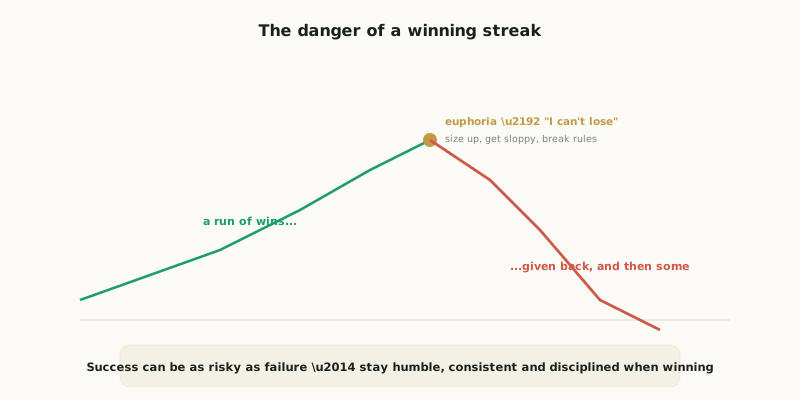
A winning streak breeds euphoria and overconfidence (the overconfidence link), and these lead, almost predictably, to: increasing risk recklessly (sizing up beyond the plan because "I can't lose right now") — so the inevitable loss is far bigger; sloppiness (skipping analysis, taking marginal setups, breaking rules because you're "hot") — degrading the very edge that produced the wins; overtrading (euphoria spurs more, lower-quality trades); mistaking luck for skill (attributing a streak entirely to brilliance, ignoring the role of variance); and complacency about risk. The feeling of invincibility is precisely the danger — so treat euphoria, like despair, as a warning sign that your judgement may be compromised.
The result of these traps is depressingly common: traders give back their winning-streak gains — and often more — when the overconfidence leads them to abandon discipline and a loss finally hits a now-oversized, recklessly-managed position. The streak that felt like proof of mastery becomes the setup for a damaging loss. This is why the adage holds that it's not the losing streaks that ruin traders so much as the overconfidence after winning streaks: losing streaks are painful but expected, prompting caution and tighter risk; winning streaks lull you into dropping your guard exactly when your positions may be largest. Many of the worst blow-ups in trading follow directly on the heels of a hot streak — the euphoria of success, not the despair of failure, doing the damage. The psychological mechanism is clear: success inflates the ego and the perception of skill, which erodes the humility and discipline that risk management depends on, which leads to the reckless behaviour that the eventual, inevitable loss then punishes severely.
Skill, luck and the role of variance
A key part of why winning streaks mislead is the difficulty of separating skill from luck. Trading outcomes are heavily influenced by variance (randomness): even a sound strategy with a genuine edge will produce streaks of wins and losses purely by chance — a run of wins does not, by itself, prove your skill has improved or that you've "cracked it" (just as a losing streak doesn't prove you've lost your edge — the process-vs-outcome point). The overconfident trader, though, attributes the winning streak entirely to their own brilliance, concluding they're better than they are, and therefore that they can take bigger risks and bend the rules safely. This is a classic error: confusing a favourable run of variance with a permanent leap in ability.
The reality is that markets revert — hot streaks end, variance turns, and the trader who sized up and got sloppy on the assumption of invincibility is then badly exposed. Recognising the role of luck and variance is therefore not false modesty but accurate self-assessment, and it's protective: if you understand that some of your winning streak is variance (which it always is, to a degree), you'll resist the urge to conclude you're suddenly unbeatable, and you'll keep your risk and discipline steady. This is where process over outcome thinking is invaluable: judging yourself by whether you followed your sound process — not by the streak of good outcomes — keeps you grounded through both winning and losing runs, immune to both the euphoria of a hot streak and the despair of a cold one. Humility about the role of variance is, paradoxically, what protects the gains a winning streak produces.
How to handle a winning streak
Handling a winning streak well comes down to doing nothing different — staying disciplined, humble and consistent precisely when success tempts you to deviate. The central principle is to stick to the process and rules that produced the wins: a winning streak is not a licence to abandon what's working. Keep taking the same quality of setups by the same criteria; keep doing the analysis, the journaling, the risk management you did before; don't get sloppy or marginal because you feel hot. The discipline that produced the streak is what should continue it — deviating from it is how you end it.
Concretely: don't increase risk impulsively. Keep your risk per trade consistent — the euphoric urge to "press your advantage" by sizing up dramatically is exactly the trap; any increase in position size should come only from your growing account equity via your normal (anti-martingale) sizing rules, not from an emotional "I'm on fire" jump. Stay humble — actively remind yourself that variance is part of the streak, that markets revert, and that a run of wins doesn't make you invincible (the role of luck, above). Guard against complacency — keep your risk management, stops and routine fully in place; don't let success erode the disciplines that protect you. Monitor your emotional state — just as you'd watch for tilt after losses, watch for euphoria after wins: if you notice feelings of invincibility, of "I can't lose," of wanting to bet big — treat that as a clear cue to be extra careful and disciplined, not less. And optionally, some traders periodically bank or withdraw a portion of profits, locking in some of the streak's gains rather than letting all their swollen equity ride into the next, overconfident trade. The honest, wellbeing-minded framing: winning streaks feel great but are a psychological danger zone — euphoria and overconfidence lead to reckless risk, sloppiness and giving it all back. The skill is to stay disciplined, humble and consistent when winning: keep your process and risk steady, respect the role of variance, guard against complacency, and treat euphoria as the warning sign it is. The same discipline that protects you in losses protects you in wins — don't let success make you the architect of your own undoing. Enjoy the streak, but don't believe it.
Discipline in both directions
The deepest lesson of winning streaks is that discipline must work in both directions — and most traders only guard one. Almost everyone braces for losing streaks: they know drawdowns are painful and try to manage their emotions through them. Far fewer think to guard against winning streaks, because winning doesn't feel like a threat. But the consistent, disciplined trader treats both as states to manage, because both are largely products of variance and both can corrupt judgement — losing streaks toward fear and revenge, winning streaks toward euphoria and recklessness. The same emotional detachment that keeps you steady when losing should keep you steady when winning: neither despair nor elation should be allowed to change how you size, what setups you take, or whether you follow your rules.
This is where consistency itself becomes the protection. If your process, your risk per trade, and your setup criteria stay the same regardless of recent results — unchanged by a cold streak or a hot one — then variance can't lure you into the behaviours that turn a normal losing run into a blow-up or a normal winning run into a give-back. The trader who sizes the same after five wins as after five losses, who takes the same quality of setups whether feeling invincible or shaken, has neutralised the emotional swings that variance produces. Practically, this means building the habit of emotional self-monitoring in both directions: just as you'd notice rising tilt after losses, notice rising euphoria after wins, and respond to either by returning to your process and your normal risk. A simple discipline some traders use is to treat any strong emotional state — elation or despair — as a signal to pause, step back, and reconnect with the plan before trading further. The honest framing: handling winning streaks well is really just the principle of disciplined consistency applied to the half of variance that feels good. Stay the same trader in success as in failure — same process, same risk, same humility — and the streaks, in both directions, lose their power to derail you. That even-keeled consistency, immune to both the highs and the lows, is the hallmark of a trader built to last.
Winning streaks are dangerous — success can ruin a trader as surely as failure. A run of wins breeds euphoria and overconfidence, leading to reckless risk (sizing up beyond plan), sloppiness (breaking rules, marginal setups), overtrading, and mistaking luck for skill — so traders often give back their gains (and more) when a loss hits an oversized position. It's often the overconfidence after winning streaks, not the losing streaks, that does the damage. Remember the role of variance: a streak is partly luck, markets revert, and a run of wins doesn't make you invincible (process over outcome). Handle it by doing nothing different: stick to your process and rules, keep risk per trade consistent (no impulsive sizing up), stay humble, guard against complacency, and treat euphoria as a warning sign. Enjoy the streak, but don't believe it.