The urge to always be in the market — to be doing something, taking action, not missing out — is one of the most natural and most expensive habits in trading. It has a name: overtrading, the tendency to trade too frequently or too large, taking trades that do not truly meet your criteria. Overtrading feels productive — surely more activity means more opportunity? — but it quietly erodes an edge through accumulating costs and poor-quality setups, and it is one of the most common reasons otherwise-capable traders fail to profit. Learning to not trade, to sit on your hands, is paradoxically one of the hardest and most valuable skills there is. This guide explains what overtrading is, why it happens, why it hurts, and how to overcome it.
It is closely tied to patience and discipline, and it is often driven by the emotions covered in revenge trading and FOMO.
Key takeaways
Q: What is overtrading?
A: Overtrading is trading too frequently or with too-large size relative to a sound plan — taking trades that don't meet your criteria, often driven by boredom, impatience, revenge or overconfidence rather than a genuine edge. It tends to erode profits through costs and poor-quality setups.
Q: Why is overtrading harmful?
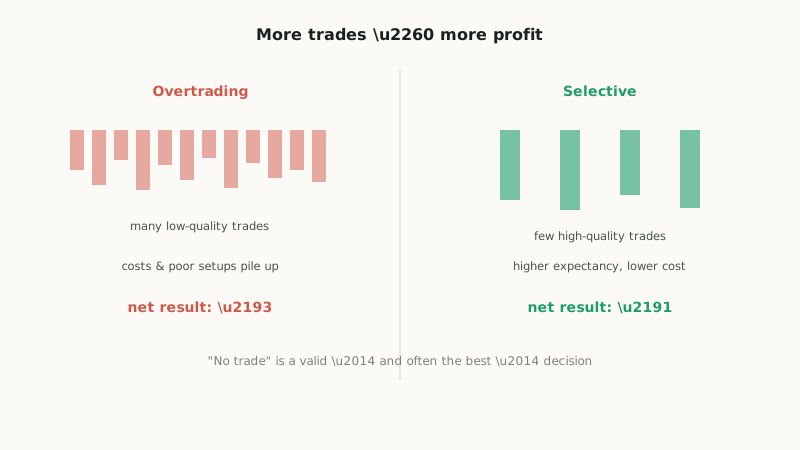
A: Overtrading harms results in several ways: trading costs accumulate across many trades, lower-quality setups have worse expectancy, and frequent trading causes fatigue and emotional exhaustion that degrade decisions. More trades do not mean more profit — often the opposite.
Q: How do you stop overtrading?
A: Trade only setups that meet your written plan's criteria, be patient and selective, set limits on the number of trades, and recognise the emotional drivers (boredom, FOMO, revenge) behind the urge to trade. Accept that not trading is a valid and often the best decision.
What overtrading is
Overtrading is trading more than a sound plan justifies — taking trades too frequently, or in sizes too large, that do not meet your defined criteria for a genuine edge. The hallmark of overtrading is trades driven by something other than your edge: by impulse, emotion, boredom or habit rather than by a setup that actually matches your strategy. The overtrader is not patiently waiting for quality opportunities and acting on them; they are generating activity, finding reasons to be in the market, treating trading as something to do rather than a disciplined response to specific conditions.
The deceptive thing about overtrading is that it masquerades as diligence. Being constantly active feels like working hard at trading, like taking opportunities and staying engaged. But trading is one of the rare activities where more effort, in the form of more trades, usually produces worse results. The edge lives in the quality of the setups you take, not the quantity; and taking more, lower-quality trades dilutes rather than multiplies your edge. Recognising overtrading for what it is — activity mistaken for productivity, quantity mistaken for opportunity — is the first step to overcoming it. The cure begins with understanding that in trading, doing less is often doing better.
Why we overtrade
Overtrading is driven by emotional and psychological forces, and recognising them is key to controlling it. Boredom is a major culprit: waiting patiently for quality setups is dull, and the restless need for action drives traders to take trades just to be doing something. Fear of missing out (FOMO) pushes traders to chase moves they have no real setup for, unwilling to watch the market move without them. Revenge trading — the urge to immediately win back a loss — drives a flurry of impulsive trades after a setback, as covered in the revenge-trading guide. And overconfidence, especially after a winning streak, leads traders to take marginal trades they would normally skip, feeling invincible.
Underlying many of these is a deeper issue: the feeling that one must always be in the market, that sitting in cash is somehow failing or missing out. This compulsion to be constantly positioned is perhaps the core driver of overtrading, and it is fundamentally mistaken — being out of the market, waiting, is a perfectly valid and often optimal position. For some, the urge to trade can take on a genuinely compulsive, addiction-like quality, where trading becomes about the stimulation and action rather than the edge. If trading ever starts to feel compulsive — something you cannot stop doing even when you know you should, or that is harming your finances or wellbeing — it is wise to step back, take a real break, and consider seeking support. The emotional drivers of overtrading are powerful, and naming them is the first step toward not being ruled by them.
The costs of overtrading
Overtrading damages results through several compounding channels. The most direct is trading costs: every trade pays the spread (and possibly commission), and across many trades these costs accumulate into a significant drag. A trader taking five times as many trades pays roughly five times the costs, and for frequent trading those costs can consume a meaningful chunk of — or entirely erase — a modest edge. The arithmetic is unforgiving: costs scale with trade count, so overtrading multiplies the friction working against you.
Beyond costs, overtrading means taking lower-quality setups. By definition, the overtrader takes trades that do not meet their best criteria — marginal, forced, or impulsive trades with worse expectancy than their A+ setups. Diluting your trading with poor setups drags down your overall expectancy, the very thing that determines profitability (as the expectancy guide explains). A few excellent trades have higher combined expectancy than those same trades plus a dozen mediocre ones. Overtrading also causes fatigue and emotional exhaustion: constant trading is mentally draining, and tired, depleted traders make worse decisions, creating a vicious cycle. And it almost always involves deviating from the plan, taking trades the strategy does not sanction, which undermines the discipline and consistency that success depends on. The combined effect — higher costs, worse setups, fatigue, indiscipline — is why overtrading so reliably turns a potential edge into a loss.
Overtrading attacks your edge from every side: costs scale with trade count, marginal setups drag down expectancy, and fatigue degrades decisions. A handful of A+ trades has higher combined expectancy than those same trades buried among a dozen mediocre ones. In trading, doing less is usually doing better.
Becoming selective
The antidote to overtrading is selectivity — trading only setups that genuinely meet your criteria, and being content to wait for them. This rests on the principles developed elsewhere on the site. A clear trading plan with defined entry criteria is the foundation: it specifies exactly what a valid setup looks like, so you can objectively judge whether a potential trade qualifies or is just an impulse. If it does not meet the plan, you do not take it — full stop. The plan turns selectivity from a vague intention into a checkable rule.
Patience (the subject of its own guide) is the companion virtue: the willingness to wait, sometimes for a long time, for a quality setup, and to do nothing in the meantime. This is where the crucial mindset shift lies: accepting that not trading is a valid, active decision — indeed often the best one. "No trade" is a choice, not a failure; sitting in cash waiting for an A+ setup is exactly what a disciplined trader should do most of the time. Some traders enforce selectivity with explicit limits — a maximum number of trades per day or week — which forces them to be choosy and to save their trades for the best opportunities. Above all, recognising the emotional drivers (boredom, FOMO, revenge, overconfidence) when they arise, and naming the urge to overtrade for what it is, lets you resist acting on it. Selectivity, patience and self-awareness together transform overtrading into the disciplined, quality-focused approach that lets an edge actually produce profit — and they make trading calmer and more sustainable in the bargain.
Signs you are overtrading
Because overtrading disguises itself as diligence, it helps to know the concrete signs that you have crossed from active trading into overtrading. A telling test is whether you can clearly explain why you took each trade in terms of your plan's criteria. If you find yourself in trades you cannot justify — trades where the honest answer to "why did I take this?" is "I was bored," "I didn't want to miss out," or "I wanted to make back that loss" rather than "it matched my setup" — you are overtrading. A trade you cannot explain by your plan is, almost by definition, one you should not have taken.
Other signs are behavioural and emotional. Trading out of boredom or restlessness — reaching for a trade simply because nothing is happening and you feel the itch to act — is a clear flag. Feeling compelled to be in the market at all times, uncomfortable holding cash, is another. So is noticing that your trading costs are consuming a large share of your results, a quantitative symptom that frequent trading is eating your edge (your journal will reveal this). Trading fatigue — feeling mentally drained or emotionally frayed from constant activity — signals you are doing too much. And taking trades on timeframes or pairs outside your plan, hunting ever more markets for action, is a classic overtrading pattern.
The trading journal is invaluable here, because it lets you audit your trades objectively after the fact: reviewing your record, you can tag which trades genuinely met your criteria and which were impulsive, boredom-driven or revenge trades, quantifying how much overtrading is costing you. This honest review often reveals that a trader's losses are concentrated in exactly these unplanned, impulsive trades — and that cutting them would transform the results. If you recognise these signs in your own trading, the remedy is the selectivity and patience described above: return to taking only setups that match your plan, and treat the urge to do more as the warning sign it is.
Overtrading is trading too often or too large, taking trades that don't meet your criteria — driven by boredom, FOMO, revenge, overconfidence, and the false belief you must always be in the market. It erodes your edge through accumulating costs, lower-quality setups, fatigue and indiscipline; more trades usually mean less profit. Watch for the signs: trades you can't justify by your plan, trading from boredom, costs eating your results, fatigue. The cure is selectivity and patience — trade only setups that match your plan, accept that "no trade" is valid, and if trading ever feels compulsive, step back and seek support.