Following the crowd feels safe — surely all those people can't be wrong? In markets, that instinct is a trap. The herd is often most confident precisely when it's most wrong: piling into a rally at the top, panicking out at the bottom, and dragging the latecomers — who joined because everyone else had — into the worst possible entries. Herd mentality is one of the most powerful and costly forces in trading psychology, and resisting it is central to trading well. This guide explains herd mentality: what it is, why it's so dangerous, and how to trade your own plan instead.
It's the engine behind FOMO, supercharged by social media, and the human force underlying bubbles and the greater-fool dynamic.
Key takeaways
Q: What is herd mentality in trading?
A: Herd mentality is the tendency to follow what the crowd is doing — buying because everyone else is buying, selling because everyone else is selling — rather than acting on independent analysis. It's driven by the comfort of conformity and the fear of missing out, and it's amplified by social media and financial news, where seeing others profit creates pressure to join in.
Q: Why is herd mentality dangerous?
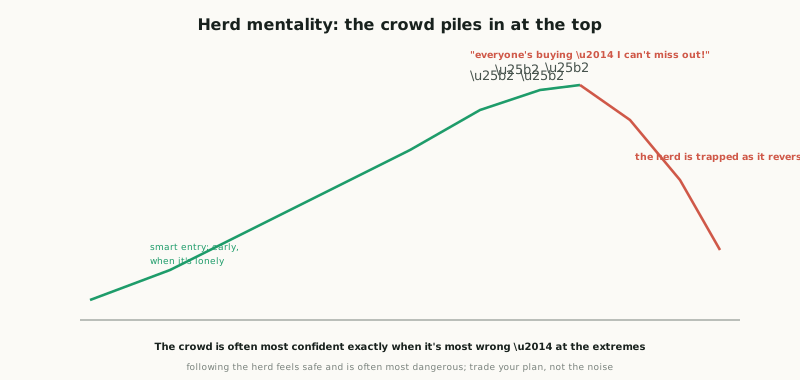
A: Because the crowd is often most confident exactly when it's most wrong — at market extremes. Herd buying drives prices to unsustainable highs (bubbles) just as the move is ending, trapping latecomers, and herd panic drives prices to lows just as they're bottoming. Following the herd tends to get you in late and out late, buying high on euphoria and selling low on fear — the opposite of what works.
Q: How do you avoid herd mentality?
A: By trading your own plan based on your own analysis, not on what the crowd or social media is doing. Define your setups and rules in advance and follow them regardless of the noise; be especially sceptical when a trade feels 'obvious' because everyone is talking about it; and recognise FOMO as a warning sign rather than a signal. Independent thinking and a disciplined process are the antidotes to herd behaviour.
What it is and why it feels safe
Herd mentality is the tendency to follow what the crowd is doing — buying because everyone else is buying, selling because everyone else is selling — rather than acting on your own independent analysis. It's deeply rooted in human psychology: conformity feels safe (there's comfort and reduced personal responsibility in doing what everyone else does), and the fear of missing out on gains others are making is a powerful pull. In markets, the herd instinct is amplified by social media and financial news, where a constant stream of others' apparent profits, hot tips and breathless commentary creates intense pressure to join in — when a particular trade or asset is "all anyone is talking about," the social pressure to participate can overwhelm independent judgement. The instinct made evolutionary sense (following the group often aided survival), but in trading it frequently leads you exactly where you don't want to go.
Why the crowd is most wrong at the extremes
Here's the dangerous truth that makes herd-following so costly: the crowd is often most confident exactly when it's most wrong — at the extremes. Consider how a herd move unfolds. As a market rises, more and more people pile in, each drawn by the rising price and the others already in; this buying drives the price higher still, which attracts even more buyers, in a self-reinforcing loop of euphoria — a bubble. By the time the move is "obvious" and everyone is talking about it and piling in, the buying is nearly exhausted, the price is unsustainably high, and the move is ending — so the latecomers (who joined precisely because the crowd had) buy right at the top and are trapped when it reverses. The same dynamic runs in reverse at bottoms: herd panic drives prices to lows just as selling exhausts itself and the market is about to turn, so the herd sells the bottom. The net effect of following the herd is to get you in late and out late — buying high on euphoria and selling low on fear — the precise opposite of profitable trading. This is why the most painful entries so often feel the most comfortable (everyone agrees!) and the best ones feel lonely (you're early, when few agree). The comfort of the crowd is, in markets, frequently a warning sign.
The antidote is independent thinking and a disciplined process. The core principle: trade your own plan based on your own analysis, not on what the crowd or social media is doing. Define your setups and rules in advance, and follow them regardless of the noise — a predefined plan is your anchor against the social pull, because it tells you what you decided when you were thinking clearly, not what the excited crowd is feeling now. Be especially sceptical when a trade feels "obvious" because everyone is talking about it; that very obviousness often means the crowd is already positioned and the easy move is gone (the link to FOMO is direct — FOMO is the herd instinct urging you in late). Treat FOMO as a warning sign, not a signal: the urge to chase because others are profiting is precisely the feeling that leads to top-buying. None of this means being contrarian for its own sake (blindly fading the crowd is just herd-following inverted, and crowds are sometimes right, especially mid-trend); it means thinking independently — forming your own view, acting on your own rules, and being aware of the crowd's influence so it doesn't make your decisions for you. Limiting exposure to the hype (curating your social media intake) and trusting your process over the noise are practical defences. The honest framing: herd mentality is following the crowd — buying because others buy, selling because others sell — rather than your own analysis, driven by the comfort of conformity and FOMO and amplified by social media. It's dangerous because the crowd is most confident at the extremes, where it's most wrong: herd buying inflates bubbles and traps latecomers at the top, herd panic sells the bottom, so following it gets you in late and out late — buying high, selling low. Avoid it by trading your own predefined plan regardless of the noise, being sceptical of "obvious" trades, treating FOMO as a warning not a signal, and thinking independently (not blindly contrarian); manage risk.
Thinking independently without being contrarian
An important nuance keeps independent thinking from curdling into reflexive contrarianism: the crowd is not always wrong. For most of a trend's life, the crowd is broadly right — a rising market rises because the majority are buying, and "the trend is your friend" precisely because going with the prevailing flow often works. The herd is dangerous mainly at the extremes, where its confidence is most stretched and the move is exhausting itself; in the middle of a trend, fighting the crowd is just as costly as blindly following it at the top. This is why blind contrarianism — automatically fading whatever the crowd does — is simply herd-following inverted, an equally lazy substitute for thinking: the contrarian who reflexively shorts every rally because "the crowd is long" gets run over by trends just as the herd-follower gets trapped at tops. Neither is independent thought; both let the crowd dictate the decision, merely with opposite signs.
Genuine independence means forming your own view from your own analysis and acting on your own rules — sometimes that aligns with the crowd, sometimes against it, and the alignment is incidental rather than the basis of the decision. The crowd's behaviour becomes information to interpret, not an instruction to obey or defy: extreme, euphoric consensus (everyone bullish, retail piling in, the trade "obvious" on every feed) is a caution flag worth weighing, while a healthy trend with normal participation is not. Sentiment, in other words, is one input among many — most useful at the extremes as a contrarian caution, largely neutral the rest of the time. Practically, the defences are: rely on your predefined plan so the crowd can't make your decisions for you; curate your information diet so you're not marinating in hype (limiting the social-media feeds that amplify herding); and treat the feeling of social pressure itself — the urge to join because everyone else is — as a prompt to pause and check your own analysis, not as a signal. The goal is to be aware of the herd without being governed by it, in either direction. The honest reminder: the crowd is often right mid-trend and dangerous at the extremes, so don't blindly follow or blindly fade it — think independently from your own plan, treat extreme consensus as a caution flag rather than an instruction, and use sentiment as one input, staying aware of the herd's pull without letting it govern you.
Herd mentality is following the crowd — buying because others buy, selling because others sell — instead of your own analysis, driven by the comfort of conformity and FOMO and amplified by social media. It's dangerous because the crowd is most confident at the extremes, where it's most wrong: herd buying inflates bubbles and traps latecomers at the top, herd panic sells the bottom — so following it gets you in late and out late, buying high and selling low. The comfortable, "obvious," everyone's-doing-it trade is often the warning sign. Avoid it by trading your own predefined plan regardless of the noise, being sceptical of obvious trades, treating FOMO as a warning not a signal, and thinking independently (not blindly contrarian — that's just inverted herding). Awareness of the crowd's pull is most of the defence.