Open any feed and trading looks easy and lucrative — screenshots of huge wins, sports cars, beach offices, effortless riches, and a "guru" promising to show you the way for a small fee. Almost none of it is what it seems. Behind the curated success lies survivorship bias, hidden losses, a silent majority who fail, and a thriving industry of finfluencers who profit from selling the dream rather than living it. Believing the highlight reel can wreck both your trading and your wellbeing. This guide explains social media and trading honestly: the distortions, the dangers of finfluencers and scams, the harm of comparison, and how to handle it all healthily.
It feeds the FOMO that drives impulsive trades, builds the echo chambers behind confirmation bias, and distorts the realistic learning curve.
Key takeaways
Q: Why is social media bad for traders?
A: Because it presents a heavily distorted picture. It's full of survivorship bias and curated success — you see the wins and the lifestyle, never the losses or the large majority who fail. It fosters harmful social comparison, FOMO and impulsive trading, creates confirmation-bias echo chambers, and is rife with finfluencers and scams. It can damage both your trading and your mental health.
Q: Should you trust trading finfluencers?
A: Be deeply sceptical. Many 'trading gurus' make their money selling courses, signals, 'mentorships' or affiliate broker sign-ups — not from trading itself — so their incentive is to sell you a dream, not to make you a trader. Track records are rarely verifiable, and outright scams (fake results, signal services, pump-and-dumps, managed-account fraud) are common. Never follow signals blindly or hand over money.
Q: How do you handle social media as a trader?
A: Recognise that what you see is curated and not representative, be sceptical of gurus and scams, and stop comparing your journey to others' — focus on your own process and progress. Curate your inputs toward genuine, honest sources, avoid echo chambers, take breaks, and protect your mental health. If it's affecting your wellbeing, step back and seek support.
The distortions and dangers
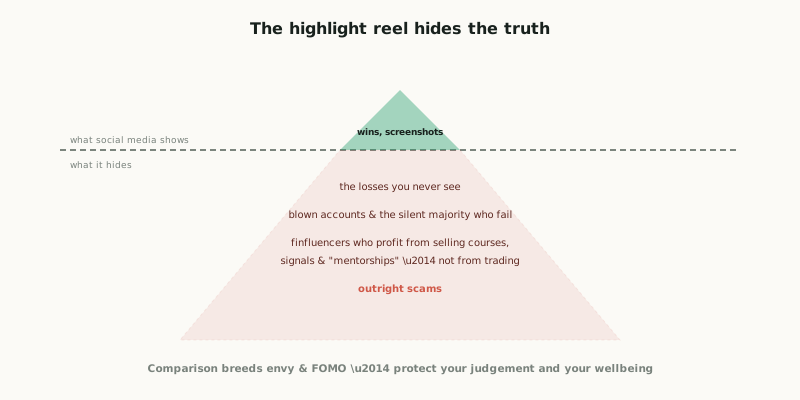
Social media's picture of trading is dangerously distorted. Survivorship bias and fake success: feeds are full of people flaunting wins, profits and luxury — but you never see the losses, the blown accounts, or the silent majority who quietly fail. The curated highlight reels create a false impression that everyone's getting rich, badly distorting your expectations. Finfluencers: many "trading gurus" make their money selling courses, signal services, "mentorships" and affiliate broker sign-ups — not from trading — so their real incentive is to sell you a dream, and their flashy "results" are rarely verifiable. Outright scams are rampant: fabricated track records, signal-selling cons, pump-and-dumps, and "managed account" frauds that simply take your money. Social comparison: constantly measuring your results and journey against others' (often fake) success breeds envy, inadequacy, impatience and pressure — which pushes you to over-risk, abandon your process, chase others' strategies, or take trades just to "keep up." And the noise and herd — a flood of conflicting hype and groupthink — fuels impulsive, FOMO-driven trading and confirmation-bias echo chambers. All of this harms not just your trading but your mental health.
It's worth dwelling on the finfluencer and scam problem, because it's where real money gets lost beyond the markets themselves. The simple, clarifying heuristic: most people selling trading education, signals or "mentorship" are not successful traders — if they could reliably make money trading, they wouldn't need to sell you a course. Their business is the selling, and you are the product. This doesn't mean all educational content is worthless (some is genuinely honest and useful), but it means you should treat anyone monetising a trading "secret" with deep scepticism, verify what little can be verified, and never follow signals blindly or hand money to a stranger promising returns. The flashier and more guaranteed the promise, the more certain the con. Scam awareness here is not cynicism — it's basic financial self-defence.
Handling it healthily
Given all this, the goal is to protect both your trading and your wellbeing from social media's distortions. First, recognise the curation and survivorship bias: what you see is not representative — it's a filtered highlight reel — so simply discount the flaunting; the lambo screenshots tell you nothing true about trading. Second, be deeply sceptical of finfluencers, signals and scams: assume "courses/signals/mentorship for sale" signals a sales business rather than trading success, never follow signals blindly, and never hand over money. Third, stop comparing your journey to others': everyone's path, circumstances, capital and timeline differ — and much of the "success" you're comparing against is fake — so measure your progress against your own process and goals, not someone else's highlight reel (the process-focus and learning-curve links). Fourth, curate your inputs: limit or unfollow toxic, hype-driven content, seek out the few genuinely honest and educational sources, deliberately avoid echo chambers, and take breaks from the feed.
Finally, and most importantly, protect your mental health. The relentless comparison, hype and pressure of trading social media can genuinely harm wellbeing — fostering anxiety, feelings of inadequacy, impatience, and an unhealthy, compulsive relationship with the feed and with trading itself. If you notice it affecting how you feel or how you trade — making you anxious, envious, impatient, or pushing you toward reckless decisions — it's both reasonable and wise to step back: trading is hard enough without the added noise and false comparisons. Be kind to yourself, keep your own counsel, and if the toll on your wellbeing is significant, talking to someone you trust or seeking appropriate support is a sensible step. Used carefully — for genuine learning or honest community, rather than for validation, signals or comparison — social media can have a place; but its default influence on traders is corrosive, and treating it with healthy scepticism and firm boundaries protects both your account and your mind. The honest framing: social media and finfluencers are a largely toxic influence on traders — full of survivorship bias and fake success (you see wins, never losses or the failing majority), finfluencers who profit from selling courses/signals rather than trading, and outright scams; social comparison that breeds envy, inadequacy and impatience and pushes you to over-risk or abandon your process; and a noise/herd/hype environment fuelling impulsive, FOMO-driven trading and echo chambers — all of which can harm your trading and your mental health. Handle it by recognising the curation, being deeply sceptical of gurus/signals/scams (never blindly follow or hand over money), not comparing your journey to others', curating your inputs, taking breaks, and protecting your wellbeing — stepping back, and seeking support, if it's harming you. Use social media for genuine learning, not validation or signals.
The good side, used deliberately
For all its dangers, social media isn't only a hazard — used deliberately and with firm boundaries, it can offer genuine value, and an honest treatment should acknowledge that. There is real, high-quality educational content out there: experienced practitioners and reputable sources who explain concepts clearly and honestly, without selling a dream. There's value in community — connecting with other developing traders can reduce the isolation of a solitary pursuit, provide encouragement through the hard stages, and expose you to ideas and perspectives you'd never reach alone. Some traders find genuine benefit in accountability — sharing their process (not their P&L) with a trusted peer or group that helps them stick to their plan. And following thoughtful market commentary can broaden your understanding of what's moving markets. The key is that these benefits come from using social media as a learning and connection tool, on your terms — not as a source of signals, validation, or comparison.
The discipline, then, is to curate ruthlessly and engage intentionally. Seek out the honest educators — typically those who emphasise risk, realistic expectations and process over profit screenshots, who acknowledge losses and uncertainty, and who aren't constantly selling something (the absence of a hard sell is one of the better signals of credibility). Unfollow or mute the hype, the flaunting, and anyone promising guaranteed returns. Favour communities focused on learning and process rather than tip-trading and lifestyle flexing. Engage to learn and connect, not to seek validation or to measure yourself against others. And set boundaries: limit your time, take regular breaks, and stay alert to how the content makes you feel — if a source or community starts breeding anxiety, envy, FOMO or impulsive urges, that's your cue to step away from it. The realistic conclusion is balanced: social media's default influence on traders is corrosive — the survivorship bias, finfluencer selling, scams and comparison genuinely harm most who consume it passively — but with deliberate curation, healthy scepticism and firm boundaries, it can be turned into a modest net positive for learning and connection. The difference lies entirely in how you use it: as a discerning learner protecting your judgement and wellbeing, or as a passive consumer of a highlight reel that distorts both.
Social media and finfluencers are a largely toxic influence on traders. Survivorship bias / fake success: you see wins and lifestyle, never the losses or the failing majority — distorting expectations. Finfluencers: most profit from selling courses/signals/mentorships, not trading (if they could trade, they wouldn't need to sell you) — and scams are rife; never follow signals blindly or hand over money. Social comparison breeds envy, inadequacy and impatience, pushing you to over-risk or abandon your process; the hype/herd fuels FOMO and echo chambers. It harms your trading and your mental health. Handle it: recognise the curation (it's not representative), be deeply sceptical of gurus/scams, don't compare your journey to others' (focus on your own process and progress), curate inputs, take breaks, and protect your wellbeing — step back, and seek support, if it's harming you. Use it for genuine learning, not validation or signals.