Why is the US dollar so dominant? Part of the answer is oil. For decades, oil has been priced and traded in dollars worldwide, creating a built-in global demand for the currency. The "petrodollar" system is a fascinating piece of macro plumbing that helps explain dollar strength and reserve status — and it's the subject of one of finance's most heated debates. This guide explains the petrodollar system: what it is, how it supports the dollar, and the de-dollarization question — handled with balance, not hype.
It's a key pillar beneath reserve-currency status, sits at the intersection of commodities and currencies, and is increasingly bound up with geopolitics.
Key takeaways
Q: What is the petrodollar system?
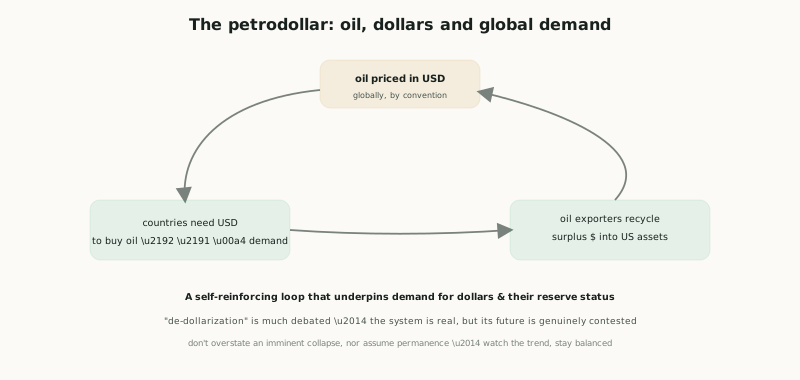
A: The petrodollar system refers to the long-standing practice of pricing and trading oil in US dollars on global markets. Because nearly all countries need oil and it's bought in dollars, they need to hold and acquire dollars to pay for it — creating a structural, built-in global demand for the currency. The term also captures 'petrodollar recycling,' where oil-exporting nations invest their dollar surpluses back into US assets like Treasuries.
Q: How does the petrodollar support the US dollar?
A: In two reinforcing ways. First, pricing oil in dollars means countries worldwide must hold dollars to buy energy, sustaining demand for the currency regardless of trade with the US itself. Second, oil exporters recycle their large dollar surpluses into US assets — especially government bonds — which helps fund US borrowing and supports the dollar's role. Together these underpin the dollar's status as the world's dominant reserve currency.
Q: Is the petrodollar system ending (de-dollarization)?
A: It's one of the most debated topics in macro, and the honest answer is uncertain. Some countries have begun settling some energy trades in other currencies, and there's a long-running push by various nations to reduce dependence on the dollar ('de-dollarization'). But the dollar's dominance rests on deep, liquid markets, trust, and network effects that are hard to replace quickly. The system is real and evolving, but predictions of imminent collapse have repeatedly proven premature — watch the trend without overstating it.
What it is
The petrodollar system refers to the long-standing practice of pricing and trading oil in US dollars on global markets. The logic is simple but powerful: because nearly all countries need oil, and oil is bought in dollars, they need to hold and acquire dollars to pay for it — creating a structural, built-in global demand for the currency that exists regardless of whether a country trades much with the United States itself. A nation importing oil must obtain dollars to do so, which means holding dollar reserves and accepting dollars in trade — a vast, continuous source of demand woven into the fabric of the global energy market. The term also captures a second mechanism: "petrodollar recycling," where oil-exporting nations invest their dollar surpluses back into US assets like Treasuries. Oil exporters earn enormous dollar revenues they can't fully spend domestically, so they park those dollars in US financial assets — recycling the money back into the US system. Together, these two flows — demand for dollars to buy oil, and recycling of oil dollars into US assets — form the petrodollar system.
The petrodollar at a glance
How it supports the dollar, and the de-dollarization debate
The petrodollar supports the dollar in two reinforcing ways. First, pricing oil in dollars means countries worldwide must hold dollars to buy energy, sustaining demand for the currency regardless of trade with the US itself — a baseline of global dollar demand independent of America's own economy. Second, oil exporters recycle their large dollar surpluses into US assets — especially government bonds — which helps fund US borrowing (keeping US yields lower than they'd otherwise be) and reinforces the dollar's central role. Together, these underpin the dollar's status as the world's dominant reserve currency: the petrodollar is one of several pillars (alongside the depth of US markets, the rule of law, and the dollar's safe-haven role) that make the dollar the currency the world defaults to. For a forex trader, this matters as context: it's a structural reason the dollar enjoys persistent demand and dominance, part of why USD sits on one side of most major pairs and why dollar liquidity is so deep.
Then there's the de-dollarization debate — one of the most heated and recurring topics in macro — and here intellectual honesty matters more than a hot take. The honest answer is genuinely uncertain. On one hand, there are real developments: some countries have begun settling some energy and other trades in other currencies, there's a long-running push by various nations (often for geopolitical reasons) to reduce dependence on the dollar, and the weaponisation of the dollar through sanctions has motivated some to seek alternatives. These trends are real and worth watching. On the other hand, the dollar's dominance rests on deep, liquid markets, trust built over decades, and powerful network effects that are hard to replace quickly — there is, currently, no alternative currency that matches the dollar's combination of scale, liquidity, openness and trust, and shifting the entire global system is a slow, formidable undertaking. The crucial balanced point: the system is real and evolving, but predictions of its imminent collapse have repeatedly proven premature — "the death of the dollar" has been forecast for decades and keeps not happening, while at the same time it would be naive to assume the current order is permanent and unchanging. The sensible trader's stance is to watch the trend without overstating it: take genuine de-dollarization developments seriously as a slow-moving structural factor, but be deeply sceptical of dramatic "dollar collapse" narratives (which are often pushed by people selling something — gold, crypto, or a worldview). Avoid both errors — dismissing change entirely, and betting on imminent upheaval — and instead hold a calm, evidence-based view that the dollar is dominant but not divinely permanent, its position evolving gradually in ways worth monitoring over years, not days. The honest framing: the petrodollar system is the practice of pricing oil in dollars globally, which creates structural demand for the dollar (countries need it to buy oil) and feeds petrodollar recycling (exporters parking dollar surpluses in US assets), together underpinning the dollar's reserve status. De-dollarization — some trade shifting to other currencies and a push to reduce dollar dependence — is real and worth watching, but the dollar's dominance rests on deep markets, trust and network effects that are hard to replace, and predictions of imminent collapse have repeatedly proven premature. Watch the trend without overstating it: dominant but not permanent.
A brief history, and what to watch
The petrodollar system has historical roots worth knowing. After the post-war Bretton Woods system (which tied the dollar to gold) ended in the early 1970s, arrangements emerged in which major oil exporters priced their oil in dollars and recycled the proceeds into US assets — cementing the dollar's central role in global energy and finance just as its gold backing fell away. Over the following decades this became the default structure of the oil market and a key pillar of dollar dominance. Knowing this history helps frame the present: the petrodollar wasn't an immutable law of nature but a historically contingent arrangement — which is exactly why its future is a legitimate (if often overhyped) question rather than a settled fact.
For a trader, the right response is to watch the slow-moving structural signals rather than react to breathless headlines. Genuine indicators of gradual change include: the dollar's share of global reserves (tracked by the IMF — a slow, multi-year drift, not a cliff), central-bank gold buying (some nations diversifying reserves away from dollars), bilateral trade deals settled in non-dollar currencies (e.g. some oil and commodity trades in other currencies), and the development of alternative payment systems that bypass dollar infrastructure. These are real, monitorable trends — but they move over years and decades, and none has yet meaningfully dethroned the dollar, whose advantages in depth, liquidity and trust remain unmatched. The disciplined stance, reiterating the article's balance: take these structural shifts seriously as long-horizon factors worth monitoring, but treat them as context, not day-trading signals, and be especially wary of dramatic "imminent dollar collapse" narratives, which have a long history of being wrong and are often pushed by those with something to sell (gold, crypto, doom). For practical forex trading, the petrodollar and de-dollarization are slow background forces shaping the dollar's long-term standing — useful to understand, important to monitor over years, but not a basis for short-term trades. The honest reminder: the petrodollar has historical roots in the post-Bretton-Woods 1970s arrangements to price oil in dollars, making it a contingent arrangement rather than a law of nature — so watch the slow structural signals (the dollar's reserve share, central-bank gold buying, non-dollar trade deals, alternative payment systems) as multi-year trends and context, not day-trading signals, while staying especially sceptical of dramatic "imminent collapse" narratives that have a long history of being wrong.
The petrodollar system is the practice of pricing oil in US dollars globally, which creates structural demand for the dollar (countries need dollars to buy oil) and feeds petrodollar recycling (exporters parking dollar surpluses in US assets like Treasuries) — together underpinning the dollar's reserve status. The de-dollarization debate is real — some trade is shifting to other currencies and various nations are pushing to cut dollar dependence — and worth watching as a slow-moving structural factor. But the dollar's dominance rests on deep, liquid markets, trust and network effects that are hard to replace, and predictions of imminent collapse have repeatedly proven premature. The balanced stance: watch the trend without overstating it — the dollar is dominant but not divinely permanent, and be sceptical of dramatic "dollar collapse" narratives (often sold by those with something to sell).