
When everyone is convinced the market can only go up — when the taxi driver is giving tips and the headlines scream of endless gains — who is left to buy? The theory of contrary opinion turns crowd sentiment on its head, arguing that at the extremes, the consensus is most likely to be wrong, and that the disciplined trader should be looking to fade it. It's a powerful lens on sentiment and crowded trades — but also one of the easiest theories to misapply, because the crowd is right far more often than it's wrong. This guide explains contrary opinion: the core idea, why extremes mark turning points, how to gauge sentiment, and the serious dangers of naive contrarianism.
It's deeply tied to behavioural finance and fear and greed, and the sentiment extremes it targets often coincide with bubbles and manias.
Key takeaways
Q: What is the theory of contrary opinion?
A: The theory of contrary opinion, articulated by Humphrey Neill, holds that when the crowd is overwhelmingly bullish or bearish — a sentiment extreme — the market is likely near a turning point, so going against the prevailing consensus at those extremes can be profitable. As Neill put it, 'when everyone thinks alike, everyone is likely to be wrong.'
Q: Why is the crowd wrong at extremes?
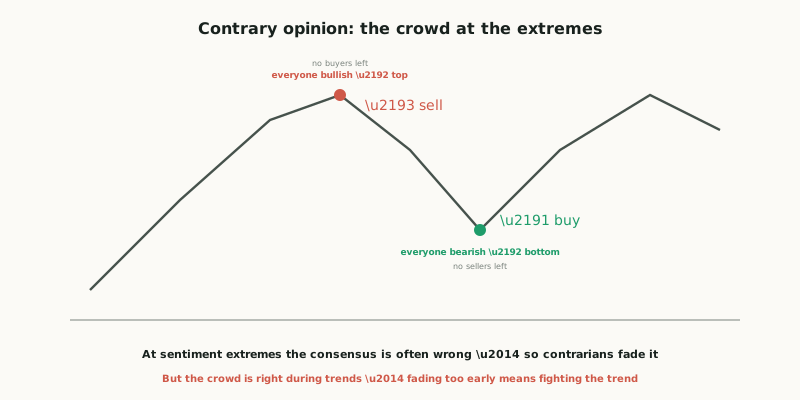
A: Because at a sentiment extreme, the buying or selling is exhausted. When everyone is bullish, everyone who intends to buy has already bought, so there are no buyers left to push prices higher and the market falls. When everyone is bearish, the selling is spent, leaving the market poised to rise. Extremes mark exhaustion, not continuation.
Q: Is contrarian trading reliable?
A: Only when applied carefully. The crowd is right most of the time — during trends — so contrarianism works only at genuine extremes, which are hard to identify. Being contrarian too early means fighting a strong trend, which is costly: the market can stay irrational longer than you can stay solvent. It requires identifying true extremes plus confirmation and timing, not simply doing the opposite of everyone.
The core idea
The theory of contrary opinion was articulated by Humphrey Neill in The Art of Contrary Thinking, and its central claim is memorably simple: "when everyone thinks alike, everyone is likely to be wrong." When the crowd becomes overwhelmingly bullish or bearish — a genuine sentiment extreme — the market is likely near a turning point, and positioning against that consensus can be profitable. The logic is grounded in a mechanical truth about markets, not mere cynicism about crowds. When everyone is bullish, everyone who is going to buy has, more or less, already bought — so there are no buyers left to push prices higher, and the path of least resistance becomes down. Conversely, when everyone is bearish, the selling is exhausted — everyone who was going to sell has sold — leaving the market poised to rise on the slightest good news. Sentiment extremes, in other words, mark exhaustion of buying or selling pressure, which is precisely why they tend to coincide with tops and bottoms. This is the same insight behind the famous investing maxims to "be fearful when others are greedy, and greedy when others are fearful," and it connects directly to behavioural finance (herding) and the cycle of fear and greed.
To apply it, contrarians try to measure crowd sentiment and spot extremes. The tools include explicit sentiment indicators and surveys (such as investor-sentiment polls), positioning data (in forex, the Commitments of Traders report and retail-positioning data from brokers), options-based measures like the put/call ratio, and softer signals — the tone of headlines, magazine covers, social-media froth, and the unmistakable sense that "everyone is talking about it." When such measures reach an extreme — near-unanimous bullishness or bearishness — the contrarian grows wary of the consensus and alert to a possible reversal.
The crucial nuance and danger
Here is the nuance that separates successful contrarians from blown-up ones: the crowd is right most of the time. During a trend, the majority is correct — that's why it's a trend — and contrarianism works only at genuine extremes, which are notoriously hard to identify in real time. The single biggest mistake is treating the theory as "always do the opposite of the crowd," which is naive and ruinous: fade a strong, healthy trend just because the majority is on board, and you'll be run over repeatedly. Almost as dangerous is being contrarian too early — sentiment can become "extreme" and then grow far more extreme as a bubble inflates or a crash deepens, so the trader who fades the first sign of extreme is fighting a powerful trend and bleeding losses, perfectly capturing the warning that "the market can stay irrational longer than you can stay solvent." Contrarianism is not a licence to fight trends; it's a specific tool for the rare moments of true consensus exhaustion. And because identifying those moments and timing them is so difficult, it must be paired with confirmation — waiting for price to actually turn before acting (don't try to catch a falling knife) — and with firm risk management. Used as a blunt "do the opposite" rule, the theory is a fast route to losses; used as a patient alertness to genuine extremes, confirmed by price, it's genuinely valuable.
The forex applications are concrete. Positioning extremes show up in the Commitments of Traders data and in retail-sentiment feeds — and a popular contrarian observation is that when retail traders are overwhelmingly long a pair, the smart-money tendency is to fade them (retail being, on aggregate and at extremes, frequently on the wrong side). Crowded carry trades and consensus macro views that "everyone" holds are vulnerable to sharp reversals when the positioning becomes one-sided. As always, though, these are signals to grow alert at extremes, confirmed by price action, not invitations to fight prevailing trends. The honest framing: the theory of contrary opinion (Neill) holds that at extremes of crowd sentiment (everyone bullish or bearish), the market is near a turning point, so going against the consensus can pay — because at extremes the buying or selling is exhausted (everyone who'll buy has bought). It's a valuable lens on sentiment and crowded trades. But crucially the crowd is right most of the time (during trends), so contrarianism works only at genuine extremes, which are hard to identify, and being contrarian too early means fighting a trend (costly). It's not "always do the opposite"; it requires spotting true sentiment extremes and waiting for confirmation/timing (don't catch a falling knife). A useful sentiment framework, dangerous if applied naively or early — pair it with confirmation and risk management, and respect that markets can stay irrational longer than you can stay solvent.
Applying it sensibly
The gap between the theory's appeal and its safe application is wide, so a disciplined framework matters. The essential principle is that contrary opinion is a tool for the turning points, not the trend — which means a sensible contrarian spends most of the time not fighting the crowd (because the crowd is usually right) and only grows interested when sentiment reaches a genuine, measurable extreme. The practical sequence is: first, identify a true extreme using more than one sentiment gauge (a single indicator is easily misread) — for example, in forex, retail positioning that is overwhelmingly one-sided and a stretched Commitments-of-Traders reading and saturated media coverage all pointing the same way. Second, and non-negotiably, wait for price confirmation: don't act on the extreme alone, but wait for price to actually begin turning (a break of a trendline, a reversal pattern, a failure to make new highs) before positioning against the crowd. This is the difference between anticipating a reversal (dangerous, like catching a falling knife) and confirming one (far safer). Third, manage risk tightly, because even a well-identified extreme can extend further — a contrarian trade needs a defined stop and modest size precisely because the crowd might keep being right a while longer.
The classic anecdotal signals capture the spirit: the magazine-cover indicator (when a trend is so established it makes the front cover of mainstream magazines, it may be near exhaustion), the proverbial taxi-driver or barber giving stock tips (a sign the public — the last buyers — are all in), and the moment "everyone" agrees a move is obvious and unstoppable. These are folk versions of the same idea: peak consensus marks peak vulnerability. But the discipline that makes contrary opinion workable rather than ruinous is the humble acceptance that you will often be early or wrong, that the crowd's trend can persist painfully long, and that the theory earns its keep only at rare extremes confirmed by price. Treated that way — as patient alertness to genuine sentiment exhaustion, confirmed before acting and risk-managed throughout — it's a valuable complement to trend-following (which rides the crowd) rather than a contradiction of it. The trader who knows when to follow the crowd and when (rarely, and carefully) to fade it holds a more complete view than either the perpetual trend-follower or the reflexive contrarian.
The theory of contrary opinion (Humphrey Neill): at extremes of crowd sentiment, the consensus is likely wrong and the market near a turning point — "when everyone thinks alike, everyone is likely to be wrong." The logic is exhaustion: if everyone's bullish, no buyers are left (so it falls); if everyone's bearish, selling is spent (so it rises). Gauge sentiment via surveys, positioning (COT, retail data), put/call ratios, and media froth. Crucial danger: the crowd is right during trends, so contrarianism works only at true extremes — which are hard to spot — and fading too early means fighting a trend (the market can stay irrational longer than you can stay solvent). It's not "always do the opposite"; require a genuine extreme plus price confirmation (don't catch a falling knife) and risk management. Forex: fade extreme retail/COT positioning — but confirm, don't fight trends.