
A 10% interest rate sounds irresistible — until you learn inflation is running at 12%. Suddenly that "high" rate is losing you purchasing power. The headline, or nominal, rate is only half the story; what truly drives a currency's appeal is the real rate — what's left after inflation. Grasping the difference between real and nominal interest rates is one of the most important refinements in fundamental analysis, and it explains why high-rate currencies don't always strengthen. This guide explains real vs nominal interest rates: the difference, why the real rate matters for forex, and why high nominal rates can deceive.
It's a crucial refinement on interest rates and forex, inseparable from inflation, and central to the carry trade.
Key takeaways
Q: What is the difference between real and nominal interest rates?
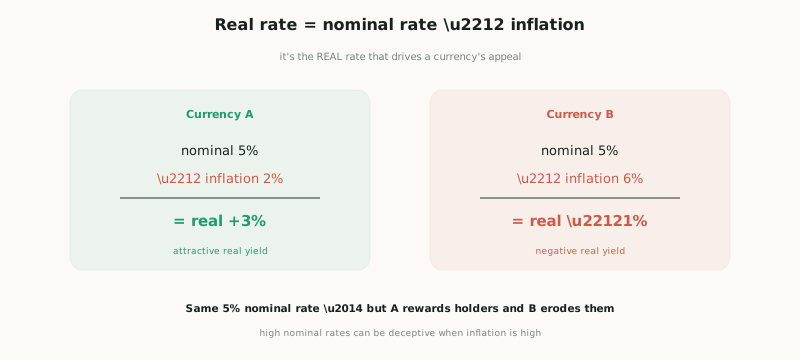
A: The nominal interest rate is the headline, stated rate — what's quoted on a bond or set by a central bank. The real interest rate is the nominal rate minus inflation, representing the return after accounting for the erosion of purchasing power. So a 5% nominal rate with 2% inflation is a 3% real rate; the same 5% nominal rate with 6% inflation is a negative 1% real rate.
Q: Why do real interest rates matter for forex?
A: Because capital flows toward genuine, inflation-adjusted returns. A currency offering a high nominal rate isn't attractive if inflation is eating most of it; what investors ultimately care about is the real return. Real interest-rate differentials — the gap in real rates between two countries — are therefore a more meaningful driver of exchange rates than nominal differentials alone, especially over the medium term.
Q: Can a high nominal interest rate be a bad sign?
A: Yes — it can be deceptive. A very high nominal rate often accompanies very high inflation, leaving a low or even negative real rate, so the currency may not benefit and can weaken. High nominal rates can also signal economic stress or a central bank fighting an inflation or currency crisis. Always check the real rate (nominal minus inflation) rather than being lured by an eye-catching nominal number.
The difference
The distinction is simple but consequential. The nominal interest rate is the headline, stated rate — the number quoted on a bond, set by a central bank, or advertised on a savings account. The real interest rate is that nominal rate minus inflation, representing the true return after accounting for the erosion of purchasing power that inflation causes. The relationship is captured in a simple approximation: real rate ≈ nominal rate − inflation.
| Nominal rate | Real rate | |
|---|---|---|
| Definition | Headline, stated rate | Nominal minus inflation |
| Example A | 5% (inflation 2%) | +3% — rewards holders |
| Example B | 5% (inflation 6%) | −1% — erodes holders |
| What it tells you | The advertised return | The true, after-inflation return |
The examples make the point vividly: two currencies with the identical 5% nominal rate can offer completely different real returns. If one country has 2% inflation, its real rate is a healthy +3% — holders genuinely gain purchasing power. If another has 6% inflation, its real rate is −1% — holders lose purchasing power despite the same headline 5%. The nominal rate looked the same; the real rate, which is what actually matters, was worlds apart.
Why the real rate drives currencies
For forex, the principle is decisive: capital flows toward genuine, inflation-adjusted returns. International investors deciding where to park money ultimately care about the real return they'll earn, not the headline number — so a currency offering a high nominal rate is not truly attractive if inflation is devouring most or all of it. This is why real interest-rate differentials — the gap in real rates between two countries — are a more meaningful driver of exchange rates than nominal differentials alone, particularly over the medium term: money tends to flow toward the currency offering the better real yield, supporting it, and away from currencies with low or negative real rates. A trader comparing two currencies should therefore look past the headline rates to ask which offers the higher real rate, adjusting each nominal rate for its country's inflation. This refinement also illuminates the carry trade: a high nominal yield that's eaten by inflation (and the currency depreciation inflation tends to bring) is a far less attractive — and more dangerous — carry target than the headline suggests.
The most important practical lesson is that high nominal rates can be deceptive. An eye-catching double-digit nominal rate very often accompanies very high inflation, leaving a low or even negative real rate — so the currency may not benefit at all, and can weaken despite the headline appeal. Worse, sky-high nominal rates frequently signal economic stress: a central bank battling an inflation crisis or defending a collapsing currency, an emerging market under pressure — contexts where the high rate is a symptom of trouble, not a reward. The disciplined approach is always to check the real rate (nominal minus inflation) rather than being lured by a big nominal number, and to read a very high nominal rate as a prompt to ask why it's so high. As ever, real rates are one important input into a currency's prospects, not the whole story (sentiment, growth, flows and more all matter), and they inform a view rather than guaranteeing an outcome. The honest framing: the nominal rate is the headline stated rate; the real rate is nominal minus inflation — the true after-inflation return. It matters for forex because capital chases real, inflation-adjusted returns, so real rate differentials drive exchange rates more meaningfully than nominal ones, especially over the medium term — money flows toward the better real yield. High nominal rates can deceive: they often accompany high inflation (low/negative real rate) or signal economic stress, so a currency need not benefit. Always check the real rate rather than the headline; use it as one key input, combined with the wider picture, and manage risk.
Applying real rates in forex
Turning the concept into practice means getting into the habit of adjusting every nominal rate for inflation before comparing currencies. The workflow is straightforward: for each currency, take the relevant nominal rate (the policy rate, or better, a market yield like the government bond yield) and subtract a measure of inflation (or, more sophisticatedly, expected inflation) to get an approximate real rate; then compare the real figures across the two currencies in a pair. The currency with the meaningfully higher real yield has the stronger fundamental pull for capital, all else equal. A worked comparison shows why this matters: imagine Currency X with a 6% nominal rate and 5% inflation (real ≈ +1%) versus Currency Y with a 3% nominal rate and 1% inflation (real ≈ +2%). The nominal comparison screams "X yields double Y!" — but the real comparison reveals Y actually offers the better inflation-adjusted return, and a trader fooled by the headline could be positioned exactly the wrong way. This is the everyday discipline real rates demand.
A few further points deepen the application. Expected real rates often matter more than backward-looking ones — markets are forward-looking, so where inflation and rates are heading (is the real rate rising or falling?) can drive a currency more than today's snapshot; a central bank hiking faster than inflation is rising means a rising real rate, typically supportive. Real rates also connect to other markets a forex trader watches: rising real yields tend to pressure gold (which pays no yield, so its opportunity cost rises) and can strengthen the associated currency, while falling or negative real yields tend to support gold and can weigh on the currency — a useful cross-check. On horizon, real-rate differentials are more of a medium-term driver than a tick-by-tick one: over days, sentiment and positioning dominate, but over weeks and months, capital's pursuit of real returns exerts a steady pull. And real rates sharpen carry-trade analysis: a high-nominal-yield carry target with high inflation offers a thin or negative real carry and often a depreciating currency — a trap the nominal yield disguises. As always, the real rate is one powerful input, not the whole story; growth, risk appetite, flows and politics all matter too, and it informs a view rather than guaranteeing an outcome. The honest reminder: always convert nominal to real (subtract inflation) before comparing currencies, focus on where real rates are heading, use them as a medium-term driver and a cross-check against gold and carry, and combine with the wider picture under proper risk management.
A market read on real rates
You don't always have to estimate real rates yourself — markets price them directly. Inflation-linked bonds (such as US TIPS or UK index-linked gilts) pay a return that adjusts for inflation, so their yield is a market-implied real yield. The gap between a regular nominal bond yield and the inflation-linked yield of the same maturity is the "breakeven" inflation rate — the market's expectation of average inflation over that horizon. These two readings are gold for a forex fundamentalist: the inflation-linked yield tells you the real rate the market is actually demanding, and the breakeven tells you what inflation expectations are doing (the same expectations that anchor or unanchor the Phillips-curve story). Watching real yields and breakevens — and how they shift around central-bank decisions and data — gives a cleaner, forward-looking picture of the real-rate dynamics driving a currency than crude "nominal minus latest inflation" arithmetic. They're a professional's shortcut to seeing real rates as the market sees them.
The nominal rate is the headline, stated rate; the real rate is nominal minus inflation — the true after-inflation return. Two currencies with the same 5% nominal rate can have very different real rates: +3% (2% inflation, rewards holders) vs −1% (6% inflation, erodes them). For forex, capital chases real returns, so real rate differentials drive exchange rates more meaningfully than nominal ones — money flows toward the better real yield. High nominal rates can deceive: they often come with high inflation (low/negative real rate) or signal economic stress, so the currency need not benefit and can weaken. Always check the real rate (nominal − inflation), not the headline, and ask why a nominal rate is unusually high. One key input among many — combine with the wider picture and manage risk.