
At 4pm London time, a quiet ritual reshapes the currency market: a benchmark exchange rate is set, and vast amounts of FX transact at that single price. Knowing about the "London fix" explains the regular burst of activity late in the London afternoon — and the even bigger one at month-end — that can otherwise look like a mysterious daily spike. It's a genuine piece of market plumbing worth understanding. This guide explains the London fix: what it is, why it matters to traders, the month-end flows, and the manipulation scandal that reformed it.
It's a feature of the London session, often falls within the London–New York overlap, and the month-end version reflects big capital flows.
Key takeaways
Q: What is the London fix?
A: The London fix (most importantly the 4pm London fix, also called the WM/Reuters fix) is a benchmark exchange rate calculated at set times each day, with 4pm London being the key one. Many institutions — index funds, asset managers, corporates — agree to transact their FX at this fixed benchmark rate, so a large volume of currency is bought and sold around that moment. It's the foreign-exchange equivalent of a daily official 'closing price.'
Q: Why does the London fix matter to traders?
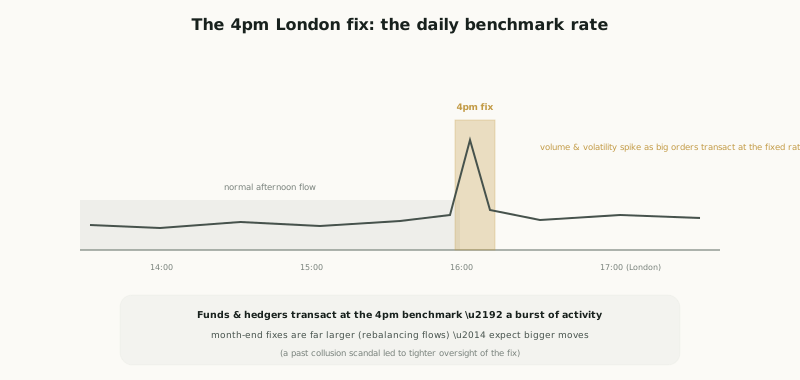
A: Because the concentration of orders around the fix causes a regular, predictable spike in activity, volume and often volatility late in the London afternoon. Spreads can widen and price can move sharply in the minutes around 4pm as large benchmark orders execute. Knowing the fix exists explains those recurring late-afternoon moves, and traders factor in the potential for volatility and wider spreads around that time.
Q: What was the forex fixing scandal?
A: Around 2013, it emerged that traders at several major banks had colluded to manipulate the London fix — coordinating their orders to nudge the benchmark rate in their favour, profiting at clients' expense. The scandal led to large fines and reforms, including widening the calculation window to make manipulation harder. It's a cautionary tale about concentrated, benchmark-setting moments, and why oversight of the fix was tightened.
What it is
The London fix (most importantly the 4pm London fix, also known as the WM/Reuters fix after the benchmark's administrators) is a benchmark exchange rate calculated at set times each day — with 4pm London being by far the key one. The reason it matters is who uses it: many large institutions — index funds, asset managers, corporates, pension funds — agree to (or are required to) transact their FX at this fixed benchmark rate, rather than at whatever the market price happens to be when they trade. They do this for fairness and accountability: using an independent, published benchmark means a fund manager can't be accused of timing their FX trades badly, and performance can be measured against the official rate. The consequence is that a large volume of currency is bought and sold around that single moment, all referencing the same benchmark price. It's effectively the foreign-exchange equivalent of a daily official "closing price" — a designated, published rate that huge swathes of the financial system anchor their currency transactions to.
The London fix at a glance
Why it matters, and the scandal
For a trader, the fix matters because the concentration of orders around it causes a regular, predictable spike in activity, volume and often volatility late in the London afternoon. As large benchmark orders execute in the minutes around 4pm London, spreads can widen and price can move sharply — sometimes a clean burst, sometimes a brief, choppy spike that reverses afterward. Knowing the fix exists explains those recurring late-afternoon moves that might otherwise look random: that 4pm flurry isn't news, it's the mechanics of the benchmark transacting. Practically, traders factor in the potential for volatility and wider spreads around that time — some avoid placing fresh trades right into the fix (to dodge the choppy spike and worse spreads), some watch for the post-fix settle, and all benefit from not being surprised by a 4pm move. The effect is amplified because 4pm London often falls within the busy London–New York overlap, layering the fix's flows onto an already-active window.
The fix becomes especially significant at month-end (and quarter-end). At those times, large institutions rebalance their portfolios — adjusting currency hedges and holdings to their target allocations — and they typically execute this at the fix, so month-end fixes carry far larger flows than ordinary days. These "month-end fix flows" can drive notably bigger, more directional moves into and around the 4pm fix on the last trading day of the month (and especially quarter-ends), which is why experienced traders flag month-end as a time to expect outsized activity at the fix — a recurring, somewhat predictable feature of the calendar driven by institutional flows rather than fresh fundamentals.
Finally, the fix has a cautionary history worth knowing. Around 2013, it emerged that traders at several major banks had colluded to manipulate the London fix — coordinating and timing their orders (and sharing client-order information) to nudge the benchmark rate in their favour, profiting at their clients' expense. The forex fixing scandal led to large fines, criminal and regulatory action, and reforms — notably widening the calculation window of the fix (from a brief snapshot to a longer averaging period) to make such manipulation much harder. It stands as a cautionary tale about concentrated, benchmark-setting moments: when huge volume transacts at a single reference price, the incentive to game that price is powerful, which is why the fix is now more tightly overseen. For an ordinary trader, the scandal is mostly context — you're not setting the benchmark — but it underlines why the fix is a moment of concentrated, sometimes erratic activity, and why a healthy respect for the volatility around it (rather than naive trading into it) is sensible. As with all market structure, understanding the fix is about knowing why the market behaves as it does at certain times, so you can trade around it intelligently rather than being blindsided. The honest framing: the London fix (the 4pm WM/Reuters benchmark) is a published FX rate that index funds, asset managers and corporates transact at for fair, measurable execution, so huge volume trades around 4pm London — causing a regular spike in activity, volume and volatility (and wider spreads), amplified within the London–NY overlap. Month-end fixes are far larger due to portfolio rebalancing flows. A 2013 collusion scandal saw banks manipulate the fix, leading to fines and a widened calculation window. Knowing the fix explains those recurring 4pm moves — expect volatility around it, especially at month-end, and trade around it with care.
Trading around the fix
For most retail traders, the fix is something to navigate rather than trade directly — and a few practical habits help. Be cautious entering fresh trades right into the 4pm fix: the minutes around it can be choppy, with wider spreads and erratic ticks as large benchmark orders execute, so a clean-looking setup can get whipsawed by flow that has nothing to do with your analysis. Many traders simply avoid initiating right at the fix and either trade before it or wait for the post-fix settle. Be extra cautious at month-end and quarter-end, when the rebalancing flows are far larger and the moves around the fix more pronounced — flag those dates in advance.
Crucially, don't mistake fix-driven moves for genuine signals. A sharp push into the fix can look like a breakout or a trend starting, but if it's just benchmark flow, it may reverse once the orders clear (a spike-then-reverse pattern is common around the fix). Reading a 4pm spike as a real directional move — and chasing it — can mean buying the top of a flow-driven blip that promptly fades. So treat sharp, isolated moves right at the fix with suspicion: wait to see whether they hold after the fix passes before treating them as meaningful. The broader principle is the familiar one of knowing the scheduled structure of the trading day: just as you'd check the economic calendar for news, knowing the 4pm fix (and month-end) is part of mapping the day's predictable bursts of activity, so you're never blindsided and can trade around them deliberately. Understand the fix as market plumbing, give it a wide berth when initiating, respect month-end, and don't confuse its flow-driven spikes with genuine setups. The honest reminder: trade around the fix rather than into it — be cautious entering fresh trades right at the choppy, wide-spread 4pm fix (and especially at month/quarter-end), and don't mistake fix-driven spikes for genuine breakouts (they often spike then reverse once orders clear); treat knowing the fix as part of mapping the day's scheduled structure, like the economic calendar, so you trade around its predictable activity rather than being blindsided.
The London fix (the 4pm WM/Reuters benchmark) is a published FX rate that index funds, asset managers and corporates transact at for fair, measurable execution — so huge volume trades around 4pm London, causing a regular spike in activity, volume and volatility (and wider spreads), often amplified within the London–NY overlap. Month-end fixes are far larger (portfolio rebalancing flows), driving bigger, more directional moves. A 2013 collusion scandal saw banks manipulate the fix, leading to large fines and a widened calculation window to deter it. Knowing the fix explains those recurring 4pm moves — they're mechanics, not news — so expect volatility and wider spreads around it, especially at month-end, and trade around it with care rather than naively into it.