For a few hours each day, the world's two biggest financial centres — London and New York — are open at the same time. This overlap is forex's prime window: the deepest liquidity, the tightest spreads, and the largest moves of the day. For many day traders, it's simply where the real action lives. This guide explains the London–New York overlap: when it is, why it's the best window, and how to trade it sensibly.
It's the most important of the windows covered in session overlaps and best times to trade, where the London and New York sessions meet.
Key takeaways
Q: What is the London-New York overlap?
A: It's the period each day when both the London and New York trading sessions are open simultaneously — roughly 1pm to 5pm London time (8am to noon New York time), though the exact hours shift with daylight saving. Because the two largest forex centres are active at once, this overlap concentrates the most trading activity of the day, making it the single most liquid and active window in the market.
Q: Why is the overlap the best time to trade?
A: Because liquidity and activity peak when both centres are open. That brings the tightest spreads (lowest trading costs), the deepest liquidity (easy fills, less slippage), and the largest, most tradeable moves of the day, especially in dollar, euro and pound pairs. For day traders seeking movement and good execution, the overlap offers the best combination of conditions, which is why it's so widely favoured.
Q: Are there risks to trading the overlap?
A: Yes. The same conditions that make it lucrative — high activity — also mean major US economic news is often released during this window, which can cause sharp volatility, spread-widening and whipsaws. The moves can be fast and large, so risk management matters. It suits active, prepared traders; it's not 'easy money,' and the volatility that creates opportunity also creates risk, particularly around scheduled news releases.
When it is, and why it matters
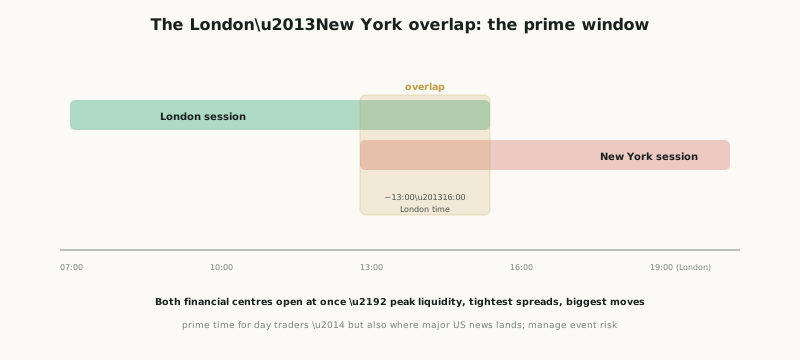
The London–New York overlap is the period each day when both the London and New York sessions are open simultaneously — roughly 1pm to 5pm London time (about 8am to noon New York time), though the exact hours shift with daylight saving. It matters because of a simple fact: London and New York are the two largest forex centres by far, and when they're both active at once, the market concentrates the most trading activity of the day into those few hours.
The London–New York overlap at a glance
This concentration of activity makes the overlap the single most liquid and active window in the entire market — the high tide of the trading day.
Why it's prized, and the risks
The overlap is so widely favoured because liquidity and activity peak when both centres are open, which brings a near-ideal combination of conditions for active trading. The tightest spreads (the most participants competing means the lowest spread cost — cheaper trading), the deepest liquidity (easy fills with minimal slippage, even in size), and the largest, most tradeable moves of the day — especially in the dollar, euro and pound pairs that these two centres trade most heavily (EUR/USD, GBP/USD and the like really come alive). For day traders seeking movement and good execution, this is the best window the day offers, which is exactly why so many concentrate their trading here and why the quieter hours (the thin period after New York closes, before Asia gets going) are so much less prized. If you can only trade part of the day, the London–NY overlap is, for most strategies that need movement and liquidity, the part to choose.
But the overlap is not "easy money," and the same conditions that make it lucrative also make it risky. High activity means this window is exactly when major US economic news is typically released (the key US data and events land in the US morning — right in the overlap), which can cause sharp volatility, spread-widening and whipsaws (see news and event risk). The moves can be fast and large — wonderful when you're on the right side, painful when you're not — so risk management matters more here, not less: the volatility that creates the opportunity also creates the risk. Practically, trading the overlap well means being prepared rather than just present — know the economic calendar (so a big release doesn't blindside you mid-trade), respect that the fast moves cut both ways, size sensibly for the elevated volatility, and treat the window as a place of opportunity that demands discipline rather than a guaranteed payday. It suits active, prepared traders who want movement and can handle it; it's less suitable for trading carelessly or oversized, precisely because so much can happen so fast. Used with awareness — trading the deep liquidity and good moves while managing the news-driven volatility — the London–New York overlap genuinely is the best few hours in the forex day. The honest framing: the London-New York overlap (~1pm–5pm London, shifting with DST) is when the two biggest forex centres are open at once, concentrating the day's peak liquidity, tightest spreads and biggest moves — the prime window, especially for dollar/euro/pound pairs and day traders. But the same high activity means major US news lands here, bringing sharp volatility, spread-widening and whipsaws — so it's opportunity that demands discipline, not easy money. Trade it prepared: watch the calendar, respect the fast two-way moves, and manage risk for the elevated volatility.
Trading the overlap well
The overlap suits the kinds of strategies that need movement and liquidity: breakouts (the surge in activity can power clean breaks of levels set earlier in the London session), trend continuation (an established London trend often extends as New York joins), and news reactions in the liquid majors. A common, sensible structure is to let the London session set the tone in its earlier hours and then watch how New York reacts as it comes online during the overlap — NY money either confirms and extends the London move (a continuation opportunity) or fades and reverses it (a reversal setup). Focus on the right pairs: the overlap is prime time for the dollar, euro and pound majors — EUR/USD, GBP/USD, the USD pairs — where the liquidity is deepest and the moves cleanest, rather than thin crosses that don't benefit as much from these two centres being open.
Trading it well, though, is as much about managing the landmines as seizing the moves. The single most important habit is to know the economic calendar: because major US releases land in the overlap, a big data print or Fed event can detonate mid-window, so check what's scheduled and decide in advance whether to stand aside or size down around it (rather than being caught in a fresh position when volatility erupts — see news and event risk). Resist the temptation to over-trade the entire window just because it's active — the overlap rewards selective, prepared trading of genuine setups, not constant clicking because "something's always moving"; the abundance of movement can seduce you into low-quality trades. And size for the elevated volatility (the moves are bigger here, so the same lot carries more risk — see pair volatility). The ideal mindset is opportunistic but disciplined: show up prepared with your levels marked and the calendar checked, trade the high-quality breakouts, continuations and reversals the overlap throws up in the liquid majors, defend against the news spikes, and don't mistake activity for opportunity. Treated that way, the London–New York overlap delivers the best combination of conditions in the trading day; treated as a free-for-all, its very liveliness will chop up the careless. The honest reminder: trade the overlap with strategies that need liquidity and movement (breakouts, trend continuation, news reactions) in the liquid dollar/euro/pound majors, often reading whether New York confirms or fades the London move; above all manage the news landmines (check the calendar, stand aside or size down around US releases), avoid over-trading the whole window, and size for the elevated volatility — opportunistic but disciplined, not a free-for-all.
If there's a single takeaway, it's that the overlap concentrates both the opportunity and the risk of the trading day into a few hours — and the two are inseparable. The same wave of liquidity that gives you clean fills and tradeable moves is the wave that makes a news spike so violent. So the window rewards the trader who treats it with respect rather than excitement: prepared, calendar-aware, selective about setups, and sized for the conditions. Get that balance right and the London–New York overlap is, reliably, the most productive part of the forex day; get greedy with it and the very same hours will do the most damage.
The London–New York overlap (~1pm–5pm London, ~8am–noon NY — shifting with DST) is when the two biggest forex centres are open at once, concentrating the day's peak liquidity, tightest spreads, and biggest moves — the prime window, especially for dollar/euro/pound pairs and day traders. But the same high activity means major US news lands here, bringing sharp volatility, spread-widening and whipsaws (event risk) — so it's opportunity that demands discipline, not easy money. Trade it prepared: watch the economic calendar, respect the fast two-way moves, and size for the elevated volatility. The best few hours of the forex day — for traders who handle it with care.