The forex market never fully sleeps on a weekday, running 24 hours across its four sessions — but it doesn't hum at one steady pitch either. Activity ebbs and flows, and the busiest, most tradeable moments come when two big sessions are open at once: the overlaps. When two major centres trade simultaneously, liquidity, volume and volatility all peak — and one overlap towers above the rest. Understanding the overlaps is, for many traders, the single most practical piece of session knowledge, because it tells you when the market is most active and most worth watching. This guide explains the overlaps: what they are, the key windows (above all the London–New York overlap), how the four sessions compare, and why overlaps matter for trading.
It ties together the four individual sessions — London, New York, Tokyo and Sydney — covered in the sessions overview, and underpins the best times to trade.
Key takeaways
Q: What is a forex session overlap?
A: An overlap is a period when two trading sessions are open at the same time. Because more major centres are active simultaneously, overlaps have more participants — meaning higher liquidity, tighter spreads, more volume and more volatility. They are generally the busiest, most active windows of the trading day.
Q: Which session overlap is the most important?
A: The London–New York overlap, roughly 13:00–17:00 GMT, when the world's two largest forex centres are open together. It's the single most active, liquid and volatile window of the day, often producing the biggest moves — amplified by major US data releasing in the New York morning.
Q: Why do overlaps matter for trading?
A: Because liquidity and movement peak during overlaps. More liquidity means tighter spreads and easier fills; more volatility means enough price movement for opportunities — especially for breakout and momentum strategies that need movement. The trade-off is that higher volatility also means higher risk, so overlaps demand sound risk management.
What overlaps are, and why they matter
The forex day is divided into four sessions — Sydney, Tokyo, London and New York — that run on different regional clocks and therefore overlap at certain times, when one session hasn't yet closed as the next opens. These overlaps are the most important windows because, with two major centres open simultaneously, there are simply more participants in the market at once. More participants means two things that matter enormously to traders. First, higher liquidity: more buyers and sellers, which produces tighter spreads (cheaper to trade) and easier fills (your orders execute more readily at the price you want). Second, more volatility and volume: more activity drives bigger price movement, which creates the opportunities that trading depends on — a market that barely moves offers little to trade. So overlaps are, generally, the best times to trade for most strategies, and especially for breakout and momentum approaches that need movement to work.
The overlap windows and how sessions compare
There are a few overlaps in the daily cycle, of very different importance. The table compares the four sessions and highlights the overlaps.
The four sessions and their overlaps (approx GMT)
| Session | Hours (approx GMT) | Activity | Key pairs |
|---|---|---|---|
| Sydney | 22:00–07:00 | Lowest — thin | AUD, NZD |
| Tokyo | 00:00–09:00 | Lower — range-bound | JPY, AUD, NZD |
| London | 08:00–17:00 | Highest | EUR, GBP, CHF |
| New York | 13:00–22:00 | High (am) | USD pairs |
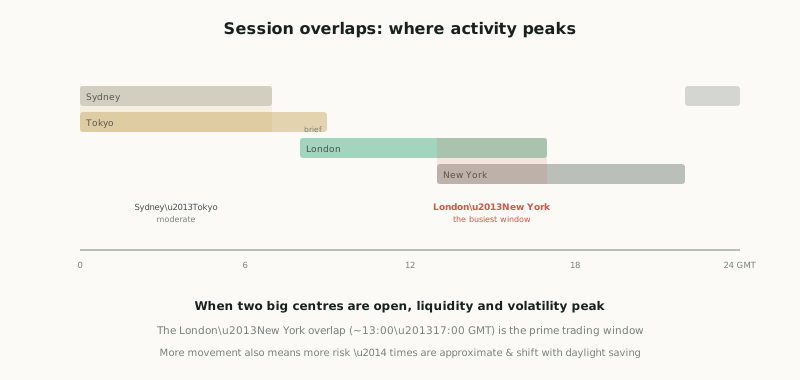
| London–NY overlap | 13:00–17:00 | Peak — busiest | EUR/USD, GBP/USD |
The London–New York overlap (roughly 13:00–17:00 GMT) is by far the most important. It's when the world's two largest forex centres — London and New York — are open together, producing peak liquidity, volume and volatility, the tightest spreads, and frequently the biggest moves of the day. Its potency is heightened because major US data typically releases in the New York morning, landing right in this overlap and amplifying the reaction with deep two-centre liquidity. For a great many traders, this window is simply the prime time to trade. The Sydney–Tokyo overlap (roughly 00:00–07:00 GMT) is the Asian overlap — moderate activity, the busier part of the Asia-Pacific day, focused on AUD, NZD and JPY pairs, but far quieter than the London–NY peak. And there's a brief Tokyo–London overlap (around 08:00–09:00 GMT) as Asia winds down and London opens — a short handover that can see activity pick up as London ramps into gear. The clear hierarchy: London–NY is the giant, the Asian overlap is moderate, and the Tokyo–London handover is brief.
Using overlaps in practice
The practical implication is straightforward: if you want the best liquidity and movement, focus your active trading on the overlaps — above all the London–New York window. This is where spreads are tightest, fills are easiest, and there's enough movement to give strategies (especially breakout and momentum) something to work with. Traders who can only be at the screen for part of the day often deliberately choose the London–NY overlap as their trading window for exactly these reasons. Conversely, the quieter, non-overlap periods — the thin early Sydney hours, the late New York afternoon after London closes — offer less movement and wider spreads, suiting range approaches, lighter trading, or simply stepping back. Matching your activity to the session rhythm — trading the active overlaps, easing off in the quiet stretches — is a simple, sensible way to align with the market's natural energy.
Two honest caveats complete the picture. First, the higher volatility of the overlaps cuts both ways: the same movement that creates opportunity also creates risk — bigger, faster moves can produce bigger, faster losses, and the overlap's news-driven spikes (especially around US data) can bring slippage and whipsaws. So the prime trading window is also a higher-risk one, demanding sound risk management, not reckless aggression because "this is when it moves." Second, as with every aspect of sessions, overlaps describe when activity tends to peak — a reliable pattern of liquidity and volatility — not a guaranteed edge or a prediction of direction. Knowing the London–NY overlap is the busiest window tells you when there's likely to be movement and good liquidity; it doesn't tell you which way to trade. The honest framing: session overlaps are the windows when two major centres trade at once, peaking liquidity, volume and volatility — with the London–New York overlap (~13:00–17:00 GMT) the most active, liquid window of the day (amplified by US data), the Asian (Sydney–Tokyo) overlap moderate, and the Tokyo–London handover brief. Overlaps offer the best liquidity and movement for most strategies and are widely treated as the prime times to trade, but their volatility raises risk, so use them with disciplined risk management — and remember they tell you when the market is active, not which way it will go. Trade the windows that fit your schedule and style.
Choosing your window
Knowing that the London–New York overlap is the day's most active window is useful only if it fits your life — so the real question is how to choose your trading window around your timezone, strategy and schedule. Start with the practical reality of where you live. The overlap falls at roughly 13:00–17:00 GMT, which is early-to-mid afternoon for European traders (very accessible), morning for traders in the Americas (accessible), and late evening or overnight for those in Asia-Pacific (much less convenient). An Asia-based trader may find their own Tokyo/Sydney hours far more practical, even though those sessions are quieter — a quieter session you can actually trade attentively beats a prime window you're too tired to trade well. There's no virtue in forcing yourself awake at 3am to trade the "best" window if it wrecks your focus; the best window for you balances the market's activity against your ability to be sharp and present.
Then match the window to your strategy and lifestyle. Strategies that need movement — breakout, momentum — are best suited to the active overlaps, so a breakout trader gravitates toward London–NY; a range trader, by contrast, may actively prefer the calmer, more rotational Asian hours, where ranges hold better. A part-time trader with only an hour or two a day benefits enormously from concentrating that time on a single, well-chosen window (often the London open or the London–NY overlap for those in compatible timezones) rather than scattering attention across the day — focus on one session you understand well tends to beat dabbling everywhere. Longer-term traders (swing, position) are far less session-dependent, since they hold across many sessions and care little about the intraday rhythm — for them, session choice mostly affects when they place or adjust orders, not the strategy itself. The honest, freeing point is that there's no single right answer: the overlaps are objectively the most active, but the right window is the one that fits your timezone, suits your strategy, and lets you trade with full attention and good discipline. Pick a window you can commit to consistently, learn its rhythm deeply, and trade it with sound risk management — that consistency and familiarity will serve you better than chasing the "best" hours at the cost of your focus and routine.
Session overlaps — when two major centres trade at once — are the busiest windows, with peak liquidity (tighter spreads, easier fills) and volatility/volume (more movement). The London–New York overlap (~13:00–17:00 GMT) is by far the most important: the two biggest centres open together, peak activity and the day's biggest moves, amplified by US data in the NY morning — the prime trading window for most. The Sydney–Tokyo overlap (~00:00–07:00 GMT) is moderate (AUD/NZD/JPY); the Tokyo–London handover (~08:00–09:00 GMT) is brief. Focus active trading on overlaps (especially London–NY) for liquidity and movement; quieter non-overlap stretches suit ranges or stepping back. But overlap volatility raises risk (manage it), and overlaps describe when the market is active — not which way it'll go. Times are approximate and shift with daylight saving; trade what fits your schedule and style.