
Sydney is where the forex week begins — the first session to open after the weekend, and the smallest and quietest of the four major sessions. As the rest of the world sleeps, the Asia-Pacific market stirs first here, easing the market back into motion. But its thin liquidity, wider spreads, and the gap risk of the Sunday reopen make it a session to treat with a little extra care. Understanding the Sydney session helps a trader know what to expect from the very start of the trading day and week — calm conditions, but with some specific cautions. This guide is a deep dive: its hours, character, key pairs, and the practical risks to mind.
It's one of the four sessions in the sessions overview, leads into the Tokyo session, and its Sunday reopen is a key source of gap risk.
Key takeaways
Q: What are the Sydney session hours?
A: The Sydney session runs roughly 22:00–07:00 GMT, covering Australasian trading hours. It's the first session to open for the new trading day — and, on Sunday evening GMT, the first to reopen for the new week after the weekend. Times are approximate and shift with daylight saving, so verify the current window.
Q: What is the Sydney session like?
A: It's the smallest and quietest of the four major sessions, with the lowest liquidity and volatility and the widest spreads. Price action is often slow and range-bound. It overlaps with Tokyo as Asia comes online, which brings the most activity to its later hours, but on its own Sydney is thin and calm.
Q: Why does the Sydney session carry gap risk?
A: Because it's the first session to reopen after the weekend (Sunday evening GMT), it's the point at which the market resumes after being closed — and price can reopen at a different level than Friday's close if news broke over the weekend, creating a gap. The thin opening liquidity can also mean wider spreads and erratic early moves.
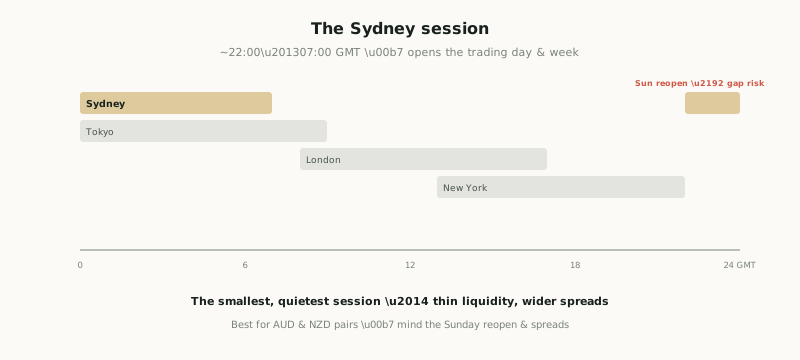
Hours and character
The Sydney session runs roughly 22:00–07:00 GMT, covering Australasian trading hours, and it holds a special place in the daily cycle: it's the first session to open for the new trading day, and — on Sunday evening GMT — the first to reopen for the new week after the weekend break. (As always, times are approximate and shift with daylight saving — and Australia's daylight saving runs opposite to the Northern Hemisphere's — so verify the current window.) In character, Sydney is the smallest and quietest of the four major sessions: it has the lowest liquidity and volatility and the widest spreads, with price action that's often slow and range-bound. This is the market easing back into motion — the quiet opening act before Tokyo, London and New York progressively ramp up the day's activity. Sydney does overlap with Tokyo as Asia fully comes online (roughly 00:00–07:00 GMT), and this overlap brings the most activity to Sydney's later hours; but on its own, in its earliest hours, Sydney is thin and calm.
The cautions: thin liquidity and gap risk
Sydney's defining quietness brings specific risks worth flagging. Its thin liquidity means wider spreads — a real and immediate trading cost, since you cross a larger bid-ask gap to enter and exit — and can also produce erratic, choppy moves, as fewer participants mean a single sizeable order can push price around more than it would in a deep, liquid session. More significantly, because Sydney is the first session to reopen after the weekend (Sunday evening GMT), it's the point at which the market resumes trading after being closed for the weekend — and this carries gap risk. If significant news broke while the market was shut (over the weekend), price can reopen at a different level than Friday's close, "gapping" past intervening prices — which means stop-losses may not fill at their set level (they fill at the gapped-open price), and positions held over the weekend are exposed to this gap. The thin opening liquidity can compound the effect with wide spreads and unstable early pricing. The gap risk guide covers this in full; the key point here is that the Sydney reopen is when weekend gaps materialise, so it deserves particular caution.
These cautions don't make the session "bad" — they simply mean it should be approached with awareness. The wider spreads make Sydney's thin hours less attractive for cost-sensitive, short-term trading (scalping into wide spreads is a poor proposition). The weekend-gap risk is really a point about holding positions over the weekend and about the Sunday reopen specifically, which any trader — whatever session they normally trade — should factor into their risk management (some reduce or close exposure before the weekend precisely to avoid gap risk). For the trader actually active in the Sydney session, the practical implications are: expect quiet, range-bound conditions and wider spreads, and be especially careful around the Sunday reopen.
Key pairs and how traders approach it
As the Australasian session, Sydney is most relevant for the Australian and New Zealand dollars — AUD/USD, NZD/USD, AUD/JPY, NZD/JPY — since this is the home session for those currencies, and Australian and New Zealand data (the RBA, RBNZ) lands in these hours. These are the pairs with the most natural liquidity in the session. In terms of approach, Sydney's thin, quiet, wider-spread character makes it less favoured for active trading by many — the low movement offers limited opportunity and the spreads raise costs — so it's often a session to trade lightly, focus on the AUD/NZD pairs and their data, or simply observe. It suits traders in the Asia-Pacific timezone trading their home currencies, and those who genuinely prefer very calm conditions. Range approaches can fit the quiet rotation, but with the spread cost firmly in mind.
The honest framing: the Sydney session (~22:00–07:00 GMT) is the smallest and quietest of the four, opening the trading day and week, best for AUD and NZD pairs and their regional data. Its thin liquidity means wider spreads and sometimes erratic moves, and — importantly — its position as the first session to reopen after the weekend makes it the locus of weekend-gap risk, where stops may not fill at set levels if price gaps. Treat it with extra care: mind the spreads, be cautious around the Sunday reopen, and factor weekend-gap risk into any position held over the break. Like all sessions, it describes when conditions tend to occur (here, quiet and thin) rather than guaranteeing an edge — trade it lightly and only if it fits your schedule and style, always with risk management and an awareness of its specific cautions.
Opening the week, and the quiet hours
Sydney's most distinctive role is opening the trading week, and this deserves a closer look because it's where the session's main risk concentrates. When the market reopens on Sunday evening GMT in Sydney, it's resuming after roughly two days of closure — and the world doesn't stop over the weekend. Geopolitical events, economic announcements, elections, or other news can occur while the market is shut, and when Sydney reopens, price simply starts wherever the new balance of supply and demand puts it — which may be some distance from Friday's closing level. That's a weekend gap: price "jumps" past the intervening levels rather than trading through them. The practical danger is that a stop-loss on a weekend-held position won't fill at its set level if price gaps straight past it; it fills at the gapped-open price, which can mean a larger loss than planned. The thin Sunday-reopen liquidity can also produce wider spreads and unstable early pricing until the market settles.
Managing this is mostly about weekend exposure decisions made before the close, not in the Sydney session itself. Traders who want to avoid gap risk reduce or close positions before the Friday weekend close; those who hold over the weekend do so understanding the gap exposure and sizing accordingly (a stop is not a guarantee across a weekend gap). For the trader actually active in Sydney's hours, the early part of the session — before Tokyo joins around 00:00 GMT — is the thinnest, quietest stretch of the entire day, with the widest spreads and least movement; the Sydney–Tokyo overlap that follows is livelier as Asia comes fully online. In practice, relatively few traders make Sydney's thin early hours their primary window — the wide spreads and low movement offer little for active trading — so it tends to be the domain of Asia-Pacific-timezone traders trading their home AUD and NZD pairs, those positioning around early-week Australasian developments, or traders simply observing how the week opens before committing. The honest practical guidance: respect the Sunday reopen as the locus of weekend-gap risk (manage weekend exposure deliberately), expect Sydney's early hours to be thin and wide-spread (trade them lightly if at all), and treat the session as the market's quiet curtain-raiser rather than a prime trading window — always with the spread cost and gap risk front of mind.
The Sydney session (~22:00–07:00 GMT) is the smallest and quietest of the four, the first to open the trading day and — on Sunday evening GMT — to reopen the week. It has the lowest liquidity/volatility and widest spreads, with slow, range-bound action; it overlaps with Tokyo in its later hours. Best for AUD and NZD pairs and their data (RBA, RBNZ). Key cautions: thin liquidity means wider spreads and sometimes erratic moves, and the Sunday reopen carries gap risk — weekend news can make price gap past Friday's close, so stops may not fill at set levels and weekend-held positions are exposed. Trade it with extra care: mind spreads, be cautious at the Sunday reopen, and factor weekend-gap risk into anything held over the break. Like all sessions, it describes when conditions occur, not a guaranteed edge — trade lightly and only if it fits you.