The single most important question to ask about any broker isn't its spreads or its platform — it's who regulates it. Regulation is what stands between your money and the people who'd happily take it. Understanding what regulators do, why it matters, and how to check, is one of the most valuable safety lessons a beginner can learn — and one that prevents the most painful, avoidable losses in trading. This guide explains forex regulation: what regulators do, why a regulated broker protects you, how to verify one, and the danger of unregulated brokers.
It's the foundation of choosing a broker safely, the best defence against scams, and underpins safe deposits and withdrawals.
Key takeaways
Q: What does forex regulation actually do?
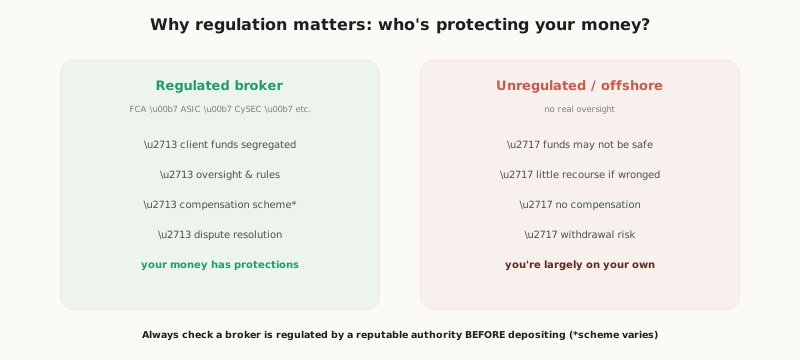
A: Financial regulators license and oversee brokers, setting rules they must follow to protect clients. Key protections typically include requiring client funds to be held in segregated accounts (kept separate from the broker's own money), enforcing fair-dealing and transparency rules, providing dispute resolution, and in some jurisdictions offering a compensation scheme that may repay clients if the broker fails. Regulation is the framework that makes a broker accountable and your money safer.
Q: Who are the main forex regulators?
A: Reputable financial authorities include the FCA in the UK, ASIC in Australia, CySEC in Cyprus (EU), the NFA/CFTC in the US, BaFin in Germany, FINMA in Switzerland and others. A broker regulated by a respected authority is held to real standards. Be wary of brokers regulated only in obscure offshore jurisdictions with little genuine oversight — that 'regulation' may offer almost no real protection.
Q: How do I check a broker is regulated?
A: Find the regulator and licence number the broker claims (usually in the website footer or 'about' section), then verify it directly on the regulator's own public register — don't just trust the broker's word, as scammers fake or clone licences. Check the licence is current, matches the company name, and is from a reputable authority. If you can't verify genuine regulation by a respected body, treat that as a serious warning and look elsewhere.
What regulation does
Financial regulators license and oversee brokers, setting rules they must follow to protect clients — and the protections are substantial. The most important is usually that client funds must be held in segregated accounts: your money is kept separate from the broker's own operating funds, so it can't simply be used by the broker and (in a properly run, regulated setup) should be protected even if the broker runs into trouble. Beyond that, regulation typically enforces fair-dealing and transparency rules (how prices and orders are handled), provides dispute resolution (an authority you can complain to if wronged), and in some jurisdictions offers a compensation scheme that may repay clients up to a limit if the broker fails. In short, regulation is the framework that makes a broker accountable and your money safer — it doesn't make trading profitable or remove market risk (you can still lose money trading), but it dramatically reduces the counterparty risk that the broker itself mishandles or steals your funds. This is why "who regulates this broker?" is the first and most important due-diligence question: a strong regulator is the difference between a broker that's accountable to an authority and one that can do as it pleases with your money. The flashiest platform and tightest spreads mean nothing if the broker behind them isn't accountable.
The main regulators, and how to check
Knowing the reputable authorities helps you judge a broker quickly. Respected financial regulators include the FCA (UK), ASIC (Australia), CySEC (Cyprus/EU), the NFA/CFTC (US), BaFin (Germany), FINMA (Switzerland) and others in the major financial jurisdictions. A broker regulated by a respected authority is held to real standards — meaningful capital requirements, conduct rules, and genuine oversight with teeth. The crucial caveat: be wary of brokers regulated only in obscure offshore jurisdictions (certain small island nations are known for light-touch, name-only "regulation") — that "regulation" may offer almost no real protection, existing mainly to let the broker claim to be regulated while escaping serious oversight. So it's not just whether a broker is "regulated" but by whom: regulation by the FCA or ASIC is worlds apart from a licence in a jurisdiction that asks little and enforces less.
Actually checking is simple and essential. Find the regulator and licence number the broker claims — usually stated in the website footer or "about"/"legal" section — then verify it directly on the regulator's own public register (the FCA, ASIC and others maintain free, searchable registers of authorised firms). Critically, don't just trust the broker's word: scammers fake regulatory claims or clone the details of a genuinely regulated firm (the "clone firm" scam), so you must confirm on the regulator's site that the licence is current, matches the exact company name, and is from a reputable authority. If you can't verify genuine regulation by a respected body — if the claim doesn't check out, the regulator is obscure, or there's no licence at all — treat that as a serious warning and look elsewhere. This five-minute check, done before you deposit a penny, is one of the highest-value safety habits in all of trading: it filters out a huge proportion of scams and dangerous brokers at the door. Combined with testing a small withdrawal early, verifying regulation is how you ensure your hard-earned capital is with a broker that's actually accountable. The honest framing: regulation is what protects your money — regulators license and oversee brokers, requiring segregated client funds, fair-dealing rules, dispute resolution and sometimes a compensation scheme, making the broker accountable (it reduces broker-counterparty risk, though you can still lose money trading). Reputable regulators include the FCA, ASIC, CySEC, NFA/CFTC and similar; be wary of obscure offshore "regulation" that offers little real protection. Always verify a broker's claimed licence directly on the regulator's own public register before depositing — scammers fake and clone licences — and if you can't confirm genuine regulation by a respected body, look elsewhere.
Regulation in practice: what it changes for you
Regulation isn't just an abstract safety net — it visibly shapes what you experience as a retail trader, especially through rules on leverage and protections. In many well-regulated regions, authorities cap the leverage offered to retail clients — for example, regulators in Europe and the UK limit major-pair leverage for retail traders to around 30:1, and Australia's regulator brought in similar caps — precisely because excessive leverage destroys retail accounts. Some regimes also mandate negative balance protection (so you can't lose more than your account balance — you can't end up owing the broker after a violent move), require prominent risk warnings (the "most retail accounts lose money" disclosures you see are regulator-mandated), and restrict misleading bonuses and aggressive marketing. These rules exist to protect retail traders from the worst outcomes.
This creates a temptation worth understanding: some traders chase offshore brokers precisely to escape these caps and access much higher leverage (500:1 or more). It's crucial to see this for the dangerous trade-off it is. You'd be giving up genuine regulatory protection — segregated funds, recourse, negative-balance protection, compensation — in exchange for the "freedom" to take on account-destroying leverage that the protective regulators specifically restrict because it's so harmful. The high leverage that offshore brokers dangle as a selling point is exactly the thing well-regulated authorities cap to protect you, so chasing it means opting out of protection to get easier access to ruin — a spectacularly bad bargain that the marketing carefully obscures. The healthy reframe is that the "restrictions" of strong regulation are protections, not obstacles: a leverage cap isn't the regulator spoiling your fun, it's the regulator standing between you and the most common way retail traders blow up. (And recall from effective leverage that you should be using only modest leverage anyway — so a 30:1 cap shouldn't even bind a sensible trader.) The sound principle for beginners: prefer a well-regulated broker and treat its protective rules as a feature, and be deeply suspicious of any broker (or "guru") enticing you offshore with sky-high leverage — they're selling you the rope. The honest reminder: regulation shapes what you experience — retail leverage caps (around 30:1 in the UK/EU and similar elsewhere), negative-balance protection, mandated risk warnings and bonus restrictions all exist to protect retail traders; some chase offshore brokers for much higher leverage, but that means giving up real protection to access the very account-destroying leverage regulators cap on purpose, so treat strong regulation's "restrictions" as protections and be wary of anyone luring you offshore with sky-high leverage.
Of everything a beginner can learn, the regulation check may have the highest ratio of protection to effort: a few minutes verifying a licence can save you from losing everything to a broker that was never accountable in the first place. No edge, strategy or amount of analysis matters if the firm holding your money won't give it back. So make "who regulates this, and can I verify it?" the very first question — before spreads, before platforms, before strategy — because it's the question that determines whether your money is safe enough for any of the rest to matter.
Regulation is what protects your money. Regulators license and oversee brokers, requiring segregated client funds, fair-dealing rules, dispute resolution and sometimes a compensation scheme — making the broker accountable (it cuts broker-counterparty risk, though you can still lose money trading). Reputable regulators include the FCA (UK), ASIC (Australia), CySEC (EU), NFA/CFTC (US) and similar — be wary of obscure offshore "regulation" that offers little real protection (it's not just whether but by whom). Always verify a broker's claimed licence directly on the regulator's own public register before depositing — scammers fake and clone licences — and if you can't confirm genuine regulation by a respected body, look elsewhere. This five-minute check filters out a huge share of scams at the door.