Before you can trade, money has to get into your account — and one day, you'll want it back out. Funding a trading account is straightforward, but the details (verification, fees, processing times) trip up beginners, and withdrawal problems are one of the clearest warning signs of a bad broker. Knowing how it works — and what to watch for — saves you both hassle and risk. This guide covers how to deposit and withdraw: the methods, verification, fees and times to expect, and why getting money out matters most.
It's a practical step beyond choosing a broker, closely tied to regulation and a key defence against scams.
Key takeaways
Q: How do you deposit money into a forex account?
A: Once your account is open and your identity is verified, you fund it through the broker's accepted payment methods — typically bank transfer, debit/credit card, or e-wallets like PayPal, Skrill or Neteller. You log in, choose 'deposit,' select a method, and transfer the funds. Different methods have different processing times and possible fees: cards and e-wallets are often near-instant, while bank transfers can take a few days.
Q: Why do brokers require identity verification?
A: Because regulated brokers must follow 'Know Your Customer' (KYC) and anti-money-laundering rules. Before you can deposit or trade, you'll usually need to verify your identity (a passport or driving licence) and address (a utility bill or bank statement). This is normal and a good sign — it indicates the broker is operating within regulations. Completing it promptly avoids delays when you later want to withdraw.
Q: Why are withdrawals such an important test of a broker?
A: Because getting money out smoothly is the ultimate proof a broker is legitimate. Many scam or unreliable brokers make deposits easy but withdrawals difficult — inventing rules, delaying, or refusing to pay. Withdrawal problems are one of the clearest red flags of a bad broker. A good practice is to make a small withdrawal early on to confirm the process works before committing more money, and to stick with regulated brokers where you have recourse.
Depositing and verification
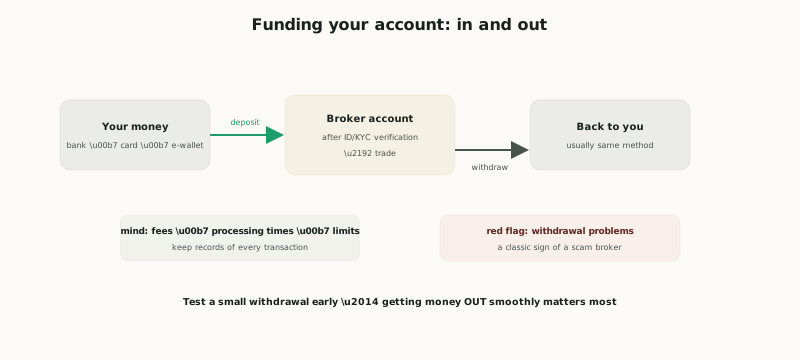
Once your account is open and your identity is verified, you fund it through the broker's accepted payment methods — typically bank transfer, debit/credit card, or e-wallets like PayPal, Skrill or Neteller (availability varies by broker and country). You log in, choose "deposit," select a method, and transfer the funds. The verification step comes first and matters: regulated brokers must follow "Know Your Customer" (KYC) and anti-money-laundering rules, so before you can deposit or trade you'll usually need to verify your identity (a passport or driving licence) and address (a utility bill or bank statement). This is normal and a good sign — it indicates the broker is operating within regulations (a broker that asks for no verification at all is a warning sign, not a convenience). Completing verification promptly, with clear documents, avoids frustrating delays later when you want to withdraw (since brokers often require full verification before releasing funds).
Deposits & withdrawals at a glance
Withdrawing — the real test
Withdrawing follows the reverse path: you request a withdrawal, and the funds are returned — usually to the same method you deposited with (a common anti-money-laundering rule). Different methods carry different processing times and possible fees: cards and e-wallets are often near-instant or same-day for deposits, while bank transfers can take a few days, and withdrawals generally take longer than deposits (often a few business days, as the broker processes the request). Sensible practical habits: check the fees for both depositing and withdrawing (some brokers charge, some don't), note the limits and times, and keep records of every transaction (useful for your own tracking and for tax purposes).
But the single most important point about the whole topic is this: getting money out smoothly is the ultimate test of a broker. Many scam or unreliable brokers make deposits easy (they want your money in) but withdrawals difficult (they don't want to let it go) — inventing surprise rules, demanding endless extra documents, delaying for weeks, imposing absurd conditions, or simply refusing to pay. Withdrawal problems are one of the clearest red flags of a bad broker, and a huge number of forex horror stories follow exactly this pattern: deposits sailed in, profits looked great on screen, and then the money couldn't be withdrawn. To protect yourself: make a small withdrawal early on — before committing larger sums — to confirm the process actually works (a broker that pays a small withdrawal smoothly is reassuring; one that obstructs it is telling you something vital while the stakes are still low). And stick with regulated brokers, where you have genuine recourse if something goes wrong (a regulator to complain to, rules the broker must follow, possibly a compensation scheme — see regulation); with an unregulated or offshore broker, a withdrawal refusal can mean your money is simply gone, with no one to appeal to. In short, treat the ease of withdrawal — not the ease of depositing or the flashy platform — as the real measure of whether a broker can be trusted with your money. The honest framing: to fund a forex account you verify your identity (KYC — normal and a good sign) then deposit via bank transfer, card or e-wallets, with varying fees and times (cards fast, bank transfers slower); withdrawals reverse this, usually to the same method, and take a little longer. Check fees, note times, keep records. Above all, smooth withdrawals are the ultimate test of a broker — scam brokers make depositing easy and withdrawing hard, so withdrawal problems are a major red flag; test a small withdrawal early, and stick to regulated brokers where you have recourse.
Practical funding habits and safety
A few sensible habits make funding your account safer and less stressful. Start small: fund with a modest amount you're comfortable with while you're still learning and testing the broker, rather than depositing a large sum up front — you can always add more once you trust the platform and have proven you can withdraw. Separate trading money from life money: only ever fund the account with genuine risk capital you can afford to lose, never rent, bills or essential savings — the deposit decision is where this discipline begins, so don't transfer money you'll need. And keep your deposit method valid and in your own name (brokers generally require withdrawals to go back to the same source, so a closed card or a third-party account causes problems).
Be alert to some specific funding-related red flags and costs. Beware deposit bonuses with strings attached — "get a 50% bonus!" offers often come with conditions that lock up your funds or require huge trading volume before you can withdraw anything, effectively trapping your money (many regulators have restricted such bonuses for exactly this reason). Treat as an outright scam any broker that demands you "deposit more to withdraw" — a request for additional funds, "taxes," or "fees" paid to the broker before they'll release your money is a classic fraud (see scams); legitimate brokers never work this way. Watch currency-conversion costs if your bank account and trading account are in different currencies (the conversion can quietly cost you on the way in and out). And, as covered, test a small withdrawal early to confirm the process works. These habits — small start, risk capital only, wariness of bonus traps and deposit-to-withdraw demands, and an early test withdrawal — turn account funding from a source of risk into a routine, safe step. The honest reminder: fund your account with sensible habits — start small while testing the broker, use only risk capital you can afford to lose (never essential money), and keep your deposit method valid and in your own name; watch for funding red flags like bonuses with withdrawal strings attached and the outright scam of being told to "deposit more to withdraw," mind currency-conversion costs, and test a small withdrawal early.
It helps to remember what depositing actually is: handing your money to a third party and trusting them to give it back on demand. Framed that way, the care is obviously warranted — you wouldn't hand a stranger your savings without checking they're accountable and can return them. Treat the whole funding process with that mindset: verify the broker is regulated first, fund modestly, confirm you can withdraw, and only then commit more. Get this foundation right and you remove one of the biggest, most avoidable risks beginners face — long before any trade is even placed.
Handled with this care, funding becomes a non-event — quietly reliable — which is exactly what you want from the part of trading that has nothing to do with the markets and everything to do with whether your money is safe.
To fund a forex account you first verify your identity (KYC — ID + address; normal and a good sign), then deposit via bank transfer, card or e-wallets (varying fees and times — cards fast, bank transfers slower). Withdrawals reverse this, usually back to the same method, and take a little longer. Check fees, note limits/times, and keep records (also for tax). Above all: smooth withdrawals are the ultimate test of a broker — scam brokers make depositing easy and withdrawing hard, so withdrawal problems (delays, surprise rules, refusals) are a major red flag (see scams). Test a small withdrawal early before committing more, and stick to regulated brokers where you have real recourse — with an unregulated one, a refused withdrawal can mean your money is simply gone.