There's a world of difference between trading money you can comfortably afford to lose and trading money you can't. The second — "scared money" — quietly poisons every decision with fear, making it almost impossible to follow your plan. It's one of the most underrated reasons traders struggle, and the fix matters as much for your wellbeing as your results. This guide explains trading with scared money: what it is, the fear-driven mistakes it causes, and why trading only genuine risk capital is essential.
It's fear in its most corrosive form, it amplifies the disposition effect, and it's why sound position sizing and risk capital matter.
Key takeaways
Q: What is 'scared money' in trading?
A: 'Scared money' refers to trading with funds you can't really afford to lose — money you need for rent, bills, debt repayments, or your financial security. Because losing it would genuinely hurt, every trade is loaded with fear, and that fear distorts your judgement. The term captures how the emotional weight of the money itself, regardless of your strategy, can undermine your decisions.
Q: How does scared money hurt your trading?
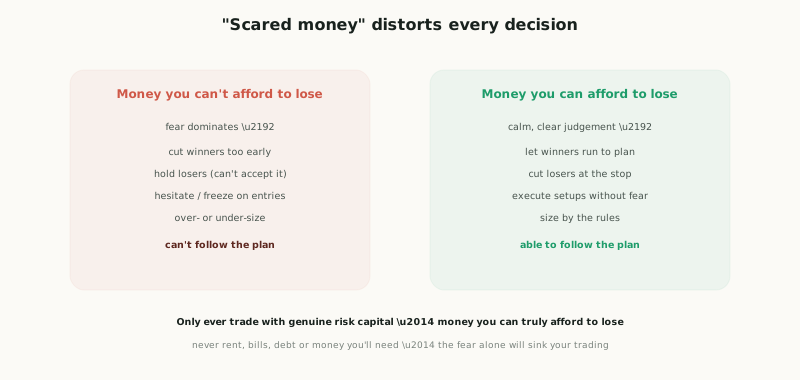
A: Fear takes over your decisions. With scared money you tend to cut winners far too early (grabbing any profit out of anxiety), hold losers too long (unable to accept a loss you can't afford), hesitate or freeze on valid entries, and size erratically — all of which make it nearly impossible to follow your plan. Ironically, the desperate need not to lose makes losing more likely, because fear-driven trading is poor trading.
Q: What should you do about it?
A: Only ever trade with genuine risk capital — money you can truly afford to lose without affecting your life or wellbeing. Never trade with rent, bills, debt, emergency savings, or money you'll need. If you're trading scared because the stakes are too high for your situation, the solution is to reduce your position sizes dramatically or step back until you can fund an account with money whose loss you could absorb calmly. Protecting your finances comes first.
What it is
"Scared money" refers to trading with funds you can't really afford to lose — money you need for rent, bills, debt repayments, emergency savings, or your basic financial security. Because losing it would genuinely hurt your life, every trade is loaded with fear, and that fear distorts your judgement. The term captures something crucial: the emotional weight of the money itself — quite apart from your strategy or skill — can sabotage your decisions. The same trade, with the same setup, feels completely different when the stake is money you'd shrug off losing versus money you desperately need — and that difference in feeling translates directly into a difference in behaviour. Scared money isn't about the amount in absolute terms; it's about what that money means to your life. The same £1,000 might be trivial risk capital for one person and terrifying rent money for another — and only the second is "scared money."
How it sabotages you, and the fix
When you trade with money you can't afford to lose, fear takes over your decisions, and fear is a terrible trader. The distortions are predictable and devastating. You cut winners far too early — the moment a trade shows profit, anxiety screams "take it before it disappears," so you grab a tiny gain and miss the move your plan would have captured. You hold losers too long — unable to accept a loss you can't afford, you freeze, hope, and let a small loss become a large one (the disposition effect on steroids). You hesitate or freeze on valid entries — the fear of losing makes you skip good setups or enter late (the fear of pulling the trigger). You size erratically — too small out of terror, then too big trying to "make it back." Every one of these makes it nearly impossible to follow your plan, because the plan requires calm, rule-based execution and scared money replaces that with raw emotion. The cruel irony is the heart of the problem: the desperate need not to lose makes losing more likely, because fear-driven trading is poor trading. You can't think in probabilities, accept the inevitable losing trades, or let an edge play out when each loss feels like a threat to your survival. Scared money turns even a sound strategy into a losing one, not through any flaw in the strategy but through the fear it forces into every decision.
The fix is simple to state and important to honour: only ever trade with genuine risk capital — money you can truly afford to lose without affecting your life or wellbeing. This is the foundational rule beneath all the psychology: get the money right, and calm, rule-based trading becomes possible; get it wrong, and no amount of technique will overcome the fear. Concretely: never trade with rent, bills, debt, emergency savings, or money you'll need for living — these must be ring-fenced and untouchable. If you find yourself trading scared because the stakes are simply too high for your situation, the solution is either to reduce your position sizes dramatically (so that even a string of losses is emotionally and financially trivial — a smaller stake you can lose calmly beats a larger one that paralyses you) or to step back until you can fund an account with money whose loss you could genuinely absorb without distress. There's no shame in trading smaller, or in waiting until your finances allow you to trade with true risk capital — both are signs of maturity, and both protect the calm state of mind that good trading requires. Above all, protecting your finances and wellbeing comes first: trading should never put your security, your essential needs, or your peace of mind at risk, and if it's doing so, the right move is to reduce risk or stop, not to push harder. A healthy relationship with trading starts with risking only what you can afford — financially and emotionally — to lose. The honest framing: "scared money" is trading with funds you can't afford to lose (rent, bills, debt, money you need), which loads every trade with fear that distorts your judgement — cutting winners early, holding losers, hesitating, sizing erratically — so you can't follow your plan, and the desperate need not to lose makes losing more likely. The fix is to trade only genuine risk capital you can truly afford to lose; never use money you need, and if you're trading scared, reduce size dramatically or step back until you can. Protecting your finances and wellbeing comes first.
Beyond money: emotional capital and position size
A useful way to think about scared money is that you trade with two kinds of capital: financial capital (your account) and emotional capital (your composure, resilience and peace of mind). Trading scared burns emotional capital fast — the constant fear, the gut-churning over every tick, the sleepless nights about money you can't afford to lose — and an emotionally bankrupt trader makes terrible decisions even if the account is technically intact. Protecting your emotional capital is therefore just as important as protecting your financial capital, and the two are deeply linked: risking money that matters too much drains both at once.
The crucial insight is that scared money isn't only about where the money came from — it's also about how much you risk. You can create the scared-money effect even with genuine risk capital simply by trading too big: if your position size is so large that each trade's potential loss feels frightening, you'll trade with the same fear-distorted judgement as someone risking the rent, regardless of how "affordable" the account technically is. This makes position sizing the key lever for the emotional problem as well as the financial one: sizing small enough that no single loss feels threatening (the logic behind the 1% rule) keeps you calm, which keeps your judgement clear — so prudent sizing isn't just financial protection, it's emotional protection that preserves your ability to follow the plan. If you ever notice fear creeping into your decisions, the first questions to ask are: is this money I can truly afford? and am I trading too big? — and the fix is usually to reduce size until the fear subsides and calm, rule-based trading returns. Building a healthy relationship with the money — risking only what you can lose without distress, financially and emotionally — is the foundation that lets every other psychological skill function. The honest reminder: you trade with both financial and emotional capital, and trading scared drains both — but the scared-money effect comes not only from using money you can't afford but also from trading too big, so even risk capital becomes "scared" if the position size makes each loss frightening; position sizing is the key lever (size small enough that no loss feels threatening), protecting your composure and your ability to follow the plan, and the fix for creeping fear is usually to reduce size until calm returns.
If trading is creating real financial strain or distress in your life, please treat that as the priority — it's completely valid to step back, trade much smaller, or seek support. I'm happy to talk through ways to approach this more safely, or to help you find appropriate resources if that would help.
"Scared money" is trading with funds you can't afford to lose (rent, bills, debt, money you need) — which loads every trade with fear that distorts your judgement: cutting winners early, holding losers, hesitating, sizing erratically — so you can't follow your plan, and the desperate need not to lose makes losing more likely. The fix: only ever trade genuine risk capital you can truly afford to lose (financially and emotionally) — never rent, bills, debt or essential savings. If you're trading scared, reduce size dramatically (a stake you can lose calmly) or step back until you can fund an account properly — there's no shame in either. Protecting your finances and wellbeing comes first: trading should never threaten your security or peace of mind.