The adverts promise a laptop on a beach and life-changing returns by next month. The reality of forex trading is slower, harder and far less glamorous — and understanding that gap is genuinely one of the most protective things a new trader can do for themselves. Unrealistic expectations don't just lead to disappointment; they actively cause the over-risking, over-trading and scam-vulnerability that destroy accounts. This guide sets realistic expectations: how much you can actually make, why most beginners lose, why get-rich-quick is a myth, and what the patient reality looks like.
It's the antidote to the thinking behind common beginner mistakes and forex scams, and it sets the tone for the trader's learning curve.
Key takeaways
Q: How much money can you make forex trading?
A: There's no fixed answer, and anyone promising specific returns is misleading you. Realistically, consistent profitability is hard to achieve and takes most successful traders a long time to reach. Professional traders and funds often target returns that sound modest — not the doubling-your-money-monthly figures marketed online. Your realistic return depends on skill, risk taken and capital, and for most beginners the first goal is simply not losing money while learning.
Q: Do most forex traders lose money?
A: Yes. Brokers in regulated regions are required to disclose the percentage of retail accounts that lose money, and that figure is consistently high — a majority. This isn't a reason never to try, but it's a sobering, honest baseline: success is the exception, not the norm, and approaching trading with that realism (rather than get-rich-quick expectations) is part of what improves your odds.
Q: Why is get-rich-quick a myth in forex?
A: Because consistent trading skill takes time to develop, returns compound gradually rather than explosively, and the high leverage that makes fast riches seem possible is the same thing that wipes out accounts. Get-rich-quick marketing relies on survivorship bias (showing the rare winners) and ignores the majority who fail. Sustainable trading is a slow, bumpy process of building skill, capital and discipline — not a shortcut.
The honest reality
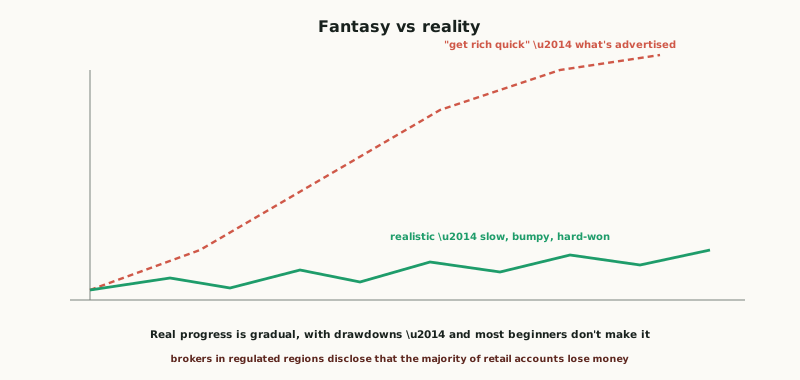
Let's start with the most important and least marketed fact: the majority of retail forex traders lose money. This isn't cynicism — it's documented. Brokers in regulated regions are required to disclose the percentage of their retail accounts that lose money, and that figure is consistently high (a clear majority). Success in trading is the exception, not the norm. Confronting that baseline matters, because it reframes everything: the goal for a beginner isn't to match the spectacular returns paraded online — it's first simply not to lose while learning, then to become consistently profitable, which most never achieve and which takes the successful a long time to reach. On the question of how much you can make: there's no honest fixed number, and anyone promising specific returns is misleading you. Tellingly, professional traders and funds often target annual returns that sound modest to a beginner raised on social-media hype — because steady, repeatable returns compounded over time are what actually builds wealth, not the doubling-your-account-every-month fantasy. Your realistic return depends on skill, the risk you take and your capital — and for most beginners, expecting to break even while learning is itself an ambitious and healthy goal.
Why get-rich-quick is a myth, and what's realistic
The get-rich-quick narrative collapses under a few simple truths. Skill takes time: developing a tested edge, the discipline to execute it, and the emotional control to survive drawdowns is a process of years, not weeks — there's a genuine learning curve with no shortcut. Returns compound gradually: even excellent percentage returns build wealth slowly at first, and the explosive growth people imagine requires both large capital and time — the maths simply doesn't support overnight riches from a small account without taking ruinous risk. And the leverage that makes fast fortunes seem possible is the very thing that wipes accounts out: the same tool that could double your money quickly can — and usually does — halve it faster (see the dangers of overleverage). The get-rich-quick story also leans heavily on survivorship bias: you see the rare winners (and the marketers selling the dream), never the majority who quietly failed. The realistic picture is altogether different and, properly understood, far more encouraging: a slow, bumpy, gradual process of building skill, capital and discipline, marked by drawdowns and plateaus, where the aim is steady, repeatable performance and the slow compounding of a hard-won edge. Crucially, realism is not discouragement — a trader with realistic expectations takes sensible risk (because they're not chasing impossible returns), is resilient through the hard middle (because they expected it to be hard), and is immune to scams and hype (because they know the promises are false). Those are exactly the qualities that improve the odds. The honest framing: realistic expectations protect you. The majority of retail traders lose money (brokers must disclose this); consistent profitability is hard and slow, and there's no honest fixed figure for "how much you can make" — professionals target returns that sound modest. Get-rich-quick is a myth because skill takes years, returns compound gradually, leverage wipes accounts out, and the dream rests on survivorship bias. The realistic path is slow, bumpy and gradual — building skill, capital and discipline — and embracing that realism (not as discouragement but as protection) leads to sensible risk, resilience and immunity to hype.
The mindset realistic expectations create
The deepest value of realistic expectations is how profoundly they change your behaviour for the better — which is why this is far more than a motivational caveat. A trader who has internalised the realistic picture naturally adopts a longer time horizon: understanding that skill takes years and returns compound gradually, they stop trying to force outsized gains and let progress accumulate, which paradoxically improves results by removing the pressure that drives reckless trades. They focus on process, not money: instead of fixating on the account balance (a source of anxiety and impatience), they judge themselves on whether they followed their plan and managed risk well — the things actually within their control — trusting that good process produces good outcomes over time. They treat early trading as skill-building rather than income generation, which makes losses easier to accept as tuition and reduces the desperation that leads to over-risking. And they use small capital and small risk while learning, because they know the first phase is about competence, not profit — protecting themselves during the period when most damage is done.
Perhaps most importantly, realistic expectations bring a kind of freedom from pressure that is itself protective. The trader chasing get-rich-quick returns is under constant strain — every trade must perform, every loss feels like failure, every slow week feels like proof something's wrong — and that strain breeds exactly the emotional, oversized, revenge-driven decisions that destroy accounts. The trader with realistic expectations carries none of that: they expected it to be slow and hard, so a drawdown is normal rather than alarming, a flat month is part of the process rather than a crisis, and there's no pressure to manufacture returns that aren't there. This calm is a genuine edge. It's worth being clear about first goals, too: for a beginner, the sensible early objectives are, in order, to survive (don't blow up while learning), to learn (build skill, process and discipline), and only then to pursue consistency — with significant profit a much later concern. None of this is pessimism; it's the realism that, by aligning expectations with reality, removes the pressure and recklessness that sink most beginners, and replaces them with the patience, process-focus and resilience that give a trader a genuine chance. Realistic expectations don't lower your ceiling — they keep you in the game long enough to reach it.
The quiet power of patient compounding
It's worth ending on the encouraging flip side, because realistic doesn't mean bleak. The reason professionals target returns that sound "modest" is that consistent returns, compounded over a long period, are genuinely powerful — far more so than the intuition suggests. A steady, repeatable edge applied patiently over years, with profits compounding, builds capital in a way that the get-rich-quick fantasy never actually delivers (because the fantasy's reckless risk usually ends in ruin first). The trader's real advantage isn't a spectacular month; it's survival plus consistency plus time. This reframes "modest" returns from disappointing to worthwhile: the goal isn't to double your account this month, but to develop a genuine edge, protect your capital so you stay in the game, and let consistency and compounding do their slow work. None of this is a promise — most never reach durable consistency, and there are no guarantees — but it explains why realistic, patient trading is the only version that has ever built lasting results, and why the unrealistic version reliably destroys them. Patience isn't the consolation prize for giving up on big returns; over a long enough horizon, it is the path to them.
So hold both truths together, because they're two sides of the same realism. The sobering side — most lose, it's slow, there's no shortcut — protects you from the recklessness that ruins beginners. The encouraging side — a genuine edge, patiently compounded, can build real results over time — gives you a reason to do the hard, unglamorous work properly. Neither hype nor despair serves you; clear-eyed realism does, because it sets expectations you can actually meet and keeps you in the game long enough to give your edge a chance to matter.
Realistic expectations are protective. The honest baseline: most retail traders lose money (brokers in regulated regions must disclose this, and the figure is a clear majority), consistent profitability is hard and slow, and there's no honest fixed number for how much you can make — professionals target returns that sound modest. Get-rich-quick is a myth: skill takes years, returns compound gradually, the leverage that promises fast riches wipes accounts out, and the dream rests on survivorship bias. The real path is slow, bumpy and gradual — building skill, capital and discipline through drawdowns. This isn't discouragement: a trader with realistic expectations takes sensible risk, stays resilient through the hard middle, and is immune to hype and scams — the very qualities that improve the odds.