
Every trading influencer you've ever seen is, by definition, one who made it onto your screen. The far larger crowd who tried the exact same thing and quietly blew up isn't posting screenshots. Survivorship bias — judging by the survivors while the failures stay invisible — systematically makes trading look far easier, more common and more reliable as a path to riches than it actually is, and it distorts everything from guru-worship to backtesting to strategy selection. This guide explains survivorship bias: what it is, where it strikes in trading, why it's costly, and how to counter it.
It's one of the most important cognitive biases for protecting yourself, it's the hidden engine of social media's distortions, and it breeds the unrealistic expectations that derail the trader's learning curve.
Key takeaways
Q: What is survivorship bias in trading?
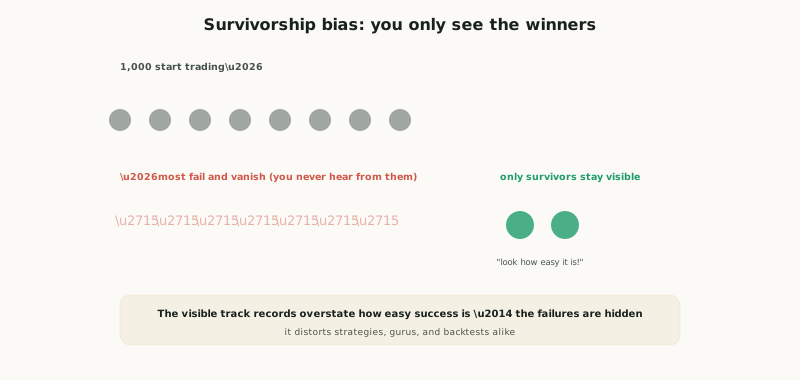
A: Survivorship bias is the error of drawing conclusions from the people or things that 'survived' a process while overlooking those that didn't — because the failures have dropped out of view. In trading, the gurus, success stories and profitable strategies you see are the survivors, while the far larger number who failed are invisible, making success look more common, easy and reliable than it actually is.
Q: How does survivorship bias affect backtesting?
A: In two ways. Testing a strategy only on assets that still exist today ignores those that went bankrupt or were delisted, overstating historical returns. And selecting the one strategy (or set of parameters) that 'worked' out of many you tested is itself survivorship — the surviving backtest can look excellent purely by chance, a form of data-mining that won't hold up out of sample.
Q: How do you counter survivorship bias?
A: Always ask 'what am I not seeing — where are the failures?' Treat success-story marketing and guru results with deep scepticism, since the people who failed don't post. In backtesting, use survivorship-bias-free data and validate on out-of-sample data rather than trusting the strategy that happened to survive many tests. Seek base rates — what proportion actually succeed — over anecdotes, and learn from failures, not just successes.
What it is and where it strikes
Survivorship bias is the error of drawing conclusions from the people or things that survived some selection process, while overlooking those that didn't — because the failures have dropped out of sight. The classic illustration comes from the Second World War: analysts examined returning aircraft to decide where to add armour, focusing on where the surviving planes were most hit — until a statistician pointed out the fatal flaw, that the planes hit in those areas were the ones that made it back; the truly vulnerable spots were where the downed planes (which no one could examine) had been hit. The lesson generalises everywhere: the sample you can see is biased toward survivors, so conclusions drawn from it can be exactly wrong. Trading is riddled with it.
| What you see (survivors) | What you don't see (failures) |
|---|---|
| Influencers posting profits | The majority who blew up and went quiet |
| "99% win rate" marketing | The blown accounts behind it |
| Backtests on assets that still exist | Assets that went bankrupt or delisted |
| The one strategy that "worked" | The many tested that didn't |
The gurus and influencers visible on social media are the survivors — a mix of the genuinely skilled, the merely lucky, and the marketing-savvy — while the vast majority who tried and failed simply stopped posting and vanished from view, so your feed wildly overstates how common success is (the direct link to social media and trading). Marketing trades on this: a "99% win rate" or a parade of winning screenshots shows you the survivors, never the blown accounts. Backtesting suffers two forms: testing only on assets that still exist ignores those that died (overstating returns), and — more insidiously — picking the one strategy or parameter set that "worked" out of many you tried is survivorship in action, a kind of data-mining where the surviving backtest looks brilliant purely by chance and collapses out of sample. Even learning is affected: studying only successful traders' habits, without seeing that many failed traders shared those same habits, teaches you nothing about what actually distinguishes success.
Why it's costly, and how to counter it
The cost of survivorship bias is a systematically distorted picture of reality: it inflates your estimate of the odds of success, lends false credibility to whatever the survivors happened to do (which may be irrelevant, or pure luck), makes you vulnerable to marketing that flaunts winners, and seeds the unrealistic expectations that lead new traders to over-risk and over-trade in pursuit of returns they've been shown are "normal." It's a quieter bias than revenge trading or FOMO — it doesn't strike in a single hot moment — but it shapes the entire framework within which a trader judges what's possible, which makes it foundational. Countering it is a discipline of seeking the invisible. The master habit is to always ask, of any success story or impressive result: "What am I not seeing? Where are the failures?" — consciously restoring the missing half of the picture. Treat guru and marketing success stories with deep scepticism, remembering that the failures don't post and that a visible winner tells you almost nothing without the base rate of how many tried. In backtesting, use survivorship-bias-free data (including delisted and dead instruments) and — crucially — validate any promising strategy on out-of-sample data it was never fitted to, so you're not fooled by a backtest that merely survived a search (this connects to over-fitting and to variance and luck). Seek base rates — what proportion of people who attempt this actually succeed? — rather than reasoning from anecdotes. And deliberately learn from failures, your own and well-documented ones, because the failures often hold the lessons the survivors' stories conveniently omit. The honest framing: survivorship bias is focusing on the survivors (successes) while overlooking the failures (invisible because they dropped out), distorting conclusions. In trading: the gurus you see are survivors while the majority who failed are silent (overstating how easy success is); "99% win rate" marketing shows winners not blown accounts; backtests on surviving assets overstate returns, and picking the one strategy that "worked" from many is survivorship; learning only from winners misleads. It's costly because it wildly overestimates the odds and reliability of success and breeds unrealistic expectations. Counter it by always asking "where are the failures?", treating success-story marketing with deep scepticism, using survivorship-free data and out-of-sample testing, seeking base rates over anecdotes, and learning from failures, not just successes.
Building realistic expectations
Beyond the specific traps, survivorship bias matters because of how profoundly it shapes a trader's baseline expectations — and getting those expectations right is quietly one of the most protective things a trader can do. When your sense of "normal" is built from a feed of survivors flaunting gains, you absorb a false picture in which consistent profits are common, large returns are routine, and anyone failing to achieve them is simply doing it wrong. That distorted baseline is corrosive: it pushes traders to over-risk in pursuit of the returns they've been shown are "standard," to feel like failures during the normal struggle that every trader experiences, and to abandon sound, patient approaches because they're not delivering the spectacular results the survivors seem to enjoy. Correcting for survivorship — internalising that the visible winners are a tiny, selected slice and that the realistic base rate of success is sobering — reframes expectations toward reality, and a trader with realistic expectations is far harder to stampede into reckless behaviour.
This connects directly to the trader's learning curve and to overconfidence: survivorship bias inflates beginners' confidence (success looks easy and common) right when humility would serve them best. The corrective isn't pessimism or discouragement — it's realism, which is something quite different and far healthier. Accepting that the path is genuinely hard, that most who attempt it don't succeed, and that the polished success stories conceal a mountain of invisible failures doesn't mean you can't succeed; it means you'll approach the attempt with appropriate seriousness, sane risk, patience through the hard middle, and resistance to get-rich-quick marketing — the very qualities that actually improve the odds. There's also genuine value in deliberately studying failure: documented blow-ups, the common mistakes that end accounts, your own losing trades reviewed honestly in a journal. The failures hold the instructive lessons the survivors' highlight reels omit, and learning what not to do is often more valuable than mimicking what a lucky survivor happened to do. Approached this way, awareness of survivorship bias becomes not a source of gloom but a foundation for the grounded, realistic mindset that separates traders who last from those who briefly arrive and quickly vanish into the invisible majority.
Your own survivorship bias
Finally, survivorship bias isn't only something others inflict on you through their highlight reels — you can inflict a version of it on yourself. Memory is selective: it's natural to recall your winning trades vividly, to screenshot the good calls, and to let the losers fade quietly into the background — building a private, flattering track record in your head that consists mostly of survivors. That self-administered survivorship bias breeds the same distortions: inflated confidence, an over-rosy sense of your own edge, and surprise when real results fall short of remembered ones. The antidote is the same discipline the site keeps returning to: record everything in a trading journal — every trade, win and loss alike — so your assessment of your own performance rests on the complete sample, not the survivors your memory chose to keep. An honest, full log is the one record immune to survivorship bias, because nothing is allowed to quietly drop out of it.
Survivorship bias is judging by the survivors while the failures stay invisible (they dropped out of view). In trading: the gurus you see are survivors — the majority who failed went quiet, so your feed overstates how easy success is; "99% win rate" marketing shows winners, never blown accounts; backtests on surviving assets overstate returns, and picking the one strategy that "worked" from many tested is survivorship that collapses out of sample. It's costly because it inflates the perceived odds of success, lends false credit to luck, and breeds unrealistic expectations. Counter it by always asking "what am I not seeing — where are the failures?", treating success-story marketing with deep scepticism, using survivorship-free data and out-of-sample testing, seeking base rates over anecdotes, and learning from failures, not just survivors.