
Its name promises a tidy 50 pips every single day. The market, of course, promises no such thing. Behind the catchy label of the 50 pips a day strategy sits a perfectly ordinary — and perfectly reasonable — early-session range breakout, useful enough as one structured setup but nothing like the daily cash machine the name implies. This guide explains the strategy honestly: how it works, the rules, and why the "pips a day" framing is marketing rather than a description of reality.
It's essentially a branded opening-range breakout, close cousin to the London breakout, and like any system it must be backtested before trusted.
Key takeaways
Q: What is the 50 pips a day strategy?
A: It's a popular named forex strategy built around an early-session range breakout. In the common version, you mark the high and low of a candle or period at a set time (often around the London open), then trade a breakout above the high (long) or below the low (short), with a stop on the other side of the range and a fixed pip target — hence the '50 pips' label. It's essentially an opening-range breakout with a catchy name.
Q: Does the 50 pips a day strategy actually make 50 pips a day?
A: No — and this is the key honest point. The name is marketing, not a description of results. Like any strategy it produces a mix of winning and losing trades; some days hit the target, some stop out, some produce no setup at all. You will not make 50 pips every day, and treating the name as a promise leads to disappointment and over-trading. It's a setup with an edge to be tested, not a daily guarantee.
Q: Is the 50 pips a day strategy worth using?
A: It can be a reasonable, structured breakout approach — it has clear rules, defined risk and a logical basis in session volatility. But it's not magic, its edge depends on market conditions (it suffers in choppy, range-bound periods full of false breaks), and you should backtest and forward-test it yourself rather than trusting marketed claims. Treat it as one structured setup to evaluate, not a shortcut to guaranteed income.
How the strategy works
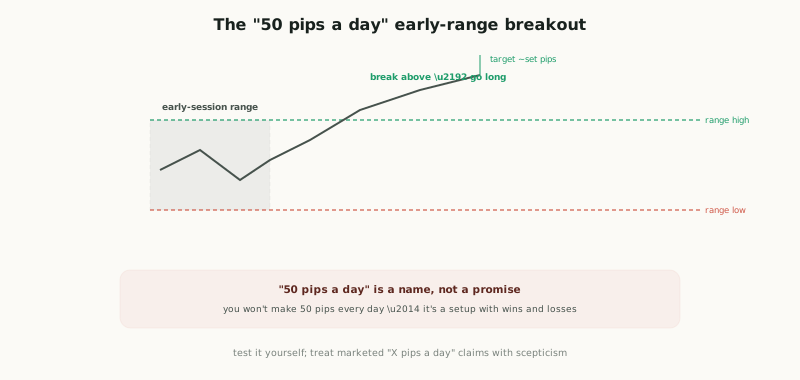
Versions vary, but the common form of the 50 pips a day strategy is a simple early-session range breakout. The trader marks the high and low of a particular candle or time window — often the candle around the London open, a time of rising volatility — to define a small range. They then place orders to trade a breakout: a buy stop just above the range high (to go long if price breaks up) and/or a sell stop just below the range low (to go short if price breaks down), with the stop-loss on the opposite side of the range and a fixed target (the "50 pips," in the classic telling) — sometimes cancelling the opposite order once one triggers. The logic is sound enough: the early session often produces a directional move as liquidity and news flow in, and a breakout from the initial range aims to ride it. In other words, strip away the branding and it's a textbook opening-range breakout applied at a volatile time of day — a legitimate, structured idea with clear rules and defined risk.
The honest reality of "pips a day" strategies
Here is the essential, honest point that the marketing obscures: you will not make 50 pips every day, and the name should never be read as a description of results. Like every strategy, this one produces a mix of winning and losing trades — some days the breakout runs and hits the target, some days it breaks and reverses (a false breakout) and stops you out, and many days there's no clean setup at all. The "50 pips a day" framing is marketing, a catchy label designed to sell the dream of effortless daily income, and treating it as a promise leads straight to the damage that unrealistic expectations cause: disappointment when the daily target isn't met, over-trading to "make up" the missing pips, and abandoning the method after a normal losing streak. Be especially wary of the whole genre of "X pips a day" strategies — they're a staple of forex marketing precisely because the promise is seductive, and the more guaranteed-sounding the pitch, the more scepticism it deserves. No setup delivers a fixed number of pips on schedule; the market doesn't dispense profits on a daily timetable. A realistic trader treats this as one structured breakout setup with a probabilistic edge to be tested — not a salary.
So how should you actually approach it? Test it yourself: backtest and forward-test the specific rules (which session, which pair, what target and stop) on real data before risking money, rather than trusting any marketed win-rate — the edge, if it exists for your version, has to be demonstrated, not assumed. Understand its conditions: like all breakout strategies, it tends to work better when the session produces genuine directional moves and to suffer in choppy, range-bound conditions that generate repeated false breaks — so it's not an all-weather method, and recognising when it's in or out of favour matters. Apply proper risk management regardless of the name: fixed small risk per trade, a real stop, sensible position sizing — the "50 pips" target is just one component of a risk-reward structure, not the headline. And drop the daily-target mindset: judge the strategy over a large sample of trades by its expectancy, not by whether it delivered its namesake pips today. Approached this way — as a reasonable, structured opening-range breakout to evaluate on its merits — the "50 pips a day" strategy is a perfectly fine setup to have in the toolkit. Approached as its name suggests — a guaranteed daily payout — it's a recipe for the over-trading and disillusionment that the name's false promise reliably produces. The honest framing: the 50 pips a day strategy is an early-session range breakout (mark a candle/period's high and low near, e.g., the London open; trade a break above/below with a stop on the far side and a fixed target) — essentially a branded opening-range breakout, a legitimate structured idea. But the name is marketing, not a result: you won't make 50 pips every day; it produces wins, losses and no-setup days like any method. Be sceptical of all "X pips a day" claims, backtest your version, understand it suffers in choppy conditions, apply real risk management, and judge it by expectancy over many trades — not by a daily pip target.
A more honest way to use the underlying idea
Strip away the marketing name, and there's a genuinely sound idea buried in the "50 pips a day" strategy — the opening-range breakout — and a serious trader can use that idea properly by doing the opposite of what the name encourages. First, replace the fixed pip target with a proper risk-reward structure. Instead of "always aim for 50 pips," define the stop by the setup (the other side of the range, or a volatility-based distance using the ATR) and the target by a sensible multiple of that risk or by the next structural level — so the trade is judged on reward relative to risk, not on hitting an arbitrary round number that ignores how much the market is actually moving that day. Second, filter by conditions: the breakout idea works best when the session produces real directional movement and badly in choppy, range-bound conditions that spew false breaks, so a serious version adds filters — trading only the most volatile sessions (the London open being the classic), only liquid pairs, perhaps only in the direction of the higher-timeframe trend, and standing aside when there's no clean range or the market is directionless.
Third, test it as a hypothesis, not a slogan. Treat "an early-session range breakout on this pair, with this stop and this target rule, in these conditions" as a precise, testable system, and backtest and forward-test it to find its real win rate, average win and loss, and expectancy — then judge whether it has an edge for you, rather than accepting a marketed claim. Fourth, drop the daily quota entirely: some days the setup won't appear, some days it'll lose, and forcing trades to "earn the day's pips" is precisely the over-trading the name induces — a real trader takes the setup when it's there and stands aside when it isn't, judging performance over hundreds of trades. Reframed like this, the strategy becomes what it always should have been: one structured, condition-dependent breakout setup with a tested edge and proper risk management, sitting in a broader toolkit — not a magic daily income generator. The value was never in the number "50"; it's in the disciplined application of a sound breakout idea, which is exactly what the catchy name distracts people from. The honest reminder: the underlying opening-range breakout is legitimate; the "50 pips a day" packaging is not, and the difference between profiting and being disappointed is whether you trade the idea with discipline or chase the name with hope.
The 50 pips a day strategy is an early-session range breakout: mark a candle/period's high and low (often near the London open), trade a break above (long) or below (short) with a stop on the far side and a fixed target — essentially a branded opening-range breakout, a legitimate structured idea. But the crucial truth: "50 pips a day" is a name, not a promise. You won't make 50 pips every day — it produces wins, losses and no-setup days like any method, and the label is marketing. Be sceptical of all "X pips a day" claims, backtest your version yourself, know it suffers in choppy conditions (false breaks), apply proper risk management, and judge it by expectancy over many trades — never by a daily pip target. A fine setup to evaluate; not a salary.