Opening a forex account is quick — often just minutes — but the order in which you do things, and the checks you make first, matter far more than the speed. The application is the easy part; the due diligence around it is what protects you. Here's the sensible, safety-first way to go from "I want to trade" to a funded account you can trust, without rushing into avoidable mistakes. This guide walks through opening a forex account step by step: choosing a broker, the account type, verification, funding, and demo-first.
It builds directly on choosing a broker and account types, and leads into demo vs live trading.
Key takeaways
Q: How do you open a forex trading account?
A: In short: choose a properly regulated broker, pick an account type that suits you, complete identity verification (KYC), fund the account with money you can afford to lose, and — ideally — practise on a demo account first. The application itself is usually online and takes only minutes, but the important work is the due diligence before and around it: verifying regulation, understanding the account, and not rushing to deposit and trade real money.
Q: What do you need to open a forex account?
A: Typically proof of identity (a passport or driving licence) and proof of address (a utility bill or bank statement) for the KYC verification that regulated brokers require, plus a funding method (bank transfer, card or e-wallet). You'll also answer questions about your trading experience and finances, as brokers must assess suitability. Having clear documents ready makes the process smooth and avoids delays later when you withdraw.
Q: Should you use a demo account first?
A: Yes — almost always. A demo (practice) account lets you learn the platform, test how orders work, and trial a strategy with virtual money and zero financial risk. It's the best way to make your inevitable beginner mistakes harmlessly. Spend real time on a demo before going live, then start live trading with very small size. Skipping the demo and jumping straight to real money is one of the most common and costly beginner errors.
The steps
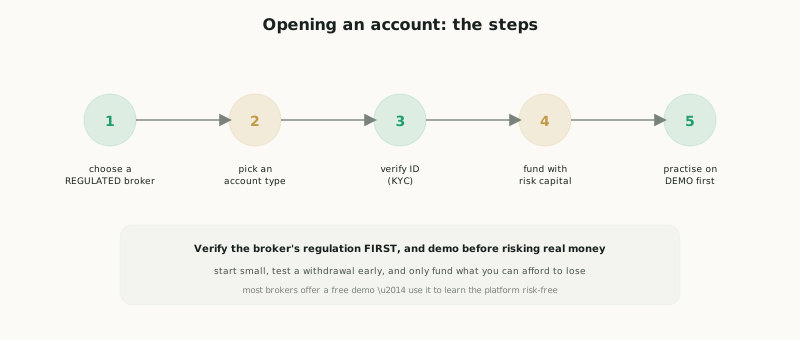
Opening an account follows a clear sequence, and doing it in the right order — with the checks before the deposit — is what keeps you safe:
Opening an account, step by step
Step by step: choose a properly regulated broker — the single most important step, done first, since everything else rests on the broker being trustworthy (verify its licence on the regulator's own register before anything else — see choosing a broker). Then pick an account type that suits you (see account types — a beginner usually wants a standard or micro/mini account with modest minimums, and should be wary of high-leverage offshore options). Complete identity verification (KYC) — regulated brokers must verify who you are, so you'll upload proof of identity (passport or driving licence) and proof of address (a utility bill or bank statement), and answer questions about your experience and finances (brokers must assess suitability); this is normal and a good sign. Fund the account via bank transfer, card or e-wallet — with only money you can afford to lose (see deposits and withdrawals, and start small). And, ideally, practise on a demo first. The whole application is usually online and takes only minutes, but the important work is the due diligence: verifying regulation, understanding the account, and not rushing to deposit and trade real money.
Get your documents ready, and demo first
Two practical points smooth the process and protect you. On what you need: have your documents ready — proof of identity (passport/driving licence), proof of address (utility bill/bank statement), and a funding method in your own name — because clear, valid documents make KYC fast and, crucially, avoid frustrating delays later when you withdraw (brokers typically require full verification before releasing funds, so getting it right up front pays off). Expect the suitability questions about your trading experience and finances; answer them honestly (they exist to protect you).
On demo first: yes, almost always use a demo (practice) account before going live. A demo lets you learn the platform, test how orders work (market, limit, stop — see order types), and trial a strategy with virtual money and zero financial risk — it's the best way to make your inevitable beginner mistakes harmlessly, learning the mechanics where errors cost nothing. Spend real time on a demo (long enough to be comfortable and to have tested your approach), then start live trading with very small size (because, as covered in demo vs live, real trading adds emotions a demo can't replicate, so ease in gently). Skipping the demo and jumping straight to real money is one of the most common and costly beginner errors — there's simply no reason to learn the platform's quirks (and your own) with real capital on the line when a free, risk-free practice version exists. The disciplined path — regulated broker, suitable account, verified identity, modest funding with risk capital, and demo before live — turns account-opening from a rushed gateway to losses into a careful, safe foundation for learning to trade. The honest framing: to open a forex account, choose a properly regulated broker (verify the licence first), pick a suitable account type, complete KYC identity and address verification, fund with only money you can afford to lose, and practise on a demo before going live. The application takes minutes, but the real work is the due diligence: verify regulation before depositing, have your ID/address documents ready to avoid withdrawal delays, start small, and never skip the demo — jumping straight to real money is a classic costly mistake.
Common mistakes when opening an account
The account-opening stage is where several costly beginner mistakes happen — and they're easy to avoid once you know them. The biggest is choosing a broker on the wrong criteria: beginners are routinely lured by flashy bonuses, sky-high leverage, or slick marketing, when the only criterion that truly matters first is genuine regulation. Picking an unregulated or offshore broker to access huge leverage (or a tempting bonus) is a classic trap — you give up real protection for the "freedom" to take on account-destroying risk, and bonuses often come with strings that lock up your funds. Always let regulation and reputation lead, never the perks.
Other frequent mistakes: rushing to deposit a large sum before you've tested the broker or your strategy (start small, prove you can withdraw, then add more); not reading the terms (fees, spreads, withdrawal conditions, the swap/financing on your account type — the details that quietly cost you); funding with money you can't afford to lose (rent, bills, savings you need — the scared-money trap that wrecks decision-making from day one); and skipping the demo to jump straight into live trading with real capital. There's also the simple error of incomplete or mismatched verification documents, which causes painful delays when you later try to withdraw. The thread running through all of these is impatience — the rush to start trading overriding the basic checks that keep you safe. The disciplined opener does the opposite: verifies regulation, reads the terms, funds modestly with risk capital, demos first, and never lets a bonus or leverage offer override the fundamentals. Getting the account-opening stage right removes a whole category of avoidable losses before you've placed a single trade. The honest reminder: avoid the common account-opening mistakes — choosing a broker on bonuses or high leverage instead of genuine regulation (especially going offshore for leverage), rushing to deposit a large sum, not reading the terms, funding with money you can't afford to lose, skipping the demo, and submitting mismatched documents that delay withdrawals; the common thread is impatience, so verify regulation, read the terms, fund modestly with risk capital, and demo first.
Think of opening the account as the first real test of your trading discipline: the same patience and refusal to be rushed that will serve you in the markets are exactly what you need here. Do it carefully once, and you've built a trustworthy base; do it in a hurry chasing a bonus, and you may be cleaning up the consequences for a long time.
One last reassurance: there is no prize for opening fastest, and no broker offer is so good it won't be matched elsewhere tomorrow. The market and the brokers will still be there next week, so take the extra hour to verify regulation, read the fine print, and set up a demo — it is, without exaggeration, one of the highest-return hours you'll ever spend as a trader.
Done right, the whole setup is a calm, deliberate half-hour — and the foundation everything that follows is built on.
To open a forex account: (1) choose a properly regulated broker — verify the licence first; (2) pick a suitable account type; (3) complete KYC (ID + address verification — normal and a good sign); (4) fund with only money you can afford to lose (start small — see deposits); and (5) practise on a demo before going live. The application takes minutes, but the real work is the due diligence: verify regulation before depositing, have your ID/address documents ready (to avoid withdrawal delays later), and answer the suitability questions honestly. Never skip the demo — learn the platform and your strategy risk-free, then ease into live trading with very small size; jumping straight to real money is a classic, costly beginner mistake.