
Perfectionism feels like a virtue — surely caring about doing it right is good? But in trading, the demand for a flawless record collides head-on with a probabilistic reality, and the result is paralysis, harsh self-criticism, broken discipline, and burnout. Counterintuitively, letting go of perfect is how you become consistent — and consistency, not perfection, is what actually works. This guide explains perfectionism in trading: why it backfires, how it shows up, and how to aim for the right target instead.
It's a major driver of analysis paralysis, directly at odds with thinking in probabilities, and a common obstacle to emotional resilience.
Key takeaways
Q: Why is perfectionism a problem in trading?
A: Because trading is inherently probabilistic — even a great strategy loses regularly — so a flawless record is impossible. A perfectionist who can't accept this ends up waiting endlessly for the 'perfect' setup (missing trades), treating normal losses as failures, over-analysing into paralysis, and abandoning their rules in pursuit of an unattainable standard. The very trait that feels responsible becomes a source of stress and poor performance.
Q: How does perfectionism show up in traders?
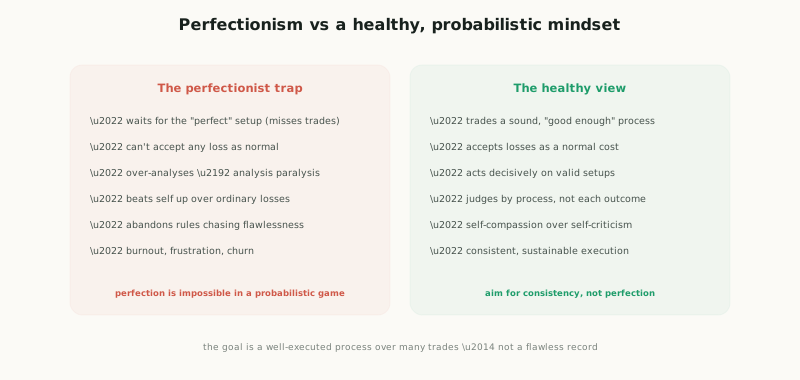
A: Common signs: waiting for the 'perfect' setup and missing good trades; inability to accept losses as normal; over-analysing every decision until paralysed (analysis paralysis); harsh self-criticism over ordinary losses; constantly tinkering with or abandoning a sound system chasing flawlessness; and emotional exhaustion or burnout from the impossible standard. It often masquerades as diligence but produces inconsistency and distress.
Q: How do you overcome perfectionism in trading?
A: Reframe the goal: aim for consistent execution of a sound process over many trades, not a flawless record. Accept that losses are a normal, expected cost of a probabilistic edge — not failures. Embrace 'good enough' setups that meet your criteria rather than holding out for perfection, act decisively, judge yourself on process rather than individual outcomes, and practise self-compassion instead of self-criticism. Consistency beats an impossible perfection.
Why it backfires
The fundamental problem is that perfectionism collides with the nature of trading. Trading is inherently probabilistic: even a great strategy loses regularly (see thinking in probabilities), so a flawless record is impossible — there is no way to trade without taking losses, missing some moves, and being "wrong" a meaningful fraction of the time. A perfectionist who can't accept this is at war with reality itself, demanding a standard the game cannot deliver. And because the standard is unattainable, the pursuit of it produces the opposite of what the perfectionist wants: instead of excellence, it generates stress, inconsistency, and poor performance. The cruel irony is that the trait that feels most responsible and diligent — "I just want to do this perfectly" — is, in a probabilistic domain, actively self-defeating. Perfectionism is a recipe for excellence in domains where flawlessness is possible; in trading, where it isn't, it's a recipe for misery and underperformance.
How it shows up, and the reframe
Perfectionism wears several disguises, and recognising them is the first step.
Signs of trading perfectionism
These signs all flow from the same root. Waiting for the "perfect" setup means holding out for an ideal that rarely comes, missing good, valid trades in the meantime (and often entering late, in frustration, on a worse setup). Inability to accept losses turns every normal, expected loss into a personal failure, generating disproportionate emotional pain. Over-analysis — the endless search for more confirmation to make the decision "perfect" — produces analysis paralysis, where you can't pull the trigger at all. Harsh self-criticism over ordinary losses erodes confidence and wellbeing. And the constant tinkering with (or abandoning of) a perfectly sound system in pursuit of a flawless one destroys the consistency that any edge needs to express itself, while the relentless impossible standard breeds frustration and burnout. Notice that perfectionism often masquerades as diligence — it feels like high standards — but produces inconsistency and distress, the opposite of disciplined trading.
The cure is a reframe of the goal itself: aim for consistent execution of a sound process over many trades, not a flawless record. Several shifts make this real. Accept losses as a normal, expected cost of a probabilistic edge — not failures, but the unavoidable price of playing a game with positive expectancy (every casino "loses" countless bets and still profits). Embrace "good enough" setups that genuinely meet your criteria, rather than holding out for a perfection that doesn't exist — a setup that fits your rules is the right setup, and acting on it decisively beats waiting for an ideal. Judge yourself on process, not individual outcomes (see process over outcome): a well-executed trade that lost is a success of process, and that's what you control. And — importantly for wellbeing — practise self-compassion rather than self-criticism: treat your inevitable losses and imperfect trades with the same understanding you'd offer a friend, because the harsh inner critic doesn't make you better, it just makes you anxious and inconsistent. The liberating truth is that you don't need to be perfect to be profitable — you need to execute a sound process consistently, accept the losses that come with it, and let the edge play out. Trading well is about consistency, not perfection; the moment you stop demanding flawlessness, you free yourself to actually trade your edge calmly — which is, paradoxically, far closer to "doing it right" than perfectionism ever gets you. The honest framing: perfectionism backfires in trading because the game is probabilistic — a flawless record is impossible, so demanding one produces missed trades (waiting for "perfect"), treating normal losses as failures, analysis paralysis, harsh self-criticism, rule-breaking and burnout. It masquerades as diligence but breeds inconsistency and distress. The reframe: aim for consistent execution of a sound process over many trades, accept losses as a normal cost, take "good enough" setups decisively, judge yourself on process not outcomes, and practise self-compassion. You don't need to be perfect to be profitable — consistency beats an impossible perfection.
Where it comes from, and breaking the cycle
Perfectionism in trading usually has roots worth understanding, because naming them loosens their grip. Often it's tangled up with ego and a fear of being wrong — if your self-worth is tied to being right, then every loss feels like a personal indictment, so you desperately seek a "perfect" approach that never has to be wrong (see ego and trading). Sometimes it's a need for control projected onto a domain that is fundamentally uncertain — the perfectionist tries to eliminate uncertainty through ever-more analysis, which is impossible and leads straight to paralysis. And it's frequently fuelled by comparison: measuring yourself against the highlight reels of other traders (the survivorship-skewed wins on social media), which sets an impossible, fictional standard of flawless success that nobody actually achieves. These roots feed vicious cycles: perfectionism drives analysis paralysis (never enough certainty to act), and the frustration of missed trades and "imperfect" losses can tip into revenge trading as the perfectionist lurches from over-caution to over-aggression.
Breaking the cycle takes deliberate, practical countermeasures. Pre-commit to your rules: define your setup criteria objectively in advance, so a trade either meets them (take it) or doesn't (skip it) — removing the endless subjective hunt for "more perfect." Define "good enough" concretely: decide what a valid, tradeable setup looks like and accept that meeting your criteria is the standard — the "B+ trade" that fits your rules is exactly the trade to take, and waiting for an "A+" that rarely comes just costs you your edge. Practise self-compassion deliberately: when you take a normal loss or an imperfect trade, consciously respond as you would to a friend — "that was a sound trade that didn't work out" — rather than with the harsh inner critic, because self-criticism doesn't improve performance, it just adds anxiety and inconsistency (and harms wellbeing). Journal on process, not perfection: review whether you followed your plan, marking a well-executed losing trade as a win for process — which retrains you to value consistency over flawless outcomes. And cultivate the underlying acceptance that uncertainty and loss are permanent features of trading, not problems to be perfected away. Over time, these practices replace the exhausting, self-defeating pursuit of perfection with the calm, repeatable consistency that actually produces results — and, not incidentally, makes trading sustainable rather than a source of chronic stress. The honest reminder: perfectionism is often rooted in ego/fear of being wrong, a need for control over an uncertain game, and comparison to others' highlight reels — feeding analysis paralysis and even revenge trading; break the cycle by pre-committing to objective rules, defining and accepting "good enough" (the B+ trade that fits your rules), practising self-compassion over self-criticism, journaling on process, and accepting uncertainty and loss as permanent features rather than flaws to perfect away.
Perfectionism backfires in trading because the game is probabilistic — a flawless record is impossible, so demanding one produces the opposite of excellence: missed trades (endless wait for the "perfect" setup), normal losses felt as failures, analysis paralysis, harsh self-criticism, rule-breaking, and burnout. It masquerades as diligence but breeds inconsistency and distress. The reframe: aim for consistent execution of a sound process over many trades — not a flawless record. Accept losses as a normal cost of a probabilistic edge, take "good enough" setups (that meet your rules) decisively, judge yourself on process not outcomes, and practise self-compassion over self-criticism. You don't need to be perfect to be profitable — consistency beats an impossible perfection.