Trading feels like a purely mental game, but the mind runs on the body. Sleep, movement, what you eat, and how you recover all shape the focus, emotional control and judgement that good trading demands. Neglect the physical foundations and your psychology suffers — the sharpest strategy in the world can't survive a tired, depleted, run-down mind. Peak performance starts with the basics. This guide covers physical health and trading: why it matters, which factors count most, and how to look after the body your trading brain depends on.
It underpins everything in trading psychology — directly affecting decision fatigue, stress and burnout, and the focus that good trading requires.
Key takeaways
Q: Does physical health really affect trading performance?
A: Yes — significantly. Trading depends on focus, emotional control, and sound judgement, and all of these are degraded by poor sleep, inactivity, poor nutrition and lack of recovery. A tired, run-down trader makes worse decisions, controls emotions less well, and tires faster (decision fatigue). Peak-performance psychology, as used in elite sport, treats the physical body as the foundation of mental performance — and trading is no different. You trade with your whole body, not just your brain.
Q: What physical factors matter most for traders?
A: Sleep is foundational — it underpins focus, mood and self-control, and poor sleep measurably impairs judgement. Regular exercise supports mood, stress resilience and mental sharpness. Reasonable, balanced nutrition and good hydration keep energy stable rather than spiking and crashing. And rest — breaks during the day and proper recovery — prevents the depletion and burnout that erode decision quality. None of this is exotic; it's the ordinary basics of health, applied with the seriousness a demanding performance task deserves.
Q: How should traders look after their physical health?
A: Prioritise consistent, sufficient sleep; build in regular physical activity; eat in a balanced, steady way and stay hydrated; and take real breaks during trading sessions rather than sitting glued to the screen for hours. Avoid trading when exhausted, ill or depleted. The aim is simply to bring your mind to the screen in good condition. For personalised health, sleep or nutrition guidance, it's worth speaking to a qualified professional — this is general performance context, not medical advice.
Why it matters
Physical health affects trading performance significantly, because trading depends on exactly the faculties that poor physical condition degrades: focus, emotional control, and sound judgement. A tired, run-down trader makes worse decisions, controls emotions less well (a poorly-rested brain is more reactive, more prone to fear, frustration and impulse), and tires faster through the session (worsening decision fatigue). The connection is not vague wellness advice — it's mechanical: your prefrontal cortex (the seat of the deliberate, rule-following System 2 thinking that disciplined trading requires) is precisely what gets impaired by sleep deprivation, stress and poor physical condition, while the emotional, impulsive responses get amplified. This is why peak-performance psychology, as used in elite sport and other high-stakes fields, treats the physical body as the foundation of mental performance — athletes don't separate "mental game" from physical preparation, because they know the two are inseparable. Trading is no different: you trade with your whole body, not just your brain, and the quality of your decisions on the screen reflects the condition you bring to it. A trader who optimises charts and strategy while neglecting sleep and health is tuning the engine while ignoring the fuel.
The factors that matter, and how to look after them
The factors that matter most are unglamorous and familiar — which is exactly why they're so often neglected:
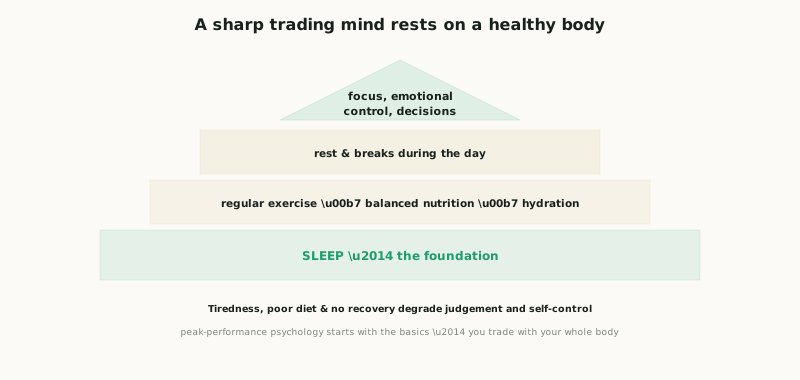
The physical foundations of trading performance
Sleep is the foundation — it underpins focus, mood and self-control, and poor sleep measurably impairs judgement (a sleep-deprived brain makes decisions a little like a mildly intoxicated one), so consistent, sufficient sleep is arguably the single highest-leverage thing a trader can do for performance. Regular exercise supports mood, stress resilience and mental sharpness, and helps discharge the tension that screen-based, high-stakes work builds up. Reasonable, balanced nutrition and good hydration keep your energy stable through a session rather than spiking and crashing (the mid-afternoon slump after a heavy lunch, or the jitter-then-crash of too much caffeine, are real performance enemies). And rest — genuine breaks during the day and proper recovery outside trading hours — prevents the depletion and burnout that erode decision quality over time. None of this is exotic; it's the ordinary basics of health, applied with the seriousness a demanding performance task deserves.
Looking after these is straightforward in principle: prioritise consistent, sufficient sleep; build in regular physical activity; eat in a balanced, steady way and stay hydrated; and take real breaks during sessions rather than sitting glued to the screen for hours on end (which both depletes you and worsens decision fatigue). Crucially, avoid trading when exhausted, ill or depleted — recognise that your judgement is compromised in that state and either trade minimally or step away (the market will be there tomorrow; a bad decision made while run-down may not be so easily undone). The overarching aim is simple: bring your mind to the screen in good condition, so that your psychology and your strategy have the physical platform they need to work. A final, sensible caveat: this is general performance context, not medical or dietary advice — for anything personalised around sleep, health, nutrition or exercise, it's worth speaking to a qualified professional who can tailor guidance to you. The point here isn't a prescriptive regimen but a mindset: treat your physical health as part of your trading edge, because the calm, focused, disciplined mind that good trading requires can only be sustained by a well-cared-for body. The honest framing: physical health significantly affects trading, because focus, emotional control and judgement — the faculties trading depends on — are degraded by poor sleep, inactivity, poor nutrition and lack of recovery; peak-performance psychology treats the body as the foundation of the mind, and you trade with your whole body. Sleep is foundational, with exercise, balanced nutrition, hydration and real breaks supporting it; avoid trading when depleted. Bring your mind to the screen in good condition — and see a professional for personalised health guidance.
The screen-trader's specific challenges
Trading carries its own particular physical toll, beyond general health, because of how it's done: sedentary, screen-based, sustained-attention work, often at irregular hours dictated by global sessions. Long hours sitting and staring at screens bring eye strain, poor posture and the stiffness and sluggishness of inactivity. The stress response of watching profit and loss tick up and down — a low-grade fight-or-flight activation sustained for hours — is genuinely taxing on the body and mind, and can leave you wired, depleted and poorly rested. Many traders lean on caffeine to push through, which in excess fuels jitteriness, anxiety and a crash that further degrades judgement. And the irregular hours of trading sessions in different time zones can disrupt sleep — the very foundation of performance — especially for those trading outside their natural waking hours.
The mitigations are practical and general. Build in movement breaks — standing, stretching, walking away from the desk periodically — to counter the sedentary toll and reset your attention (which also helps decision fatigue). Take regular screen breaks to rest your eyes and mind. Manage caffeine sensibly rather than relying on it to mask tiredness (it can't substitute for sleep, and over-use backfires). Set up a reasonable, comfortable workspace (decent posture, screen position and lighting) so the physical environment isn't quietly draining you. And pay particular attention to sleep around your session times — if you trade hours that clash with your natural rhythm, protecting sleep becomes both harder and more important, and it may be worth questioning whether trading at 3am is worth the toll. The broader point is that the way trading is done — still, screen-bound, stressful, often at odd hours — works against the body's wellbeing by default, so a trader has to actively counteract it rather than drift into the sedentary, sleep-disrupted, caffeine-fuelled pattern the activity naturally pulls toward. As always, this is general guidance — for anything personalised, see a qualified professional. The honest reminder: trading has its own physical toll — sedentary screen work, sustained attention, the stress of watching P&L, caffeine over-reliance and irregular session hours that disrupt sleep — so actively counteract it with movement and screen breaks, sensible caffeine use, a comfortable workspace, and protected sleep around your session times, recognising that the way trading is done works against the body by default unless you deliberately manage it.
It's easy to dismiss all this as soft advice next to charts and strategy, but consider the asymmetry: a trader can spend years perfecting an edge, then routinely hand back its rewards through tired, rushed, poorly-judged decisions made on four hours' sleep and a sixth coffee. The body is the one variable that touches every trade you make, all day, every day — which makes it among the highest-leverage things you can look after. You don't need to become an athlete; you need only stop sabotaging the instrument you trade with. Treat the basics as non-negotiable infrastructure, and your psychology and strategy finally get the stable platform they need.
Physical health significantly affects trading: the focus, emotional control and judgement it demands are degraded by poor sleep, inactivity, poor nutrition and no recovery (a tired brain decides worse, reacts more, and tires faster — worsening decision fatigue). Peak-performance psychology treats the body as the foundation of the mind — you trade with your whole body. Sleep is foundational; regular exercise, balanced nutrition & hydration, and real breaks/recovery support it — and don't trade when exhausted, ill or depleted. The aim: bring your mind to the screen in good condition, treating health as part of your edge. This is general performance context, not medical advice — for personalised sleep, nutrition or health guidance, speak to a qualified professional.