Trading and gambling share a lot of wiring — risk, reward, uncertainty, and the dopamine of a win. For most people, trading is a disciplined, considered pursuit. But for some, it can tip into something compulsive and harmful — and recognising that line, honestly, matters far more than any strategy or indicator. This is a serious wellbeing topic, and it deserves a clear, compassionate look. This guide explains trading addiction: how it can develop, the warning signs, how it differs from healthy trading, and — most importantly — where to find support.
It sits at the difficult end of trading's emotional dynamics, related to revenge trading, overtrading and stress and burnout — but it's fundamentally a health matter, not just a discipline one.
Key takeaways
Q: Can trading become an addiction?
A: Yes. Trading shares much of its psychology with gambling — risk, reward, uncertainty and the dopamine hit of a win — and for some people it can become compulsive in the same way problem gambling does. When trading stops being a disciplined, considered activity and becomes a compulsion you can't control, that's harming your finances, relationships or wellbeing, it has crossed into addictive behaviour and should be treated as a health issue, not a strategy problem.
Q: What are the warning signs of trading addiction?
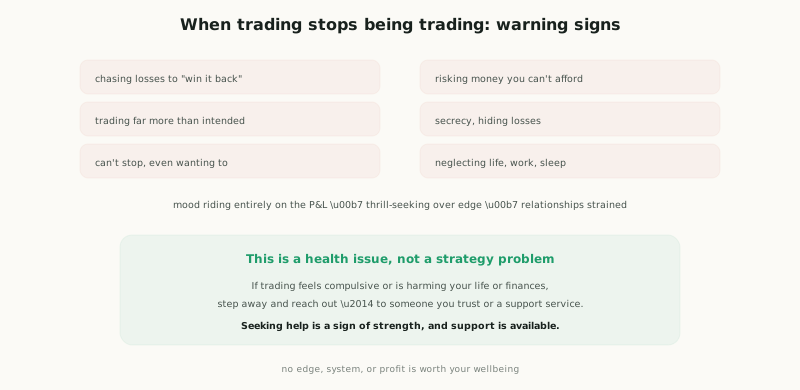
A: Common signs include: chasing losses to win them back, trading far more (or larger) than intended, being unable to stop even when you want to, risking money you can't afford to lose, secrecy and hiding losses, neglecting work, sleep or relationships, mood swings tied entirely to your profit and loss, and trading for the thrill rather than a considered edge. If trading feels compulsive or is harming your life, these are serious red flags.
Q: What should I do if I think I have a trading problem?
A: Treat it as a wellbeing issue and reach out for support. Step away from trading, talk to someone you trust, and consider contacting a problem-gambling or mental-health support service, which can offer confidential, specialist help (problem-gambling resources apply to compulsive trading too). Practical steps like restricting account access can help, but the most important thing is to seek support — this is common, treatable, and not a personal weakness.
How trading can become compulsive
Trading shares much of its psychology with gambling: the risk, the uncertain reward, the variable, intermittent payoff (sometimes you win, sometimes you don't, unpredictably) — which is, in fact, the exact reinforcement pattern psychologists know is most powerfully habit-forming. Add the dopamine hit of a winning trade, the thrill of having money on the line, the accessibility (markets open around the clock, an app in your pocket), and the way a win can feel like skill and validation — and you have an activity that, for vulnerable individuals, carries genuine addictive potential, in the same way gambling does. For most people, the discipline, the losses, and the sheer effort keep trading firmly in the realm of a considered activity. But for some, the same features can pull them into a compulsive cycle — where the activity itself, the action and the thrill, becomes the point, rather than any rational pursuit of an edge. It's important to say plainly: this is not a moral failing or a sign of weakness. It's a recognised pattern of behaviour with real psychological mechanisms behind it, and it can affect intelligent, capable, well-intentioned people.
Warning signs, and where to turn
The line into harmful, compulsive behaviour is crossed when trading stops being a disciplined, considered activity and becomes something you can't control that's harming your life. Warning signs to take seriously include: chasing losses (trading to "win back" what you've lost, the classic compulsive-gambling pattern); trading far more, or larger, than you intended; being unable to stop even when you want to; risking money you can't afford to lose (rent, savings, borrowed money); secrecy — hiding your trading or your losses from people close to you; neglecting work, sleep, health or relationships because of trading; mood swings tied entirely to your profit and loss (elated when up, despairing when down, your wellbeing hostage to the market); and trading for the thrill or to escape, rather than from a considered edge. If several of these ring true — if trading feels compulsive, or is harming your finances, relationships or wellbeing — then this is a health issue, not a strategy problem, and no edge, system or potential profit is worth it. What to do: step away from trading, talk to someone you trust, and consider reaching out to a problem-gambling or mental-health support service — problem-gambling helplines and resources apply to compulsive trading too, and can offer confidential, specialist help. Practical measures (restricting or closing account access, removing trading apps, putting barriers in place) can support recovery, but the most important step is to seek support. This is common, it is treatable, and asking for help is a sign of strength, not weakness. You are not alone in this, and support is available.
It's worth being clear about how compulsive trading differs from healthy trading, because the surface activity can look similar. Healthy trading is process-driven, disciplined and controlled: you trade a considered edge, follow risk rules, can stop when you choose, risk only what you can afford, and — crucially — your life and wellbeing aren't hostage to the outcomes. Compulsive trading is action-driven and out of control: the doing matters more than the edge, rules erode, you can't stop, the stakes climb beyond what's sensible, and your emotional state and life increasingly revolve around it. The tell is less what you're doing than whether you're in control of it and what it's costing you beyond money. If you've read this far with a flicker of recognition, please take that seriously and gently — not as a verdict, but as a prompt to check in with yourself honestly and, if needed, to reach out. The most analytical, disciplined approach to trading in the world means nothing if the activity is damaging your life; protecting your wellbeing always comes first, and stepping back or seeking help is the strongest, most rational thing you can do. The honest framing: trading shares gambling's psychology — risk, uncertain intermittent reward, the dopamine of a win — so for some it can become compulsive and addictive, which is a health issue, not a moral failing or a strategy problem. Warning signs: chasing losses, trading more/larger than intended, being unable to stop, risking money you can't afford, secrecy, neglecting life, mood swings tied to P&L, and trading for the thrill. Healthy trading is controlled and process-driven with your wellbeing intact; compulsive trading is out of control and life-damaging. If it feels compulsive or is harming you, step away, talk to someone you trust, and reach out to a problem-gambling or mental-health support service — it's common, treatable, and seeking help is a strength.
Protecting yourself and others
Beyond recognising a problem once it's developed, there are protective habits that keep trading in a healthy place — worth building before any trouble arises. Only ever risk genuine risk-capital — money you can fully afford to lose — and keep it firmly separated from the funds your life depends on; the moment trading touches rent, savings or borrowed money, the emotional stakes (and the risk of compulsive chasing) escalate dangerously. Set hard limits — on how much you'll risk, how often you'll trade, and how long you'll spend — and treat them as non-negotiable boundaries rather than suggestions. Build in time away from the screens, and notice whether you can comfortably step back; the inability to do so is itself a warning sign. And work to separate your identity and self-worth from your P&L — you are not your trading results, and a losing period (or quitting entirely) says nothing about your worth as a person. Be especially mindful that high leverage and constant access (round-the-clock markets, an app always in your pocket) can fuel compulsive patterns, so deliberately adding friction — limiting leverage, removing apps, restricting hours — can be genuinely protective.
If you're worried about someone else, approach them with compassion rather than judgement: express concern for them (not condemnation of the trading), avoid shaming, and gently point toward support, understanding that, as with any addictive behaviour, they may not yet see or accept the problem — your steady, non-judgemental support matters more than confrontation. And whether for yourself or someone else, remember that specialist help exists and works: problem-gambling services, mental-health professionals, and support groups are experienced with exactly these patterns and offer confidential, effective help. The single most important message bears repeating: no edge, system, or amount of profit is worth your wellbeing or someone else's. Trading should add to a good life, not consume it — and if it has stopped doing that, stepping back and reaching out isn't failure, it's the wisest and strongest move available. The honest reminder: protect yourself proactively — only risk true risk-capital kept separate from essential funds, set hard limits on risk/frequency/time, take regular time away (and notice if you can't), separate your identity from your P&L, and add friction around leverage and constant access; if worried about someone, approach with compassion not judgement and point gently toward support — specialist help exists and works, and no profit is worth your wellbeing.
Trading shares gambling's psychology — risk, uncertain intermittent reward, the dopamine of a win — so for some people it can become compulsive and addictive. This is a health issue, not a moral failing or a strategy problem. Warning signs: chasing losses, trading more/larger than intended, being unable to stop, risking money you can't afford, secrecy, neglecting work/sleep/relationships, mood swings tied entirely to your P&L, and trading for the thrill or escape. Healthy trading is controlled and process-driven with your wellbeing intact; compulsive trading is out of control and life-damaging — the tell is whether you're in control and what it costs you beyond money. If it feels compulsive or is harming you, step away, talk to someone you trust, and reach out to a problem-gambling or mental-health support service. It's common, treatable, and seeking help is a strength — no edge is worth your wellbeing.
This is a sensitive topic. If you're struggling with compulsive trading or gambling, or it's affecting your mental health, please consider reaching out to a problem-gambling helpline or a mental-health professional in your area — confidential support is available, and I can help you find appropriate resources if you'd like.