When reality clashes with how we see ourselves — "I'm a skilled trader" versus "this trade is bleeding money" — the discomfort is real, and the mind rushes to resolve it. Too often it does so by bending reality (rationalising) rather than bending the position (cutting the loss). That's cognitive dissonance, and it quietly wrecks accounts by turning the simple act of admitting a trade is wrong into a threat the mind works hard to dodge. This guide explains cognitive dissonance in trading: what it is, how it causes mistakes, and how to break the pattern.
It's the engine behind confirmation bias and the sunk-cost fallacy, closely tied to ego, and a major cause of the disposition effect.
Key takeaways
Q: What is cognitive dissonance in trading?
A: Cognitive dissonance is the mental discomfort of holding two conflicting beliefs at once — for example, 'I'm a smart, capable trader' and 'this trade is losing badly.' The clash is uncomfortable, so the mind looks for a way to relieve it. The problem is that the easiest relief is often to rationalise reality ('the market's wrong, it'll come back') rather than to accept the uncomfortable truth and act on it (cut the loss). That's how dissonance leads to poor decisions.
Q: How does it cause trading mistakes?
A: It makes you bend reality instead of your position. To preserve the belief that you're right or skilled, you invent reasons to ignore contrary evidence — moving stops, adding to losers, dismissing warning signs, or clinging to a thesis after it's broken. It's closely tied to confirmation bias and the sunk-cost fallacy, and it's a major reason traders hold losing positions far too long: cutting the loss would force them to accept they were wrong, which the dissonance resists.
Q: How do you overcome cognitive dissonance?
A: By separating your identity from any single trade and pre-committing to rules. If you accept in advance that being a good trader means taking losses (not being right every time), then a losing trade no longer threatens your self-image, removing the dissonance. Predefined stops let the rule act before rationalising kicks in. And noticing the feeling — that urge to explain away a bad trade — as a warning sign lets you catch yourself bending reality and follow your plan instead.
What it is
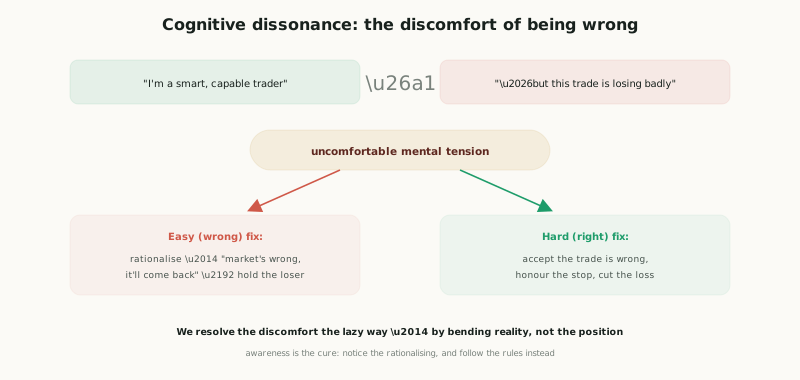
Cognitive dissonance is the mental discomfort of holding two conflicting beliefs at once — for example, "I'm a smart, capable trader" and "this trade is losing badly." These two ideas clash (a smart trader's trade shouldn't be losing badly), and that clash is genuinely uncomfortable — a kind of psychological itch the mind is strongly motivated to relieve. The trouble is how it relieves it. There are two ways to resolve the conflict: change the belief about yourself ("maybe I was wrong on this trade") — which is uncomfortable but accurate — or change your interpretation of reality ("the market's wrong, it'll come back, this is just temporary") — which is comfortable but often false. Because protecting our self-image is such a powerful drive, the mind frequently takes the easy path: it rationalises reality to preserve the flattering belief, rather than accepting the uncomfortable truth and acting on it. In trading, that means the loss isn't cut — it's explained away. That's the mechanism by which a normal human discomfort quietly translates into a concrete, costly trading error.
How it causes mistakes, and how to overcome it
Cognitive dissonance causes trading mistakes by making you bend reality instead of your position. To preserve the belief that you're right or skilled, you invent reasons to ignore contrary evidence: moving your stop further away ("I'll give it more room"), adding to a loser ("even better price now" — see averaging down), dismissing warning signs ("that's just noise"), or clinging to a thesis long after the chart has broken it. Each of these is the mind protecting its self-image at the expense of the account — choosing to be comfortable over being correct. This is intimately tied to confirmation bias (you start seeking out information that supports the losing trade and filtering out what contradicts it, to ease the dissonance) and to the sunk-cost fallacy (the more you've committed, the more painful admitting error becomes, so the harder you rationalise). It's a major reason traders hold losing positions far too long (the disposition effect): cutting the loss would force them to accept they were wrong, and that acceptance is exactly the uncomfortable truth the dissonance is straining to avoid. So the loss runs, the rationalisations pile up, and a small, manageable mistake becomes a large, damaging one — all to spare the ego a moment of "I was wrong."
Overcoming it rests on two moves, one about identity and one about structure. The deepest fix is to separate your identity from any single trade. The dissonance only arises because "this trade is losing" is allowed to threaten "I'm a good trader" — but that link is false. If you genuinely accept, in advance, that being a good trader means taking losses (a skilled trader is wrong on plenty of individual trades and still profits overall — see thinking in probabilities and process over outcome), then a losing trade no longer threatens your self-image at all — it's just a normal, expected cost of a probabilistic edge — which removes the dissonance at its source. A good trader who loses on a trade feels no conflict, because "good traders take losses" is fully compatible with "this trade lost." Reframing your identity around following your process well rather than being right on each trade dissolves the whole problem. The second, practical fix is structure: pre-commit to rules, especially predefined stops, so the rule acts before rationalising kicks in — a stop set when you were calm and objective executes automatically, giving the dissonance no opening to talk you out of the loss. And notice the feeling: that distinctive urge to explain away a bad trade, to construct reasons why the market is wrong, is itself a warning sign — when you catch yourself rationalising, recognise it as dissonance at work and follow your plan instead. Awareness is genuinely powerful here, because once you can name the rationalising as it happens, it loses much of its grip. The honest framing: cognitive dissonance is the discomfort of holding conflicting beliefs (like "I'm a good trader" and "this trade is losing"), which the mind resolves the easy way — rationalising reality to protect its self-image — rather than accepting the truth and cutting the loss; this drives moving stops, adding to losers and holding losing trades far too long (tied to confirmation bias, sunk cost and the disposition effect). Overcome it by separating your identity from any single trade (a good trader takes losses, so a loss no longer threatens your self-image), pre-committing to stops that act before rationalising can, and treating the urge to explain away a bad trade as a warning to follow your plan.
Beyond losing trades: dissonance everywhere
While the classic case is a single losing trade, cognitive dissonance operates at every level of trading, and spotting it more broadly is valuable. It shows up when you cling to a losing strategy or system (not just one trade): admitting the whole approach isn't working clashes with the time, money and identity you've invested in it, so you rationalise its failures and keep using it. It shows up when you refuse to update a market view you've stated publicly or strongly held — changing your mind would mean having been wrong, so you defend the view against mounting evidence. It shows up when you ignore that your "edge" has stopped working (the equity curve has rolled over, but accepting it means accepting your method may be broken). And it shows up when you defend a guru, course or method you've paid for and committed to — the sunk cost and identity investment make criticism feel like a personal attack to be deflected. In every case, the same machinery is at work: an uncomfortable truth threatens something you're invested in, so you bend your perception of reality to protect it.
The meta-skill that defeats dissonance across all these levels is actively seeking disconfirming evidence — deliberately looking for reasons you might be wrong rather than reasons you're right. This runs against every instinct (dissonance wants you to seek comfort, not challenge), which is why it must be a conscious, structured practice: regularly ask "what would tell me this trade / strategy / view is wrong, and is any of that happening?", invite genuine critique, and — powerfully — reframe changing your mind as a strength rather than a defeat. The best traders take a kind of pride in updating their views quickly when the evidence shifts, treating "I was wrong, so I changed" as a sign of skill, not weakness — which neatly inverts the dissonance (now admitting error protects the self-image of "I'm a disciplined, rational trader," rather than threatening it). When being a good trader means updating on evidence, the discomfort of being wrong largely dissolves. Building this habit — hunting for disconfirmation and rewarding yourself for changing your mind — is one of the most powerful antidotes not just to dissonance but to the whole family of biases that protect our beliefs at our account's expense. The honest reminder: cognitive dissonance operates beyond single trades — clinging to a losing strategy, refusing to update a market view, ignoring that your edge has stopped working, or defending a method you've invested in — all the same machinery of bending reality to protect what you're invested in; defeat it by actively seeking disconfirming evidence (asking what would prove you wrong) and reframing changing your mind as a strength, so that updating on evidence protects rather than threatens your self-image.
Cognitive dissonance is the discomfort of holding conflicting beliefs (like "I'm a good trader" and "this trade is losing badly") — which the mind resolves the easy way, rationalising reality to protect its self-image, rather than the hard way: accepting the truth and cutting the loss. It drives moving stops, adding to losers, dismissing warnings and holding losing trades far too long (tied to confirmation bias, the sunk-cost fallacy and the disposition effect). Overcome it: separate your identity from any single trade (a good trader takes losses — see process over outcome — so a loss no longer threatens your self-image, removing the dissonance at its source); pre-commit to stops that act before rationalising can; and treat the urge to explain away a bad trade as a warning sign to follow your plan instead.