
If quantitative easing is the central bank flooding the system with money, quantitative tightening is draining it back out. As the vast QE programmes of recent years unwind, QT has become a major force in global markets — and a meaningful driver for currencies. It's the less-discussed but equally important other half of the balance-sheet story. This guide explains quantitative tightening: what it is, how it differs from rate hikes, and how it tends to affect currencies.
It's the direct reverse of QE, a tool of monetary policy that works alongside interest rates and reshapes the money supply.
Key takeaways
Q: What is quantitative tightening?
A: Quantitative tightening (QT) is the reverse of quantitative easing: a central bank shrinks its balance sheet, removing money from the financial system. Having bought large amounts of bonds during QE, the central bank reduces those holdings under QT — typically by letting bonds mature without reinvesting the proceeds, and sometimes by actively selling them. This drains liquidity and is broadly restrictive for financial conditions.
Q: How does QT differ from raising interest rates?
A: Both tighten policy, but through different channels. Raising the policy interest rate directly makes borrowing more expensive. QT works on the central bank's balance sheet and the quantity of money/liquidity in the system, tending to push up longer-term yields and tighten financial conditions more broadly. Central banks often use them together — hiking rates while running QT — so they reinforce each other as part of an overall tightening stance.
Q: How does quantitative tightening affect currencies?
A: QT is broadly supportive of a currency, all else equal, because it's restrictive: draining liquidity, supporting higher yields, and signalling a tighter policy stance, which tends to attract capital and strengthen the currency — the mirror of QE's easing effect. But as with all fundamentals, the effect works largely through expectations (markets price anticipated QT in advance) and interacts with many other factors, so it's never mechanical.
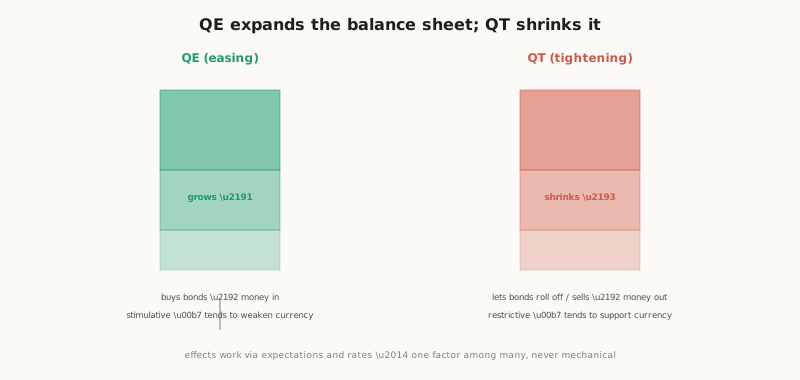
What QT is
Quantitative tightening is the reverse of quantitative easing: a central bank shrinks its balance sheet, removing money from the financial system. Recall the QE side: during easing, the central bank created money to buy large quantities of bonds (mostly government bonds), expanding its balance sheet, injecting liquidity, suppressing yields and stimulating the economy. QT does the opposite. Having accumulated those huge holdings, the central bank reduces them — most commonly by letting bonds mature without reinvesting the proceeds (so the money the government repays is simply extinguished rather than recycled into new bonds), and sometimes by actively selling bonds back into the market. Either way, the balance sheet contracts, liquidity is drained from the system, and financial conditions tighten. It's the unwinding of the extraordinary stimulus, returning the central bank's balance sheet toward more normal levels — a broadly restrictive action.
QT vs rate hikes — two tightening channels
QT and raising the policy interest rate are both forms of tightening, but they work through different channels, and understanding the distinction matters.
| Rate hikes | Quantitative tightening | |
|---|---|---|
| Channel | The price of money (the policy rate) | The quantity of money (balance sheet) |
| Direct effect | Borrowing more expensive | Liquidity drained, longer yields up |
| Stance | Restrictive | Restrictive |
| Currency tendency | Supportive | Supportive |
Raising the policy interest rate directly makes borrowing more expensive — it works on the price of money at the short end. QT works on the central bank's balance sheet and the quantity of money and liquidity in the system, tending to push up longer-term yields (as the central bank steps back as a big buyer of bonds) and tighten financial conditions more broadly. Because they operate through different mechanisms, central banks often run them together — hiking rates while conducting QT — so the two reinforce each other as parts of one overall tightening stance. For markets, QT is sometimes described as tightening that works "in the background," steadily draining liquidity even between rate decisions, which can matter for bond yields and risk appetite over time.
How QT affects currencies
For currencies, the logic follows directly from QT being restrictive: it is broadly supportive of a currency, all else equal — the mirror image of QE's tendency to weaken one. The channels: QT drains liquidity (reducing the supply of the currency in the system, the money-supply effect), tends to support higher yields (which attract capital inflows seeking returns), and signals a tighter policy stance (a hawkish posture that markets read as currency-positive). So when a central bank is running QT — especially relative to others that aren't — it adds to the case for a firmer currency, just as aggressive QE tends to be a headwind.
But the universal fundamental caveats apply with full force. The effect works largely through expectations: markets are forward-looking and price anticipated QT in advance, so it's the surprise relative to what was expected — QT announced faster, slower, larger or smaller than priced — that tends to actually move the currency, not the mere fact of QT proceeding as planned (the same expectations principle that governs hawkish/dovish shifts generally). QT also interacts with countless other factors — the level and path of rates, growth, inflation, risk sentiment, and crucially what other central banks are doing (divergence is what matters for a pair) — so it is never mechanical: a currency can fall during QT if other forces dominate. And QT's pace and impact are genuinely uncertain, since unwinding huge balance sheets is relatively novel and central banks tread carefully to avoid disrupting markets. So treat QT as one restrictive, broadly currency-supportive factor in the fundamental mosaic — important and increasingly relevant as QE unwinds, worth understanding and watching — but to be weighed alongside everything else, read through the lens of expectations, and combined with technicals and disciplined risk management rather than traded as a simple "QT = currency up" rule. The honest framing: quantitative tightening (QT) reverses QE by shrinking the central bank's balance sheet — letting bonds roll off or selling them — draining liquidity and tightening conditions. It differs from rate hikes by working on the quantity of money (and longer yields) rather than the price of short-term money, and the two are often run together as one tightening stance. QT is broadly currency-supportive (drains liquidity, supports yields, signals hawkishness), the mirror of QE — but it works through expectations (the surprise vs what's priced), interacts with many factors including what other central banks do, and is never mechanical; weigh it in the wider mosaic and manage risk.
QT in practice and its risks
In practice, QT works quietly but pervasively. By stepping back as a huge, price-insensitive buyer of bonds (and sometimes selling), the central bank removes a major source of demand from the bond market, which tends to push longer-term yields up and steepen parts of the curve — raising borrowing costs across the economy beyond just the short-term policy rate. It drains reserves from the banking system, tightening liquidity, and it generally pressures risk assets (the reverse of QE's "liquidity lifts everything" effect), since less central-bank liquidity sloshing around means a tougher environment for stocks, credit and speculative assets. For forex specifically, the channels reinforce the broadly currency-supportive lean: higher yields attract capital, the tighter stance is read as hawkish, and reduced money supply supports the currency's value. Traders watch QT's pace (how fast the balance sheet is shrinking), whether it's passive (roll-off) or active (outright sales, more aggressive), and any signals about changing the pace — since, like everything, it's shifts in the expected path that move markets.
QT also carries genuine risks that make it trickier than QE to run, and these are worth understanding. Draining liquidity can, if done too fast or too far, strain the financial plumbing — there have been episodes where shrinking reserves caused stress in short-term funding markets, forcing central banks to slow or pause QT to avoid disruption. Because unwinding enormous balance sheets is relatively novel, central banks genuinely don't know exactly how much they can shrink before causing problems, so they tread cautiously and adjust as they go — which means QT's path is uncertain and can be halted or reversed if markets wobble. QT can also interact badly with other stresses (a QT-tightened, less-liquid market is more fragile to shocks). For a trader, the implication is that QT is a real but uncertain tightening force: broadly currency-supportive and worth factoring in, but with a pace that can change, occasional liquidity-stress surprises, and effects that always work through expectations and alongside everything else — so monitor it as part of the policy picture rather than treating it as a clean, predictable lever. The honest reminder: QT pushes up longer yields, drains liquidity and pressures risk assets, reinforcing its currency-supportive lean — but it can strain funding markets if too fast, its pace is uncertain and may be paused or reversed, and effects work through expectations, so watch its pace (passive vs active) and any signals of change as part of the wider policy picture.
The bigger picture is that QE and QT together have made the central-bank balance sheet a policy lever as important as interest rates — and one that forex traders increasingly cannot ignore. A currency's path now depends not just on where rates are, but on whether liquidity is being pumped in or drained out, and how that compares with other central banks doing the same. Watching the balance-sheet direction alongside the rate path gives a fuller read on the true monetary stance behind a currency.
Quantitative tightening (QT) reverses QE by shrinking the central bank's balance sheet — letting bonds roll off without reinvesting, or actively selling them — draining liquidity and tightening financial conditions. It differs from rate hikes by working on the quantity of money (and longer-term yields) rather than the price of short-term money; central banks often run both together as one tightening stance. QT is broadly currency-supportive (drains liquidity, supports yields, signals a hawkish stance) — the mirror of QE's weakening tendency. But it works through expectations (the surprise vs what's priced), interacts with many factors — especially what other central banks do — and is never mechanical. Weigh it as one factor in the fundamental mosaic, read through expectations, and manage risk.