Adding to a position that's already winning — "pyramiding" — can turn a good trade into a great one, compounding a strong move into outsized gains. Done carelessly, it can also turn a winner into a loser, by overloading a position right before it turns. The difference between the two outcomes comes down to a handful of disciplined rules — and one absolute distinction it must never blur. This guide explains pyramiding: what it is, the rules that keep it safe, why it's risky done wrong, and why it's the opposite of averaging down.
It's a specific application of scaling in and out, relies on trailing stops, and suits trend-following approaches that ride sustained moves.
Key takeaways
Q: What is pyramiding in trading?
A: Pyramiding is adding to a position that's already profitable as it continues to move in your favour — building a larger position in stages as a trend develops, rather than committing your full size at entry. Each addition increases your exposure to a move that's working, aiming to compound the gains of a strong trend. It's the opposite of averaging down (adding to a losing position), and the two must never be confused.
Q: What are the rules for safe pyramiding?
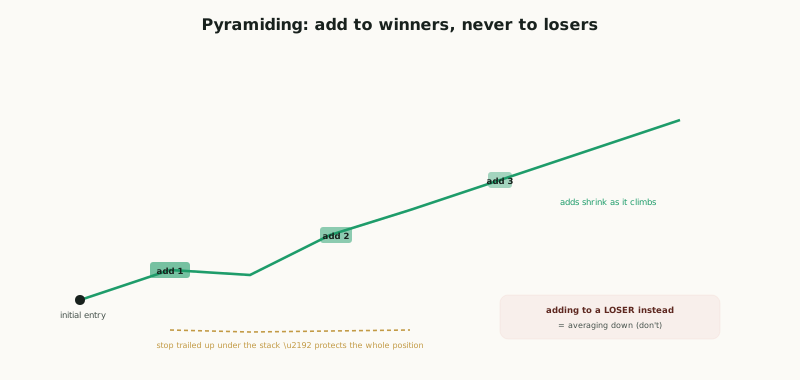
A: Add only to winners (never to losers), and only on signs of continued strength. Make each addition smaller than the last (a true pyramid shape) so you don't become top-heavy. Crucially, move your stop up as you add so the whole combined position is protected and a reversal can't turn the trade into a large loss. Account for the higher exposure in your risk, and have a clear exit plan. The goal is to risk mostly 'house money' on the additions.
Q: Why is pyramiding risky if done wrong?
A: Because each addition increases your exposure, so a position that's grown large through pyramiding can give back substantial open profit — or turn into a loss — if the trend suddenly reverses, especially if your stop wasn't raised. Adding at increasingly extended prices also worsens your average entry on the new units. Without smaller add sizes, a trailing stop on the whole position, and discipline, pyramiding can convert a winning trade into a damaging one.
What it is, and the all-important distinction
Pyramiding is adding to a position that's already profitable as it continues to move in your favour — building a larger position in stages as a trend develops, rather than committing full size at entry. Each addition increases your exposure to a move that's working, aiming to compound the gains of a strong trend (a modest initial position becomes a large one only because the trade keeps proving you right). The absolutely critical point — the one that separates a sound technique from an account-killer — is that pyramiding is the exact opposite of averaging down, and the two must never be confused. Pyramiding adds to winners (you add as the trade goes your way, on confirmation you're right); averaging down adds to losers (you add as the trade goes against you, hoping you're not wrong). They feel superficially similar (both "adding to a position"), but they're philosophically opposite: pyramiding presses a winning hand and lets a confirmed edge compound, while averaging down throws good money after bad, increasing exposure precisely as the evidence says you're wrong — the classic route to a catastrophic loss. The instinctive, comfortable move is the wrong one (averaging down feels like "buying a discount"); the disciplined, counter-intuitive move is the right one (adding to a winner feels like "chasing," yet it's adding to strength). If you remember nothing else: add to winners, never to losers — the direction the trade is moving when you add is the whole difference between a professional technique and a gambler's spiral.
The rules, and the risks
Pyramiding is powerful but genuinely advanced, and it only works safely under a clear set of rules designed to contain the extra exposure. Add only to winners, on continued strength: each addition should be triggered by evidence the trend is continuing (a fresh breakout, a higher swing, a successful retest), not by hope — you're pressing a hand the market keeps confirming. Make each addition smaller than the last (a true pyramid shape — a larger base, progressively smaller adds), so you don't become top-heavy; piling equal or larger adds at ever-higher prices concentrates your exposure at the worst point (late in the move, near a potential top), which is how pyramiding goes wrong. Crucially, move your stop up as you add: trail a stop beneath the whole combined position so that a reversal can't turn the grown trade into a large loss — ideally the trailed stop reaches a point where the entire stack is protected at break-even or in profit, so you're risking mostly "house money" (the trade's own open gains) on the additions rather than fresh capital. Account for the higher exposure in your overall risk (a pyramided position can become large — mind your effective leverage and portfolio heat), and have a clear exit plan for the combined position.
The risks of getting it wrong are exactly what those rules guard against. Because each addition increases your exposure, a position that has grown large through pyramiding can give back substantial open profit — or flip into a loss — if the trend suddenly reverses, especially if your stop wasn't raised (the nightmare scenario: you keep adding, the trend tops out, and a sharp reversal hits your now-large position before you've protected it, erasing the whole trade's gains and more). Adding at increasingly extended prices also worsens the average entry on the new units (they're bought late, with less room before exhaustion), so the later additions are inherently the riskiest — another reason to shrink them. Without smaller add sizes, a trailing stop on the whole position, and the discipline to add only on genuine strength, pyramiding can convert a winning trade into a damaging one — turning the technique's compounding power against you. There's also a behavioural trap: a string of successful pyramids can breed overconfidence, tempting bigger, sloppier adds right before the move that punishes them. So treat pyramiding as a specialist tool for strong, sustained trends, executed with shrinking adds, a trailed stop protecting the stack, and strict add-on-strength discipline — and never let it bleed into its evil twin, adding to losers. Used that way, it lets your biggest winning trends pay outsized rewards while capping the downside; used carelessly, it's a fast way to give back a good trade. The honest framing: pyramiding is adding to a winning position as it moves in your favour, to compound a strong trend — the exact opposite of averaging down into losers (add to winners, never losers). Do it safely by adding only on continued strength, making each addition smaller than the last, moving your stop up to protect the whole position (risking mostly house money), and accounting for the higher exposure. Done wrong — equal/larger adds, no trailed stop, adding on hope — a grown position can give back its profit or turn into a loss on a reversal. A specialist tool for sustained trends, governed by discipline.
When it works — and when to skip it
Pyramiding is highly conditional: it shines in strong, sustained trends and fails in choppy, range-bound markets. In a powerful trend, adding on each fresh thrust lets a single great trade pay for many ordinary ones — this is, historically, how trend-following systems (the Turtles among them) turned the occasional monster trend into outsized returns. But in a sideways or whippy market, the same behaviour is punishing: you add on what looks like a breakout, price reverses back into the range, and now your enlarged position takes a loss it wouldn't have at the original size — you've amplified exposure into chop. So pyramiding is only as good as your read of the regime: reserve it for clear, trending conditions, and avoid it when the market is ranging.
It's also worth being honest that pyramiding is optional and advanced — many traders are better served not doing it. It adds complexity (more decisions, more to manage), it inherently produces a worse average entry on the later units (bought at higher prices, closer to exhaustion), and it demands real discipline to execute the shrinking-adds-and-trailing-stop routine correctly under the excitement of a winning trade. The alternative philosophies are worth weighing: scaling out (starting with full size and reducing into strength) banks profit progressively and is psychologically easier, whereas pyramiding (starting small and adding) maximises exposure to big trends but risks giving more back. Neither is "correct" — they suit different temperaments and strategies. The honest position: pyramiding is a specialist enhancement for traders who genuinely trade strong trends and can manage the added complexity with discipline; if that's not you, a simpler approach (consistent size, or scaling out) is perfectly respectable and often safer. The honest reminder: pyramiding works in strong sustained trends (how trend-followers turn one big move into outsized gains) but fails in choppy/ranging markets where the enlarged position gets whipsawed — so reserve it for clear trends; and accept that it's optional and advanced, with a worse average entry and more to manage, so many traders are better off with consistent sizing or scaling out instead.
Pyramiding is adding to a winning position as it moves in your favour, to compound a strong trend — the exact opposite of averaging down into losers. Add to winners, never to losers — that direction is the whole difference. Do it safely: add only on continued strength (a fresh breakout/higher swing), make each addition smaller than the last (a true pyramid, never top-heavy), move your stop up to protect the whole position (a trailed stop, so you risk mostly house money), and watch the grown exposure (effective leverage, portfolio heat). Done wrong — equal/larger adds, no trailed stop, adding on hope — a large pyramided position can give back its profit or turn into a loss on a reversal. A specialist tool for sustained trends — governed by discipline, never confused with adding to losers.