Some of the worst trades aren't driven by fear or greed — they're driven by boredom. When the market is quiet and no real setup appears, the itch for action leads traders to manufacture trades that were never there. Boredom trading is one of the most common, least-discussed ways a sound edge gets quietly bled away — not in dramatic blow-ups, but in a steady drip of needless, low-quality trades. This guide explains boredom trading: what it is, why it's harmful, and how to resist the urge to trade when there's nothing worth trading.
It's a specific trigger behind overtrading, the enemy of patience, and a habit a solid routine and discipline are built to prevent.
Key takeaways
Q: What is boredom trading?
A: Boredom trading is taking trades not because a valid setup exists, but because you're bored, restless, or craving the stimulation of being in a position. When the market is quiet and your strategy offers nothing, the discomfort of inaction pushes you to manufacture a trade for its own sake — trading to relieve boredom rather than to act on an edge. It's a common, specific trigger behind the broader problem of overtrading.
Q: Why is boredom trading harmful?
A: Because trades taken without a genuine edge are, on average, losing trades — plus costs. By forcing action when your strategy says do nothing, you take low-quality setups that dilute or erase the edge your good trades provide. Boredom trades also rack up spread and commission costs, increase exposure to bad luck, and often spiral into frustration and further poor decisions. They quietly bleed an otherwise sound strategy, one needless trade at a time.
Q: How do you stop boredom trading?
A: Recognise that 'no trade' is a valid, often winning, decision — patience is part of the edge. Have clear, objective criteria so a setup either qualifies or it doesn't, removing the grey area boredom exploits. Step away from the screen when nothing is happening (you don't have to watch every tick), find stimulation outside trading, and treat the urge to trade for action's sake as a red flag. Tracking boredom trades in a journal makes their cost undeniable and easier to resist.
What it is
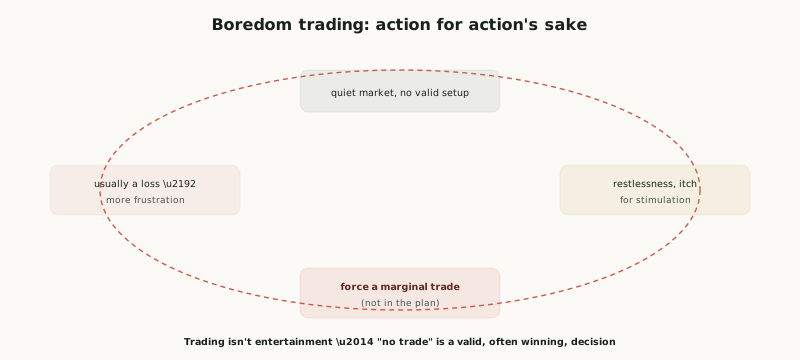
Boredom trading is taking trades not because a valid setup exists, but because you're bored, restless, or craving the stimulation of being in a position. When the market is quiet and your strategy offers nothing, the discomfort of inaction — sitting and watching, doing nothing, hour after hour — pushes you to manufacture a trade for its own sake. You're trading to relieve boredom rather than to act on an edge, and the motivation is emotional/psychological (the need for stimulation, action, or the feeling of "doing something") rather than analytical. It's a specific, identifiable trigger behind the broader problem of overtrading — not the only cause, but a very common one, and an especially sneaky one because it doesn't feel like the obvious villains (fear, greed, revenge). It feels almost innocent — "I'll just take a small one" — which is precisely why it slips past a trader's defences.
Boredom trading at a glance
Why it's harmful, and how to stop
Boredom trading is harmful because trades taken without a genuine edge are, on average, losing trades — plus costs. This is the heart of it: your profit comes from a relatively small number of good setups where you have an actual edge; by forcing action when your strategy says do nothing, you take low-quality setups that dilute or erase the edge your good trades provide. Each boredom trade is, by definition, one your method didn't endorse — so it carries no positive expectancy, and over many such trades the math is simply negative. On top of that, boredom trades rack up spread and commission costs (death by a thousand cuts), increase your exposure to bad luck (more trades = more variance, for no added edge), and often spiral into frustration and further poor decisions (a needless loss stings, prompting a revenge trade, and so on). The net effect is that boredom quietly bleeds an otherwise sound strategy, one needless trade at a time — a profitable system can be turned unprofitable purely by the accumulation of trades it never told you to take. It's a slow leak, not a dramatic crash, which is exactly why it's so often overlooked.
Stopping it begins with a mindset shift: recognise that "no trade" is a valid, often winning, decision. Patience is part of the edge, not a failure to act — the discipline to do nothing when there's nothing worth doing is one of the most profitable skills a trader can develop (the great traders are often defined by what they don't trade). Reframe sitting on your hands as active, skilled restraint rather than boring inaction (see patience in trading). Practically: have clear, objective criteria so a setup either qualifies or it doesn't, removing the grey area that boredom exploits (vague rules let a bored mind "see" setups that aren't there). Step away from the screen when nothing is happening — you don't have to watch every tick, and the constant screen-watching is itself what breeds the restless itch; a routine that includes time away when the market is dead removes the temptation entirely. Find stimulation outside trading (the need for engagement is real and healthy — just don't let the market be where you scratch it; have other interests and outlets). And treat the urge to trade for action's sake as a red flag — when you notice yourself reaching for a trade you can't really justify, name it ("this is boredom, not a setup") and let that recognition stop you. Finally, track boredom trades in a journal: honestly logging which trades were genuine setups versus boredom-driven makes their cost undeniable (the data will likely show your boredom trades are a clear net loss), which makes them far easier to resist next time. Beating boredom trading is less about willpower and more about removing the temptation (step away, use clear rules) and reframing patience as the skill it is. The honest framing: boredom trading is taking trades for stimulation when no valid setup exists — trading to relieve restlessness rather than to act on an edge, a common trigger of overtrading. It's harmful because trades without an edge are net losers plus costs, so they dilute the edge of your good trades, add variance, and spiral into frustration, quietly bleeding a sound strategy. Stop it by accepting "no trade" as a valid, often winning decision (patience is part of the edge), using clear objective criteria, stepping away from the screen when nothing's happening, finding stimulation elsewhere, treating the urge for action as a red flag, and journaling boredom trades to make their cost undeniable.
Why quiet markets are dangerous, and the sniper mindset
It's worth understanding why quiet markets are so dangerous for the bored trader — because the danger is double. Low-volatility, range-bound periods are exactly when boredom strikes (nothing's happening, the itch builds) and exactly when genuine edges are thinnest (choppy, directionless markets offer fewer high-quality setups and chop up many strategies). So the bored trader is tempted to trade most precisely when conditions are least favourable — a perfectly bad combination. The correct response to a dead market is therefore counterintuitive but simple: do less. When the market isn't offering your setups, the highest-value action is usually no action — protecting your capital and your composure until conditions improve, rather than donating money to the spread while you wait.
The reframe that makes this sustainable is the "sniper, not machine-gunner" mentality. A machine-gunner sprays trades constantly, hoping volume substitutes for quality; a sniper waits, patiently and comfortably, for the one high-probability shot and ignores everything else. The best traders are far more often snipers — they understand that the best opportunities come to those who wait for them, and that the discipline to sit out a poor market is itself a major source of edge (you can't lose on trades you don't take). Cultivating genuine comfort with inactivity — even finding a quiet satisfaction in the discipline of not trading — is a hallmark of maturity. One honest caveat worth flagging: if the urge to trade for stimulation feels compulsive — if you find you can't stop, trade despite knowing it harms you, or chase the action like a craving — that can shade beyond ordinary boredom into a more serious pattern (see trading addiction), and it's worth taking seriously and seeking support if so. For most, though, boredom trading is a habit beaten by the sniper reframe, clear rules, and stepping away — turning patience from a frustration into the professional skill it truly is. If the urge ever feels compulsive or beyond your control, please treat that seriously — I'm happy to help you think it through or find appropriate support. The honest reminder: quiet markets are doubly dangerous — they trigger boredom exactly when genuine edges are thinnest — so the right response to a dead market is to do less; adopt the "sniper, not machine-gunner" mindset, waiting comfortably for high-probability setups and finding satisfaction in the discipline of not trading, since the best opportunities come to the patient. If the urge to trade ever feels compulsive rather than merely bored, take it seriously and seek support.
Boredom trading is taking trades for stimulation when no valid setup exists — trading to relieve restlessness rather than to act on an edge (a common trigger of overtrading). It's harmful because trades without an edge are net losers plus costs, so they dilute the edge of your good trades, add variance, and spiral into frustration — quietly bleeding a sound strategy one needless trade at a time. Stop it: accept that "no trade" is a valid, often winning decision (patience is part of the edge), use clear objective criteria (no grey area), step away from the screen when nothing's happening, find stimulation elsewhere, treat the urge for action as a red flag, and journal boredom trades to make their cost undeniable. Trading isn't entertainment.