Forex and crypto are often mentioned in the same breath, but they're very different markets. One is the deepest, most mature market on earth; the other is young, wild and lightly regulated. Understanding how they compare — in hours, volatility, regulation and what drives them — helps you choose where to put your time and risk, and dispels the idea that they're interchangeable. This guide compares forex and crypto: the key differences, the risks of each, and which might suit a beginner.
It's a companion to forex vs stocks, builds on what forex trading is, and the scam warnings link to common scams.
Key takeaways
Q: What's the main difference between forex and crypto trading?
A: The biggest practical differences are maturity, regulation and volatility. Forex is the largest, deepest and most established financial market, heavily regulated and driven by macroeconomic forces like interest rates and growth. Crypto is a much younger market, far more lightly and unevenly regulated, with dramatically higher volatility and price swings driven more by adoption, sentiment and speculation. Crypto trades 24/7, while forex trades 24 hours but only five days a week.
Q: Is crypto riskier than forex?
A: Generally yes, in the sense that crypto is far more volatile and less regulated. Crypto prices can swing enormously in short periods, and the patchier regulation means weaker protections and more scams. That volatility cuts both ways — bigger potential moves in either direction — but it makes crypto less forgiving, especially for beginners. Forex majors are comparatively more stable and the market more mature, though leverage can make any forex position risky too.
Q: Should a beginner trade forex or crypto?
A: Neither is automatically 'better' — it depends on your risk tolerance and interest. Forex majors offer a more mature, regulated, comparatively less volatile market, which many find a steadier place to learn. Crypto's extreme volatility offers larger swings but is less forgiving and carries more scam and regulatory risk. Whichever you choose, the core principles — risk management, education, only risking money you can afford — matter most. Many traders eventually trade both.
How they compare
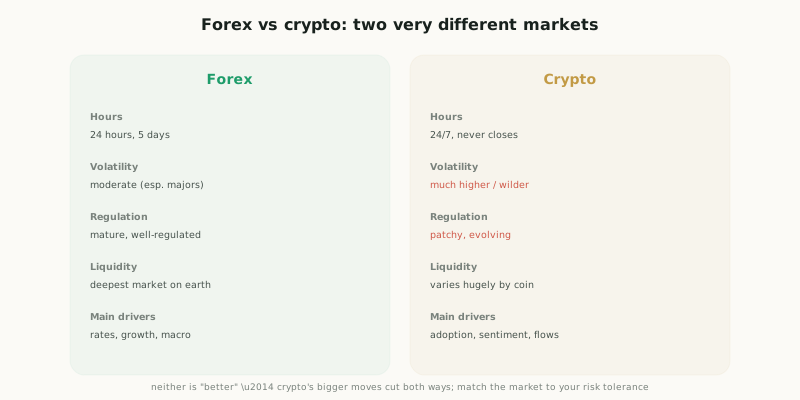
The two markets differ across several practical dimensions that matter to a trader:
| Dimension | Forex | Crypto |
|---|---|---|
| Hours | 24 hours, 5 days | 24/7, never closes |
| Volatility | Moderate (esp. majors) | Much higher / wilder |
| Regulation | Mature, well-regulated | Patchy, evolving |
| Liquidity | Deepest market on earth | Varies hugely by coin |
| Main drivers | Rates, growth, macro | Adoption, sentiment, flows |
| Maturity | Decades-old, institutional | Young, still developing |
The biggest practical differences are maturity, regulation and volatility. Forex is the largest, deepest and most established financial market — trading trillions a day, heavily regulated in the major jurisdictions, and driven by macroeconomic forces like interest rates, growth and policy (see what moves the market). Crypto is a much younger market, far more lightly and unevenly regulated, with dramatically higher volatility — swings driven more by adoption, sentiment and speculation than by traditional fundamentals. There's a timing quirk too: crypto trades 24/7 (it never closes, even at weekends), while forex trades 24 hours but only five days a week. For liquidity, forex majors are the most liquid instruments anywhere (tight spreads, easy fills), whereas crypto liquidity varies enormously — deep in the largest coins, thin and treacherous in smaller ones.
Risk, and which suits a beginner
On risk, crypto is generally riskier than forex, in the sense that it's far more volatile and less regulated. Crypto prices can swing enormously in short periods — moves that would be extraordinary in forex are routine in crypto — and the patchier regulation means weaker protections and more scams (see scams and regulation). That extreme volatility cuts both ways: bigger potential moves in either direction, which is alluring but less forgiving — a mistake or a bad position can hurt much faster. Forex majors are comparatively more stable and the market more mature, though it's important to note that leverage can make any forex position risky too — forex isn't "safe," it's just less inherently volatile than crypto at the instrument level. So the volatility comparison is about the underlying market, not a guarantee that forex trading is low-risk (poor risk management makes either market dangerous).
As for which a beginner should trade — the honest answer is that neither is automatically "better"; it depends on your risk tolerance and interest. Forex majors offer a more mature, regulated, comparatively less volatile market, which many find a steadier place to learn the craft (the moves are more measured, the regulation more protective, the drivers more analysable). Crypto's extreme volatility offers larger swings — attractive to some — but is less forgiving and carries more scam and regulatory risk, which can punish beginners harshly. Crucially, whichever you choose, the core principles matter most: risk management, ongoing education, realistic expectations, and only ever risking money you can afford to lose apply identically to both — the market you pick matters far less than the discipline you bring. Many traders eventually trade both, applying the same framework to each while respecting their different characters (sizing smaller in the wilder crypto markets, for instance). The sensible beginner takeaway: understand that crypto is higher-volatility, lower-regulation and forex is more mature and measured, pick the one that suits your temperament and curiosity, and — above all — bring sound risk management to whichever you trade. The honest framing: forex and crypto differ in maturity, regulation and volatility — forex is the deep, mature, well-regulated market driven by macro forces (24/5), while crypto is young, lightly regulated and far more volatile, driven by adoption and sentiment (24/7). Crypto is generally riskier (bigger swings, weaker protections, more scams), though leverage makes forex risky too. Neither is automatically better for a beginner — forex majors are a steadier place to learn, crypto offers wilder moves but is less forgiving — and whichever you pick, risk management, education and only risking what you can afford matter most.
What they share, and trading both
For all their differences, forex and crypto share more than beginners often realise — and the overlap is mostly in the things that matter most. Both are speculative markets usually traded with leverage, where most retail participants lose money, especially early on. Both reward the same core disciplines — risk management, ongoing education, sound psychology, and only risking what you can afford — and punish the same mistakes (overleverage, no plan, chasing, emotional trading). Both are also magnets for scams and hype, with armies of online "gurus" selling dreams in each. So the skills genuinely transfer: a disciplined forex trader has a strong foundation for crypto and vice versa, because the hard part — managing risk and yourself — is identical.
One practical distinction is worth understanding if you trade both: how you access crypto. You can often trade crypto via the same CFD/margin brokers used for forex — trading "crypto CFDs" where you speculate on the price without owning the actual coin (convenient, leveraged, and it keeps everything on one platform, but you don't hold the asset and you carry the broker's counterparty risk). Alternatively, you can buy actual coins on a crypto exchange, which means you own the asset and must handle custody (wallets, keys, security) yourself — a different model with its own risks (exchange hacks, lost keys, self-custody responsibility) that has no real equivalent in forex (where you never "own" a currency in a wallet). This ownership-and-custody dimension is genuinely new for forex traders moving into crypto, and worth learning before diving in. The sensible synthesis: the principles are the same across both markets, so build them once and apply them everywhere — while respecting that crypto adds higher volatility, lighter regulation, and (if you buy real coins) custody responsibilities, all of which argue for smaller sizing and extra caution there. The honest reminder: forex and crypto share the things that matter most — both are leveraged speculative markets where most retail traders lose, both reward risk management, education and psychology, and both attract scams — so the core skills transfer; the main practical new dimension in crypto is how you access it (crypto CFDs via a broker, like forex, vs owning real coins on an exchange with custody/wallet responsibility), and crypto's higher volatility and lighter regulation argue for smaller sizing and extra care.
If there's a unifying lesson, it's that the market matters less than the trader. People love to debate which is "better," but a disciplined trader can do well (or at least survive) in either, while an undisciplined one will lose in both — the wilder market just does it faster. So rather than agonising over the choice, pick whichever genuinely interests you, learn it properly, size sensibly for its volatility, and put your energy into the skills that travel across both: managing risk, managing yourself, and staying realistic. That focus serves you far better than picking the "right" market ever could.
Choose the market that holds your interest, because genuine curiosity is what sustains the years of learning either one demands — and a market you actually want to study is one you're far more likely to master.
Forex vs crypto: forex is the deep, mature, well-regulated market driven by macro forces (rates, growth) and trades 24/5; crypto is young, lightly regulated and far more volatile, driven by adoption and sentiment, trading 24/7. Crypto is generally riskier — bigger swings, weaker protections, more scams — though leverage makes forex risky too (forex is less volatile, not "safe"). Neither is automatically better for a beginner: forex majors are a steadier place to learn; crypto offers wilder moves but is less forgiving. Whichever you pick, the core principles matter most — risk management, education, realistic expectations, and only risking what you can afford. Many trade both, respecting each market's character.