
Forex trades 24 hours a day, five days a week — but those five days have a distinct rhythm. From the thin Sunday-evening open to the busy midweek and the Friday wind-down, knowing how the week breathes helps you pick your moments and sidestep its quieter, riskier edges. There's more structure to the trading week than "it's always open," and understanding it is part of trading the market's rhythm rather than fighting it. This guide explains the forex trading week: when it opens and closes, its rhythm, the weekend gap, and triple-swap Wednesday.
It frames the intraday detail of the sessions and best times to trade, and connects to rollover/swap and gap risk.
Key takeaways
Q: When does the forex market open and close?
A: The forex week opens around 5pm New York time on Sunday (as the Sydney session begins) and runs continuously 24 hours a day until it closes around 5pm New York time on Friday (the end of the New York session). It's closed over the weekend. So forex trades 24/5 — five full days of round-the-clock trading, bracketed by the weekend closure when the major centres are shut.
Q: What is the rhythm of the trading week?
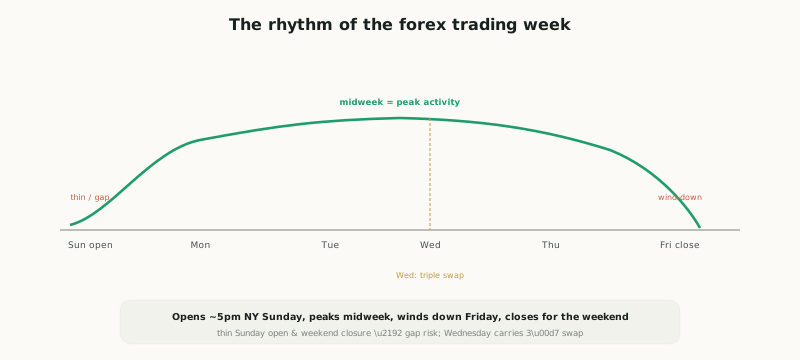
A: The Sunday open is typically thin and can gap; activity builds through Monday and tends to peak midweek (Tuesday to Thursday), when liquidity and meaningful moves are greatest; Friday often sees a wind-down, especially in the afternoon as traders close positions before the weekend, before the market shuts at the Friday close. Many traders concentrate on the active midweek and treat the thin Sunday open and Friday close more cautiously.
Q: What is the weekend gap and triple swap?
A: Because forex is closed over the weekend but the world keeps turning, news over the weekend can cause the price to 'gap' — open on Sunday at a different level from Friday's close — which is a real risk for positions held over the weekend. Separately, the daily rollover/swap on positions held past the Wednesday rollover is typically charged at triple ('triple swap Wednesday') to account for the weekend's settlement, so overnight financing is larger on that day.
When it opens and closes
The forex week opens around 5pm New York time on Sunday — as the Sydney session begins the new trading week in the Asia-Pacific — and then runs continuously, 24 hours a day, with the market handing off from session to session around the globe, until it closes around 5pm New York time on Friday (the end of the New York session). Over the weekend it's closed: the major centres are shut, so there's no live trading from Friday's close until Sunday's open. This is why forex is described as a "24/5" market — five full days of round-the-clock trading, bracketed by the weekend closure. (Note that these "5pm New York" anchors shift by an hour around daylight-saving changes, so the exact local time you see depends on the season and your timezone.)
The rhythm, the gap, and the swap
Within that 24/5 window, the week has a characteristic shape:
The trading week at a glance
The Sunday open is typically thin and, importantly, can gap — because the market was closed all weekend while the world kept turning, it may reopen at a different level from Friday's close. Activity then builds through Monday and tends to peak midweek (Tuesday to Thursday), when liquidity is deepest, spreads tightest, and the most meaningful moves and biggest scheduled news tend to land — for many traders this midweek window is the heart of the trading week. Friday often sees a wind-down, especially in the afternoon, as traders close positions before the weekend (reducing exposure to weekend risk), liquidity thins again, and moves can become choppy or drift before the market shuts at the Friday close. The practical implication many traders draw: concentrate on the active midweek, and treat the thin Sunday open and the Friday wind-down/close more cautiously (smaller size, or standing aside), since the thin edges of the week carry worse liquidity and spreads.
Two specific week-structure features deserve a closer look. The weekend gap: because forex is closed over the weekend but global events don't stop, news over the weekend (geopolitical developments, elections, surprise announcements) can cause the price to "gap" — open on Sunday at a different level from Friday's close, sometimes substantially. This is a real, specific gap risk for any position held over the weekend: your stop can't protect you across a closed market, so price can gap past your stop and fill far worse than intended. Many traders therefore reduce or close positions before the weekend, or at minimum size them so a weekend gap can't be catastrophic (and note that guaranteed stops, where offered, are the only way to fully cap weekend gap risk). The triple swap: the daily rollover/swap charged (or paid) on positions held past the rollover is typically applied at triple on Wednesday — "triple swap Wednesday" — to account for the weekend's settlement that falls due even though the market isn't trading on Saturday and Sunday. So overnight financing is larger on that one day, which matters for anyone holding positions through the Wednesday rollover (carry traders especially, who may favour or avoid it depending on whether the swap is in their favour). Understanding the week's rhythm — thin open, midweek peak, Friday wind-down, weekend gap, Wednesday's triple swap — lets you align when you trade and how long you hold with the market's natural breathing, trading the busy heart of the week and respecting its quieter, riskier edges. The honest framing: forex is a 24/5 market — opening ~5pm NY Sunday, running round-the-clock, closing ~5pm NY Friday, shut at weekends. The week breathes: a thin, gap-prone Sunday open, building activity, a midweek (Tue–Thu) peak of liquidity and moves, and a Friday wind-down before the close. Two structural features matter — the weekend gap (closed market + weekend news can gap the Sunday open past your stops, so manage weekend exposure) and triple-swap Wednesday (rollover charged 3× to cover weekend settlement). Trade the active midweek and treat the thin edges cautiously.
Using the week's rhythm
Knowing the week's shape lets you align your approach to it rather than trading every hour as if it were the same. Day traders typically concentrate on the active midweek — Tuesday to Thursday, often during the London–NY overlap — where the liquidity and movement they need are richest, and many simply avoid the thin Sunday open and the dead Friday afternoon. Swing and position traders, who hold across days, instead focus on managing weekend exposure: deciding whether to carry positions through the weekend gap risk, and accounting for the triple swap on the Wednesday rollover when holding longer-term carry-sensitive positions. Matching your style to the week's rhythm — trading the busy heart, respecting the quiet edges — is a simple but real edge.
A few finer patterns are worth knowing, held loosely (they're tendencies, not rules). Monday can be a "find direction" day as the market digests the weekend and establishes the week's tone; the midweek is when most high-impact scheduled data and central-bank events tend to cluster, so it carries both the best moves and the most event risk; and Friday often brings position-squaring (traders flattening before the weekend), which can produce late-week reversals or aimless drift rather than clean trends. Around month-end and quarter-end, additional rebalancing flows from large institutions can distort price independently of the usual drivers — another reminder that not all periods trade alike. The overarching lesson is the one that runs through all session and timing content on this site: not all hours and days are equal. The market has a rhythm — thin open, midweek peak, Friday wind-down, weekend closure — and the trader who works with that rhythm (choosing when to be active, when to be cautious, and when to stand aside) trades better than one who treats the 24/5 clock as a featureless expanse. You don't have to trade the whole week; you have to trade the right parts of it for your style. The honest reminder: use the week's rhythm — day traders focus on the active midweek (and the overlap) while avoiding the thin Sunday open and dead Friday afternoon; swing/position traders manage weekend gap exposure and the Wednesday triple swap. Hold loosely the tendencies (Monday finds direction, midweek carries the data and the moves, Friday brings position-squaring, month/quarter-end adds rebalancing flows), and remember the core point: not all hours and days are equal, so trade the right parts of the week for your style.
Ultimately, the trading week rewards selectivity over presence. The 24/5 clock can make it feel as though you should always be doing something, but the traders who last tend to be the ones who pick their windows — leaning into the liquid midweek, easing off at the thin edges, and protecting themselves around the weekend — rather than grinding every hour. Knowing the week's rhythm is really permission to not trade the quiet, awkward parts, and to bring your full attention to the hours that actually suit your approach.
Forex is a 24/5 market: it opens ~5pm NY Sunday, runs round-the-clock, and closes ~5pm NY Friday, shut at weekends. The week breathes — a thin, gap-prone Sunday open, building activity, a midweek (Tue–Thu) peak of liquidity and meaningful moves, and a Friday wind-down before the close. Two structural features matter: the weekend gap (a closed market plus weekend news can gap the Sunday open past your stops — so reduce/manage weekend exposure; only a guaranteed stop fully caps it — see gap risk), and triple-swap Wednesday (the rollover/swap charged 3× to cover weekend settlement). Trade the active midweek and treat the thin Sunday open and Friday wind-down more cautiously — align when you trade with the week's natural rhythm.